Discover the Japanese art of Shibori with Indigo Dyeing, creating patterns on fabrics with Mel Bradley and Clodagh Mac Donagh.
Students will learn using techniques such as KUMO (tying and clamping), ARASHI (using poles and string to resist the dye), and ITAJIEME (folding and clamping). Immerse your prepared fabrics in the Indigo dye bath and be amazed as the magic of the dye turns from green to a vivid blue.
The workshop is suitable for beginners and intermediate students.
Feltmakers Ireland aims to share information about awards, education, events, exhibitions, and opportunities that you will find interesting. Our sharing is neither paid for by nor an endorsement of these individuals or organisations.
Contact Us: If you have any concerns about content, please email us at feltmakersie@gmail.com.
Questions: For questions about content, please follow the link to the organisation involved in hosting the event.
Discover the Japanese art of Shibori, a technique that creates patterns on fabrics using methods such as Kumo (tying and clamping), Arashi (using poles to resist dye), and Itajime (folding and clamping). Immerse your fabrics in an Indigo Dye bath and be amazed as the magic of dye turns to a vivid indigo blue.
The workshop is suitable for beginners and intermediate students.
Feltmakers Ireland aims to share information about awards, education, events, exhibitions, and opportunities that you will find interesting. Our sharing is neither paid for by nor an endorsement of these individuals or organisations.
Contact Us: If you have any concerns about content, please email us at feltmakersie@gmail.com.
Questions: For questions about the content, please follow the link to the organisation hosting the event.
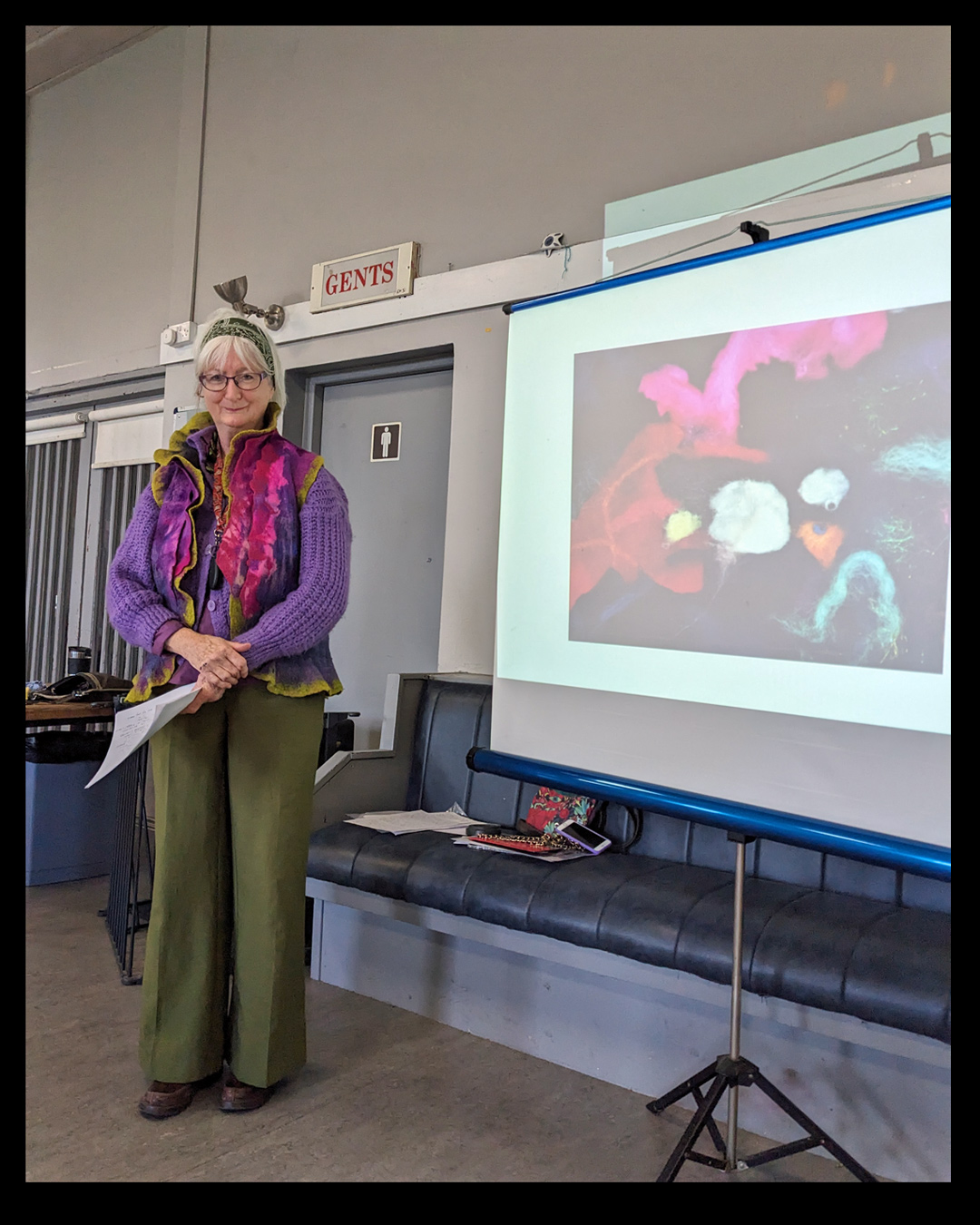
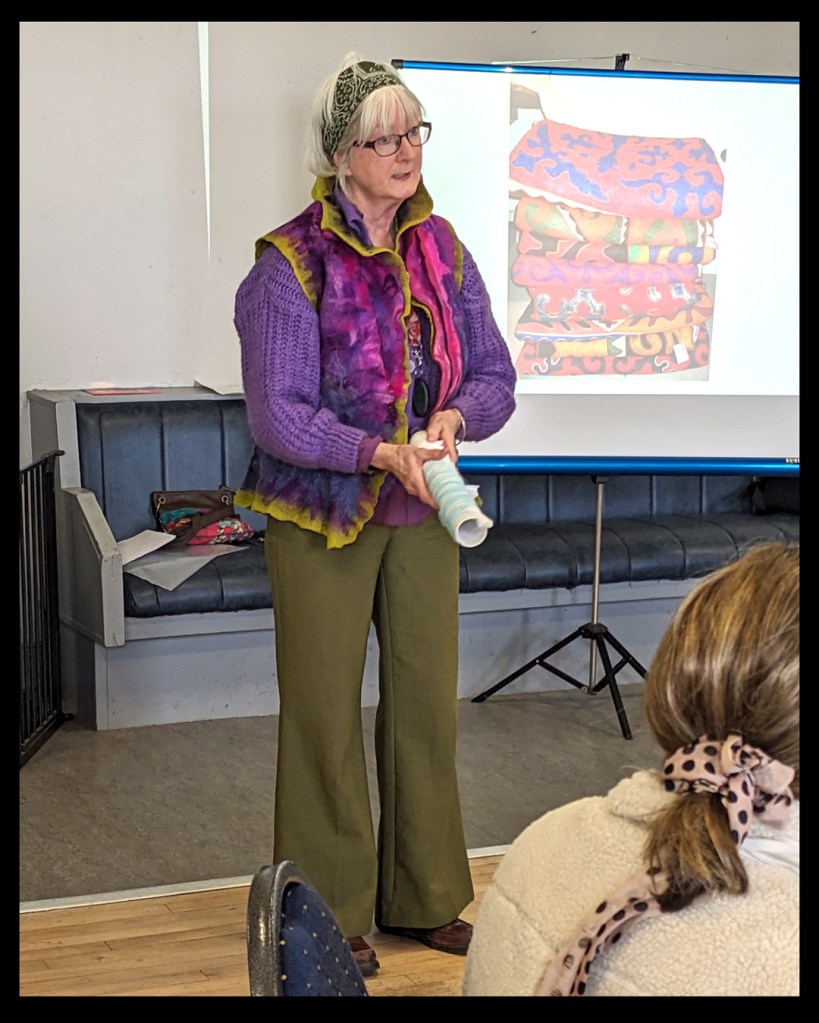
On Sunday, April 13th, long-time Feltmakers Ireland guild member Clodagh Mac Donagh shared her Textile Journey. Her colourful adventures in three locations—London, Paris, and Skerries, IRELAND —where she has lived, been educated, worked, and raised her family, enchanted us.
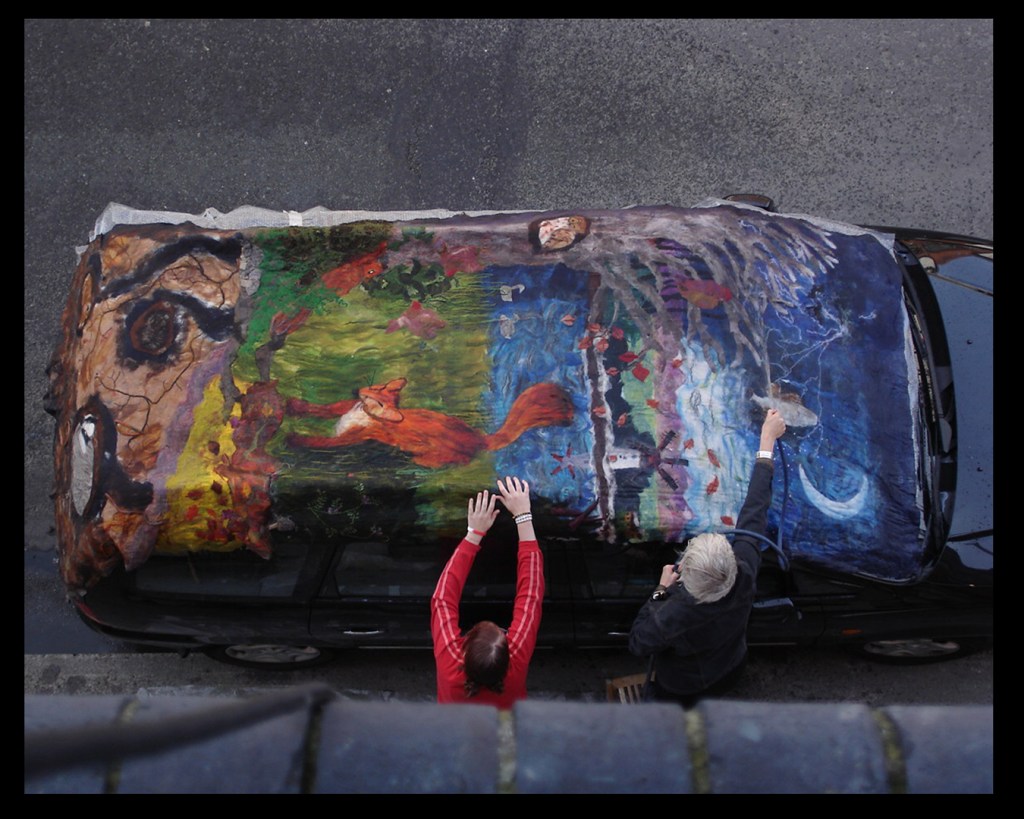
Like many guild members, Clodagh trained in fine art (in Ireland) and textiles (Goldsmiths in the UK). She worked in education. She taught textiles in multiple settings: to young people via schools, large-scale community projects funded by her local Fingal County Council, and even a textile education centre she opened in Balbriggan. Most recently, she taught a ten-week course on Wet Felting to adults at Castleknock College. Although now retired, she continues to teach Shibori Dyeing and other textile-related classes through Mel Bradley Silks Studio in Drogheda.
Teaching Felting
Besides working as an educator, Clodagh also worked as a dyer for high-end textile designer Sabina Fay Braxton.
She has also traveled extensively and shared some of her Japanese textile collection, which she collected during her visit there six years ago. When she was there, she visited Aramatsu – the town that creates famous Shibori!
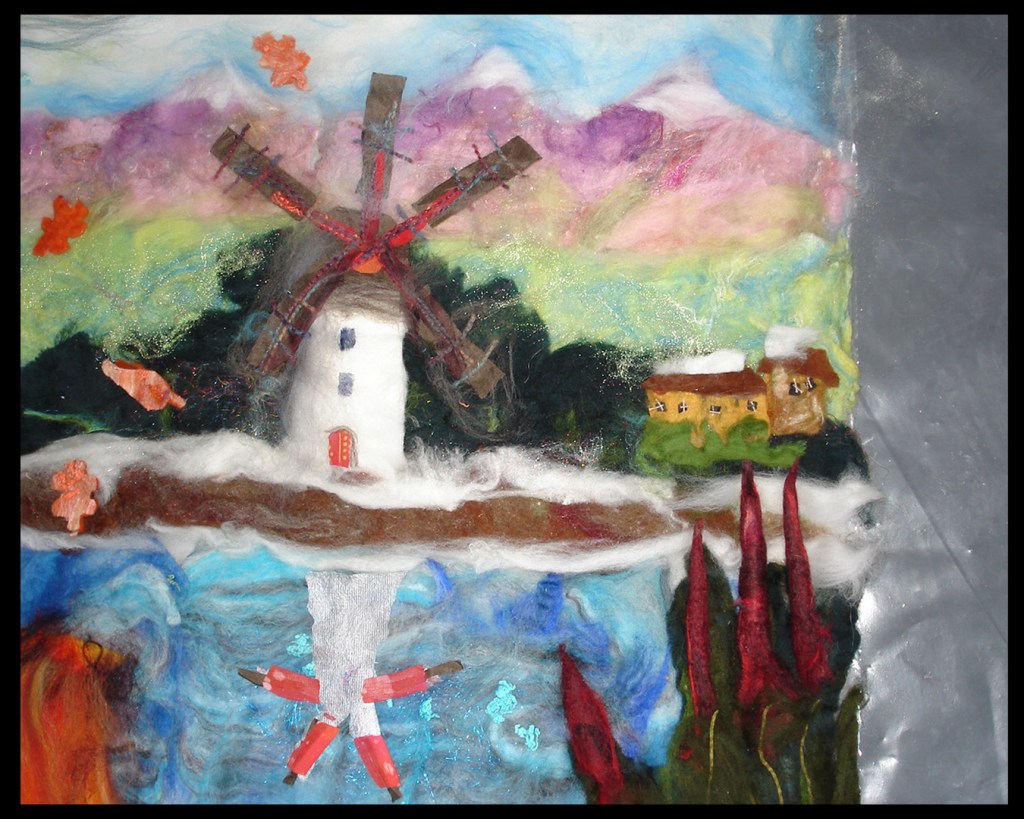
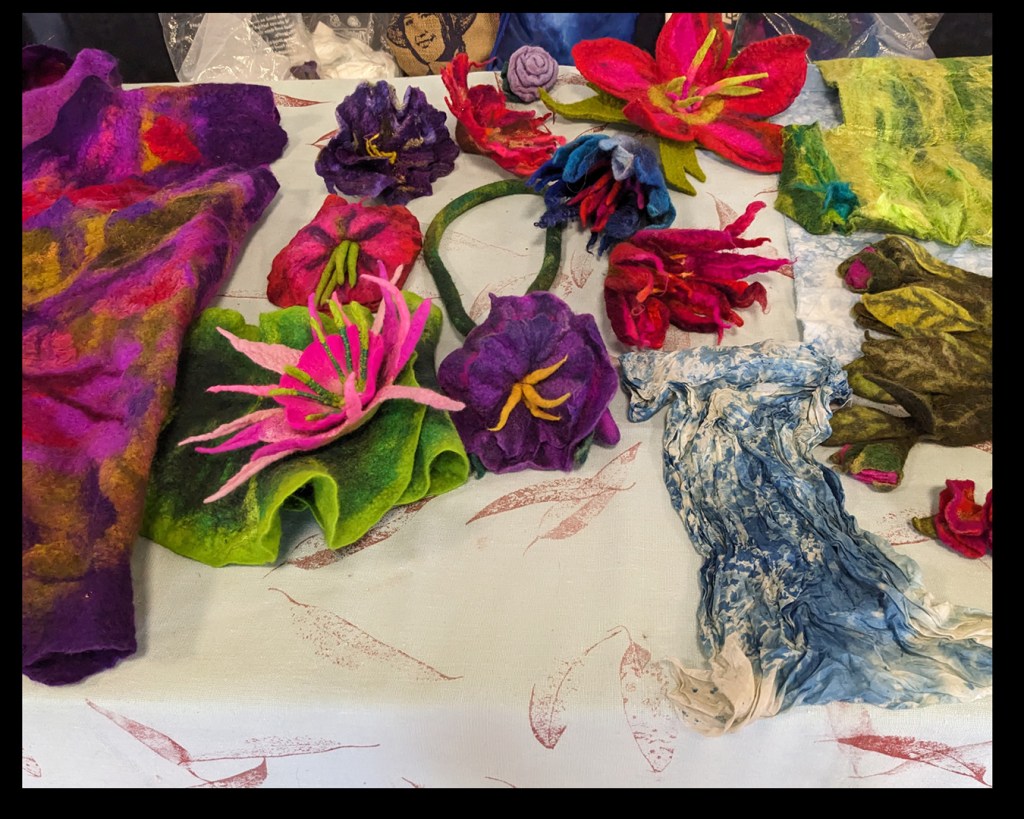
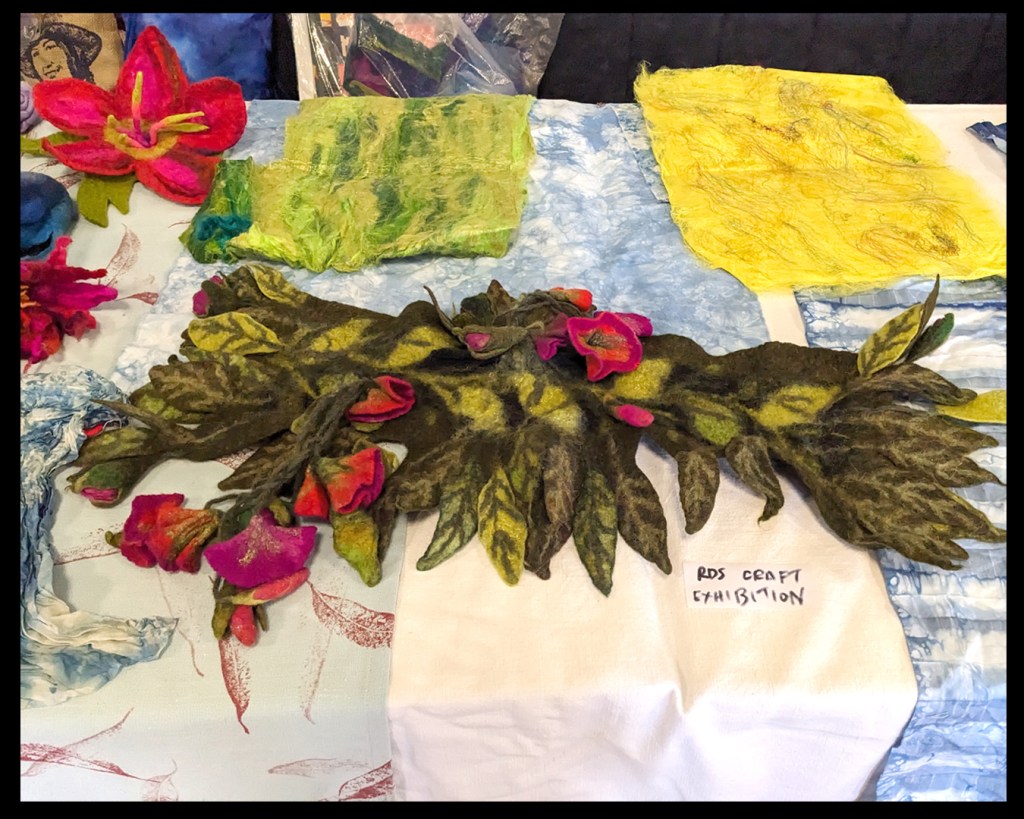
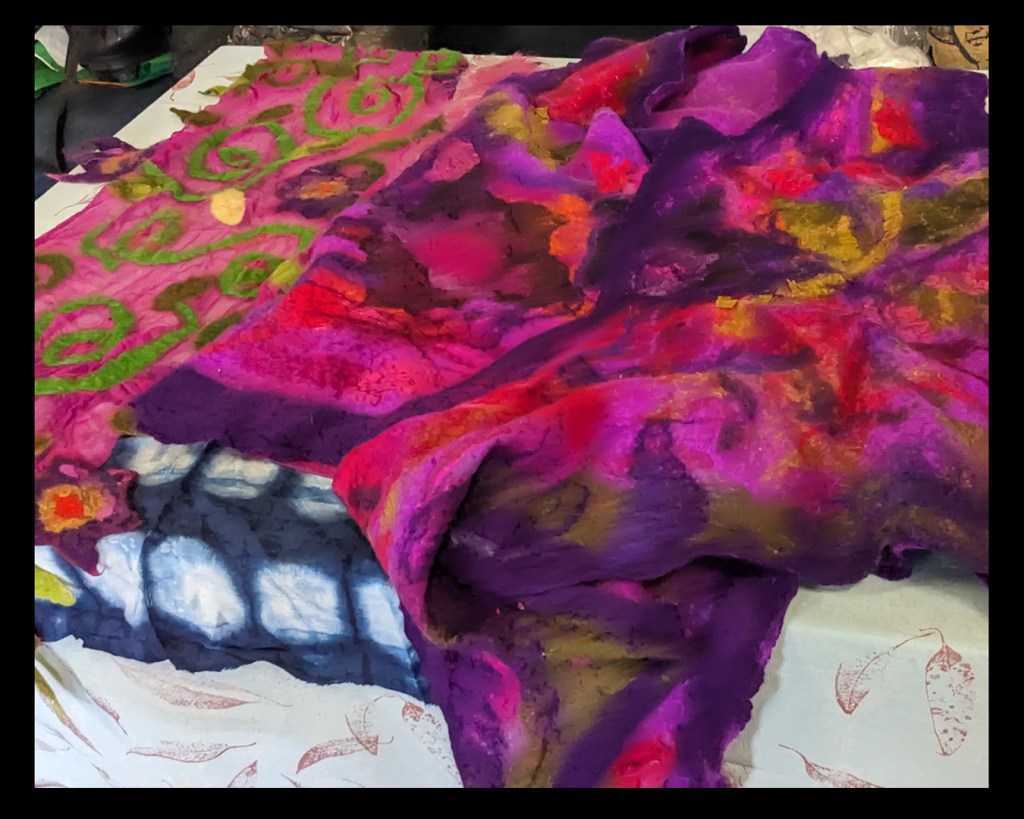
Some Photographs of Felted and Shibori Dyed Textiles
On Shibori
Clodagh explained that the term ‘Shibori ‘ means in Japanese “to wring out or compress so that the dye does not reach”. The technique dates back to the 8th century in Japan. Traditionally, it was done on silk or hemp fabrics and was worn by the samurai and aristocracy.
Clodagh generously shared six Shibori-dyeing resist techniques with the guild. She explained that what we do now is not traditional.
Kamoko – a pattern with all-over circles or bullseyes on it.
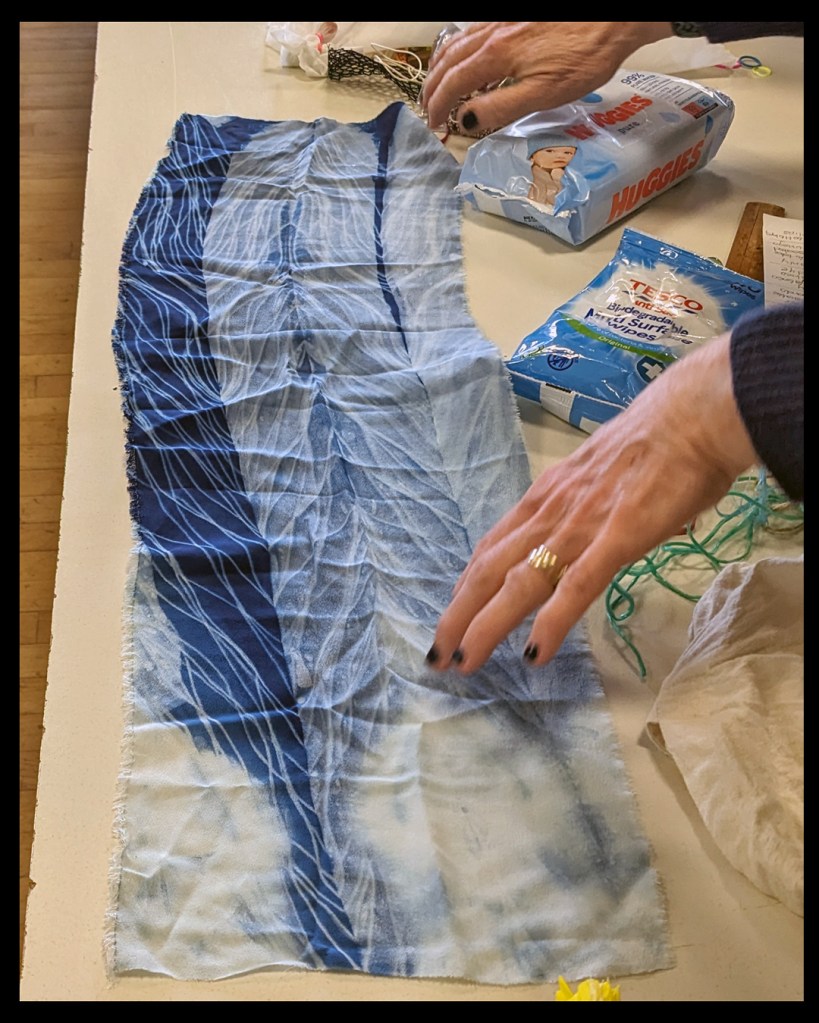
Arashi, which means ‘Driving Rain’ in Japanese, is an accordion fold (like a fan) tied around a pole or pipe. It looks sophisticated, but not difficult to produce.
Itajame – an accordion fold with resists.
Nui Shibori – stitched with pleats.
Kumo – repeat in the fabric with a series of ties concentrically arranged.
Muira—The example she showed was a long robe made of panels. It was created using a special stand with a hook that catches fabric and stitched with a continuous thread.
Example of Arashi
Video from Sunday
A huge thank you to Clodagh for sharing your Textile Journey with us! We appreciate all the work she put in to share with us.
Disclaimer for Feltmakers Ireland Blog
Feltmakers Ireland aims to share information about awards, education, events, exhibitions, and opportunities that you will find interesting. Our sharing is neither paid for by nor an endorsement of these individuals or organisations.
Contact Us: If you have any concerns about content, please email us at feltmakersie@gmail.com.
Questions: For questions about content, please follow the link to the organisation involved in hosting the event.
This Sunday, the 13th of April, longtime Feltmakers Ireland member, artist and educator, Clodagh Mac Donagh will share her travel and textile experiences with feltmaking and indigo dyeing for our Sunday Session. She has traveled to Japan to study dyeing and will bring her fantastic collection of textiles. Additionally, she will demonstrate various techniques of achieving patterns through Shibori methods.
Due to health and safety, our Sunday Session will ~not~ be a hands-on Indigo Dyeing demonstration or workshop, but Clodagh will demonstrate shibori techniques.
Please bring the following items:
10 baby wipes
10 A4 sheets of paper, preferably white/plain (These will be used for demonstration purposes)
some small rubber bands
a few short lengths of strings (different thicknesses)
a few beads or glass pebbles
a ruler
pen or pencil, and a small bag to bring items home.
Note: These items are for demonstrating purposes only, not for dyeing.
Complimentary tea and coffee will be served at this Sunday’s Session. Home-baked goods to share are always welcome! If you can, please bring a travel mug to replace disposable paper cups.
As a member perk for 2025, we no longer charge 5 euros per session. (If you still need to renew your Annual Membership for 2025, you can now pay online here – https://feltmakersireland.com/membership-application/ )
This Sunday’s Session will ~not~ have a Zoom link. We apologise for this, but we will use a projector to share some of Clodagh’s photographs of her projects and travels. There is only so much technology we can juggle during a single session.
As this is the season of coughs and sneezes, we prefer you not to share these. Please do not attend if you may be unwell.We will have a photo-filled recap on the blog in the coming week!
Disclaimer for Feltmakers Ireland Blog
Feltmakers Ireland aims to share information about awards, education, events, exhibitions, and opportunities that you will find interesting. Our sharing is neither paid for by nor an endorsement of these individuals or organisations.
Contact Us: If you have any concerns about content, please email us at feltmakersie@gmail.com.
Questions: For questions about content, please follow the link to the organisation involved in hosting the event.
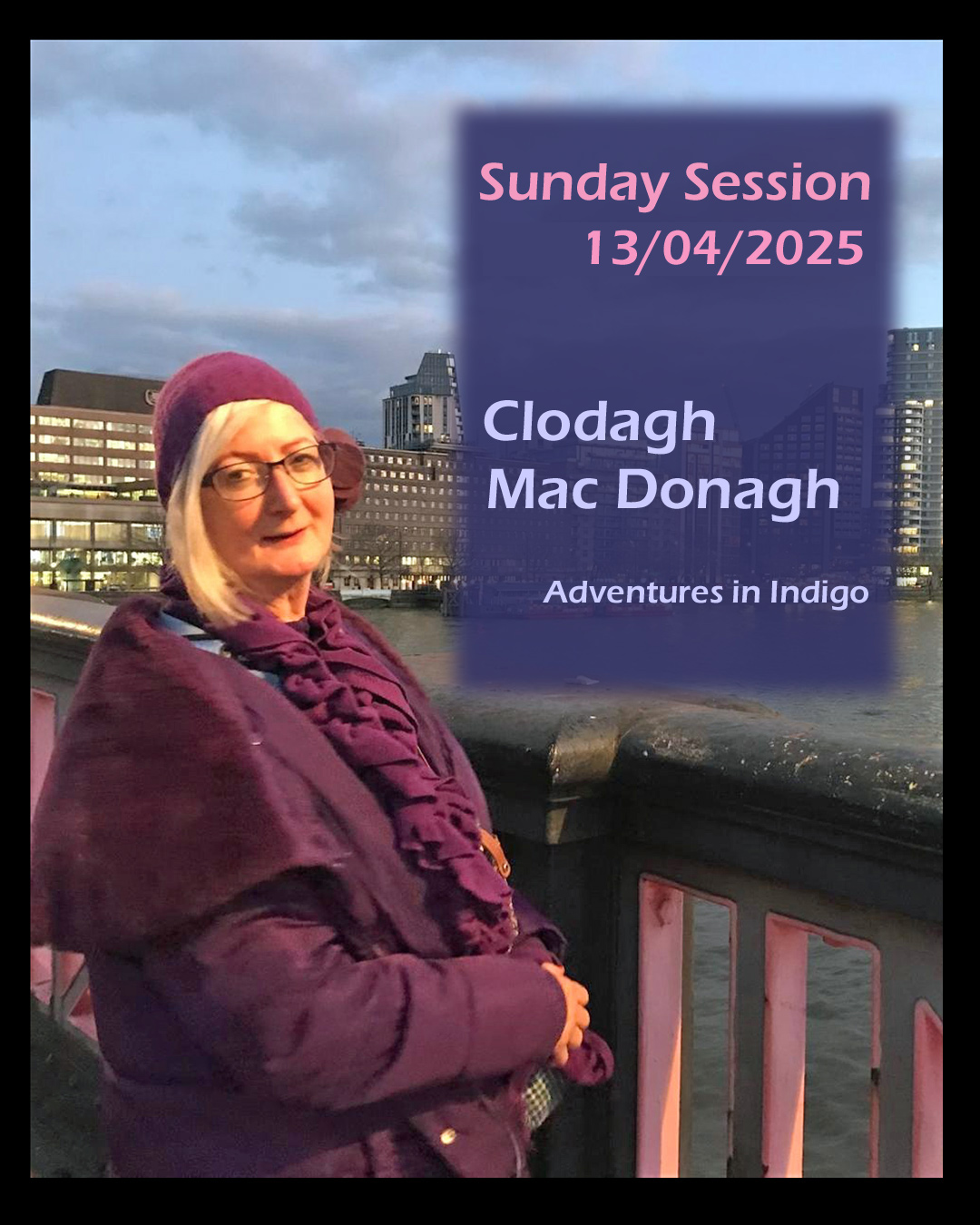
On April 13th, longtime Feltmakers Ireland member, artist and educator, Clodagh Mac Donagh, will share her travel and textile experiences with Indigo Dyeing for our Sunday Session. She has traveled to Japan to study this subject and will bring her fantastic collection of textiles. She will also demonstrate various techniques of achieving patterns through Shibori methods.
Due to health and safety, our Sunday Session will ~not~ be a hands-on Indigo Dyeing demonstration or workshop, but Clodagh will demonstrate shibori techniques.
Please bring the following items:
10 baby wipes
10 A4 sheets of paper, preferably white/plain (These will be used for demonstration purposes)
some small rubber bands
a few short lengths of strings (different thicknesses)
a few beads or glass pebbles
a ruler
pen or pencil, and a small bag to bring them home again.
Note: these items are for demonstrating purposes only, not for dyeing.
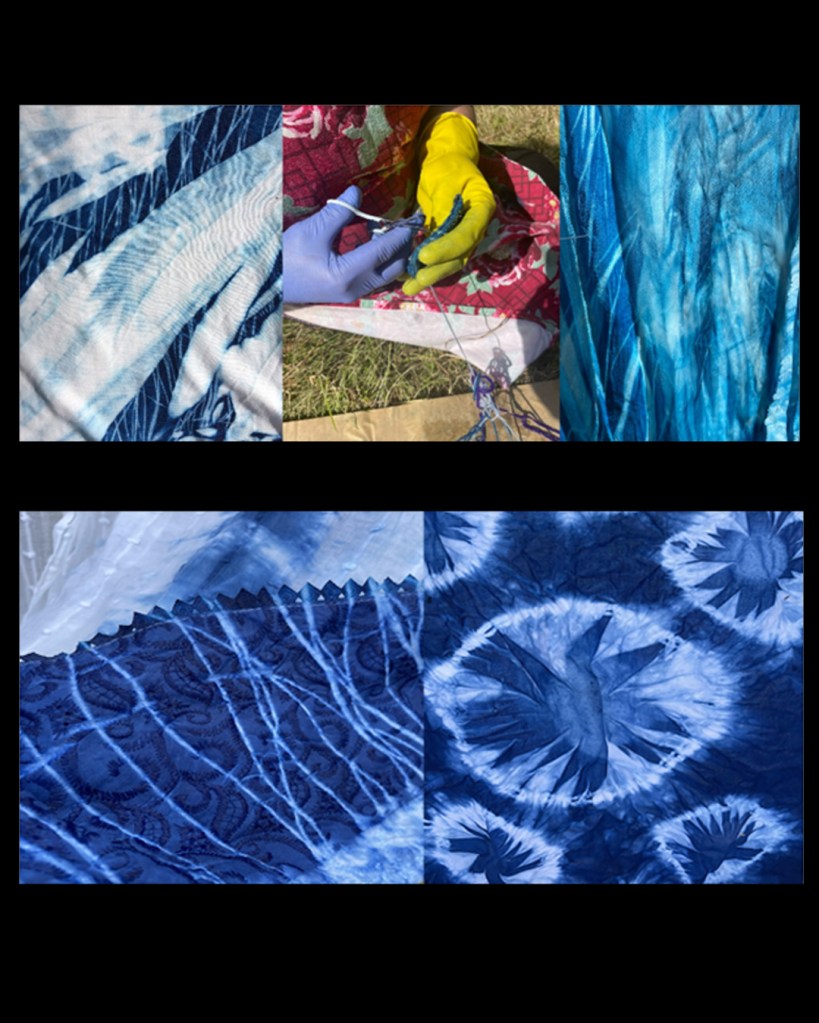
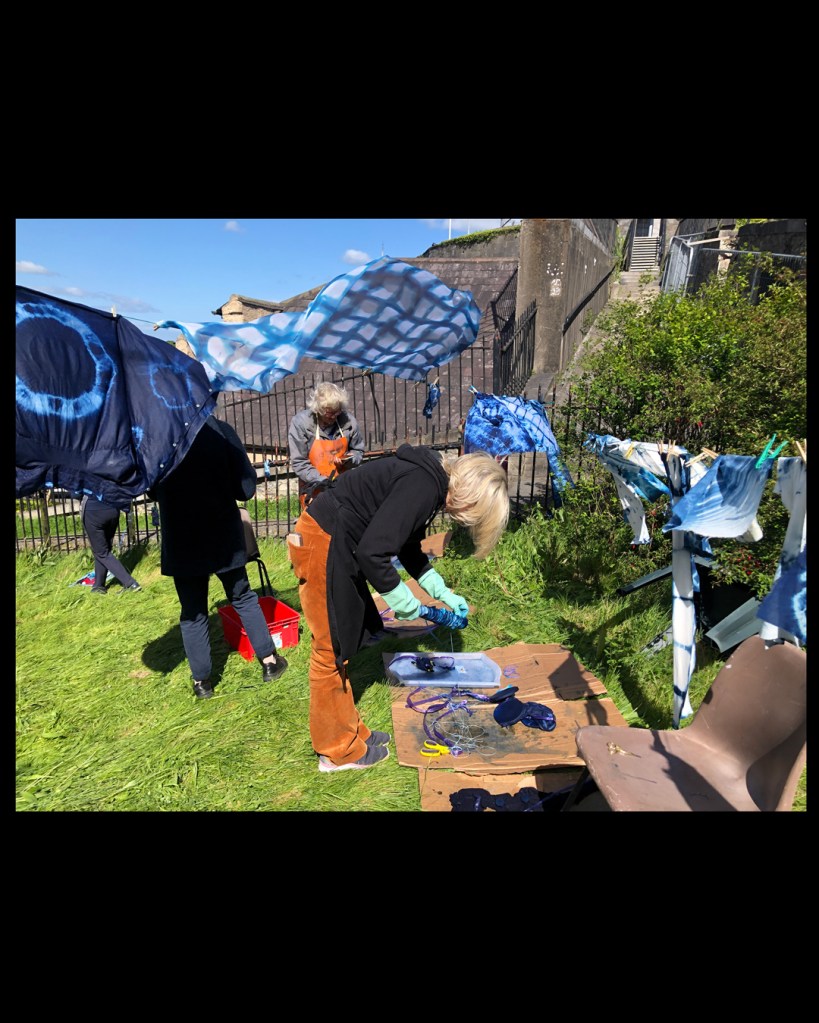
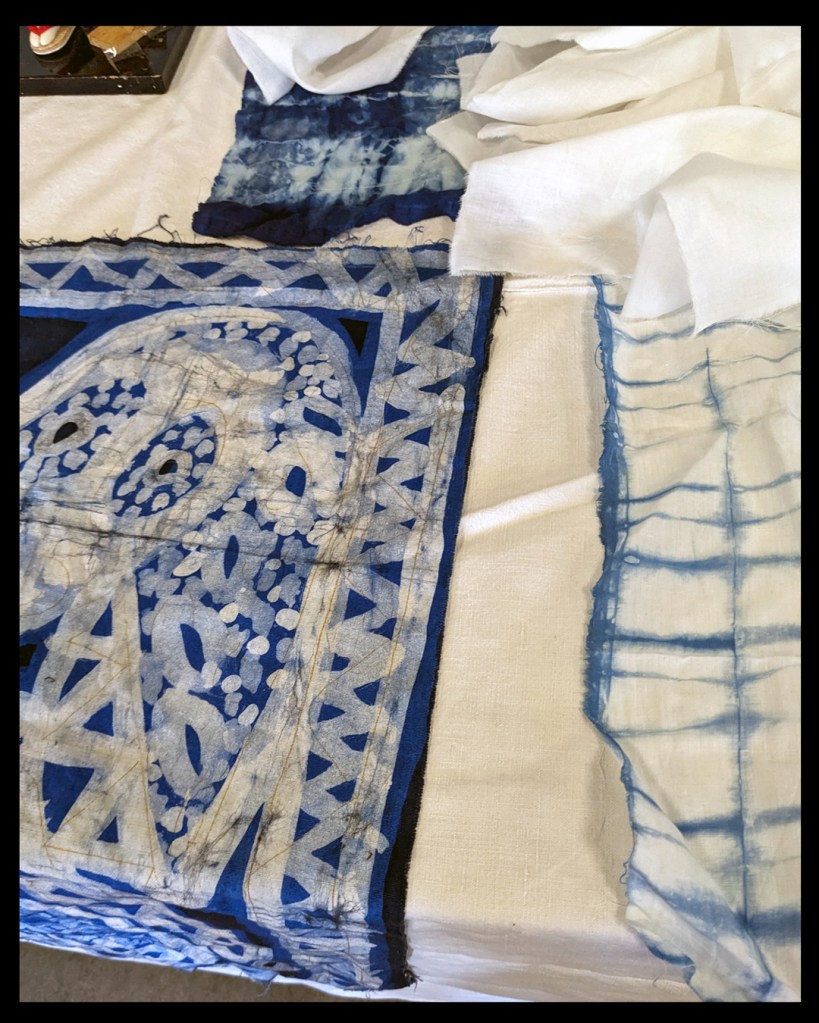
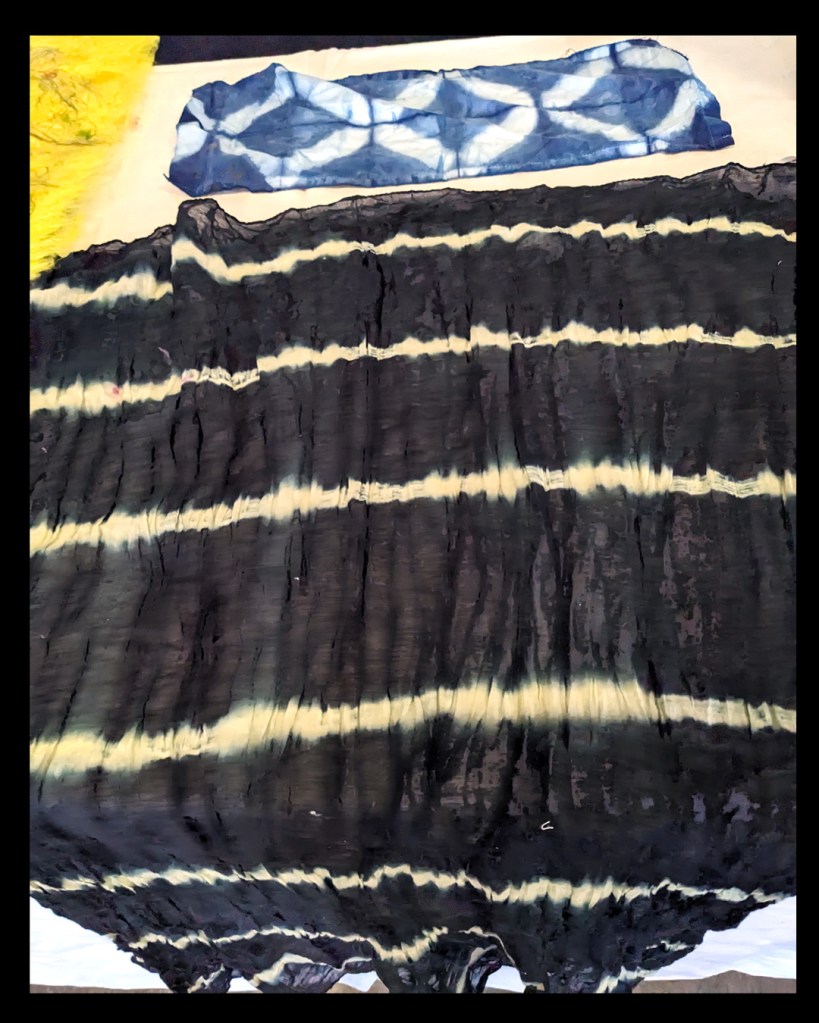
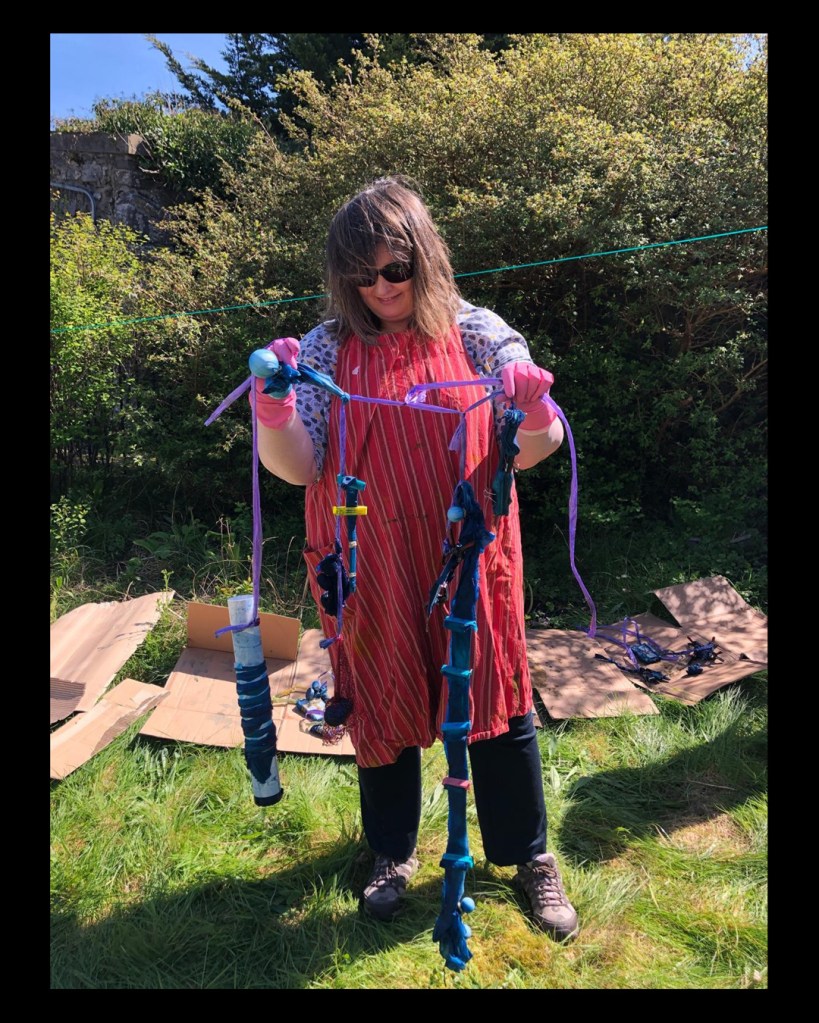
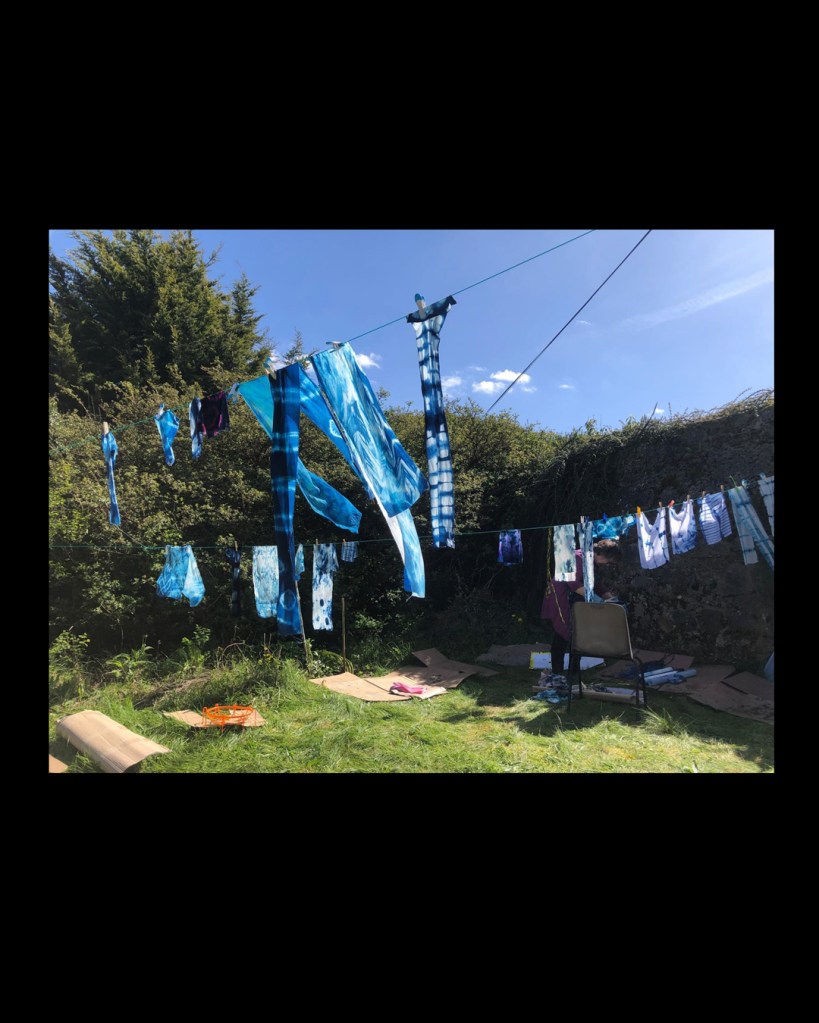
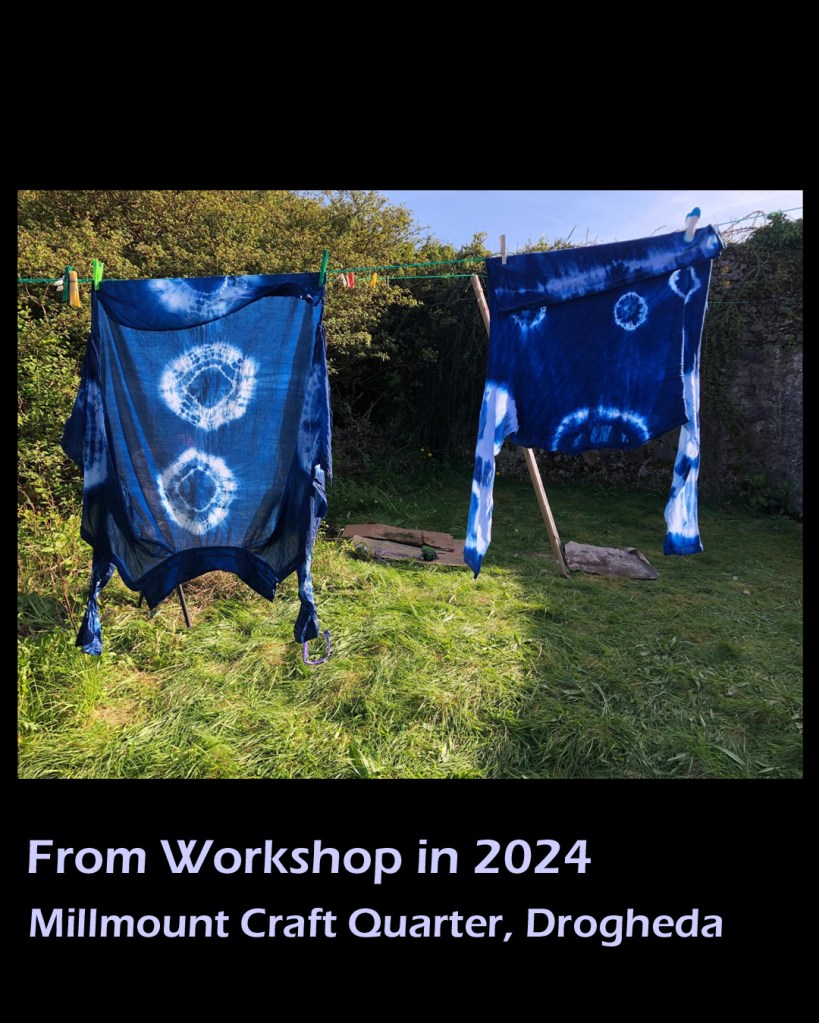
From an Indigo / Shibori Dyeing Workshop in 2024
The photos above are from a workshop taught by Clodagh and Mel Bradley, which was held at Mel Bradley Silks, in the Millmount Craft Quarter, Drogheda, in the Spring of 2024.
Complimentary tea and coffee will be served at this Sunday’s Session. Home-baked goods to share are always welcome! If you can, please bring a travel mug to replace disposable paper cups.
As a member perk for 2025, we will no longer charge 5 euros per session. (If you still need to renew your Annual Membership for 2025, you can now pay online here – https://feltmakersireland.com/membership-application/ )
This Sunday’s Session will ~not~ have a Zoom link. We apologise for this, but we will use a projector to share some of Clodagh’s photographs of her travels. There is only so much technology we can juggle during a single session.
As this is the season of coughs and sneezes, we prefer you not to share these. Please do not attend if you may be unwell.
Here is a fun video from the workshop in Drogheda!
Students are airing the indigo-dyed fabric and having a little dance, too!
Feltmakers Ireland aims to share information about awards, education, events, exhibitions, and opportunities that you will find interesting. Our sharing is neither paid for by nor an endorsement of these individuals or organisations.
Contact Us: If you have any concerns about content, please email us at feltmakersie@gmail.com.
Questions: For questions about content, please follow the link to the organisation involved in hosting the event.
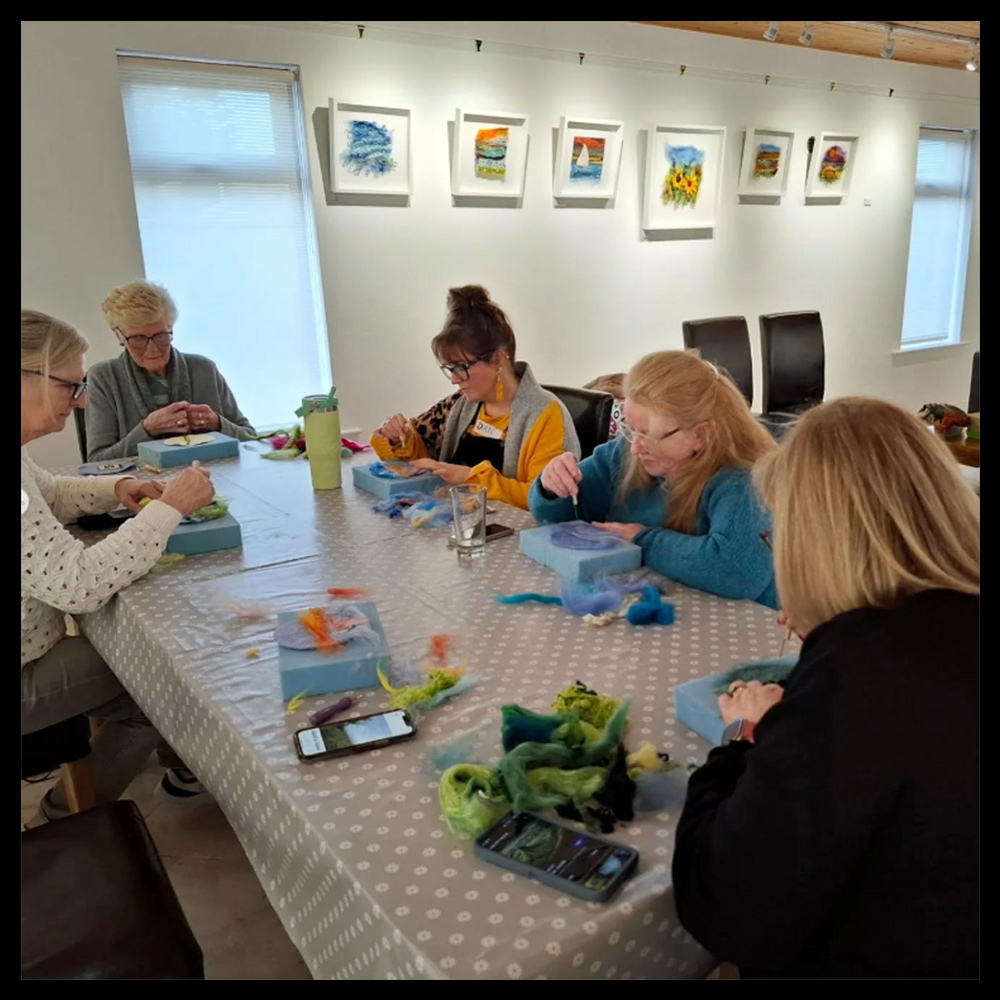
Feltmakers Ireland’s members include several who teach felting. Some teach wet felting, while others teach needle felting. We even have members who use and teach both techniques!
Below is a sampling organised by A-Z by county of upcoming felting courses taught by members in their local communities.
Co Dublin
Guild member Clodagh Mac Donagh will teach a 10-week Wet Felting evening course at Castleknock College, Dublin 15. The class starts on Monday, January 27th, 2025, and runs from 7 to 9 PM.
“Feltmaking is a therapeutic but slow craft; it takes time to obtain the skills needed to make successful Felt pieces. Weeks 1 to 5 The first weeks will introduce students to wool and its properties and qualities; each class will build on the preceding one. Students will learn a little about some of the different wool breeds and the characteristics of their particular fleeces. They will produce small jewellery elements, creating felt beads, cords or ropes and felt flowers. Week 5 will combine these elements to make a neckpiece, brooch or bracelet. Weeks 6 to 10 will see students working on a small personal project of their choice, based on the skills they have learnt.”
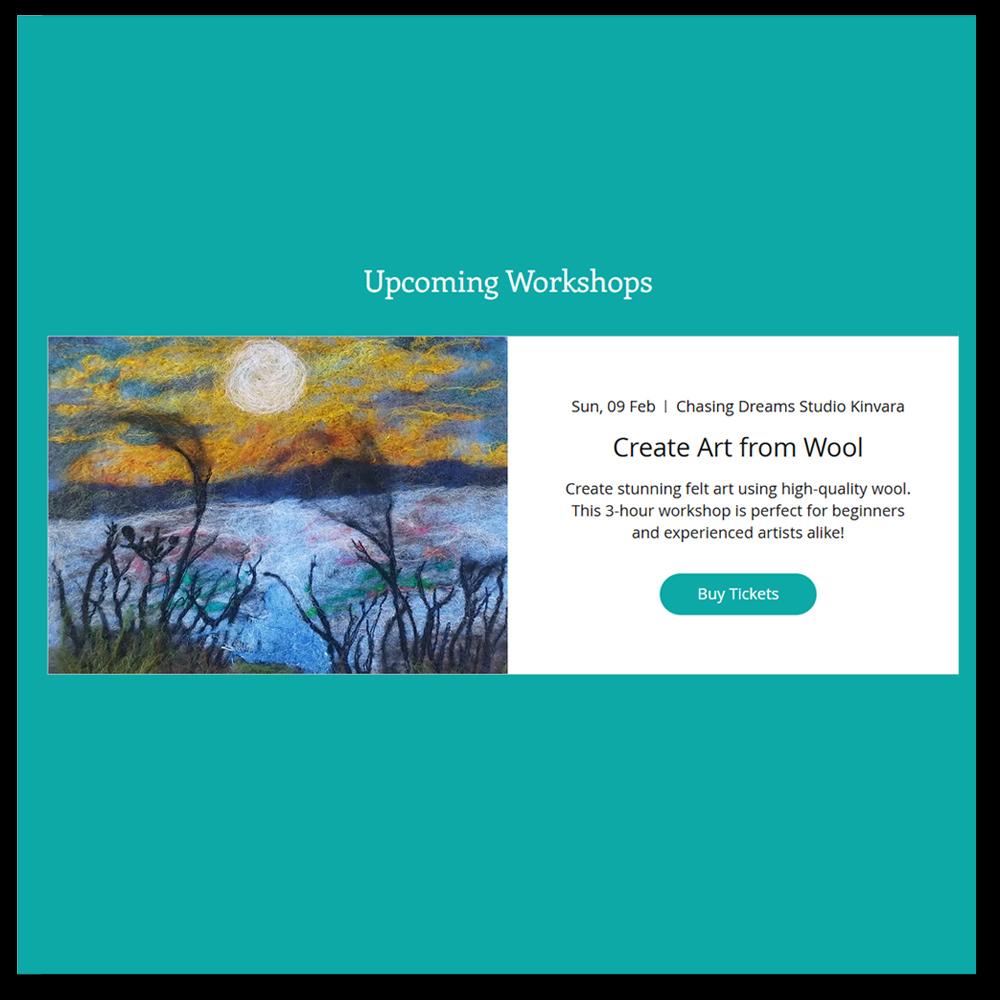
Guild member Belinda Reid will teach a felting workshop at her studio in Kinvara on Sunday, February 9th.
“Join us for a creative and engaging Felt Painting Workshop where you can create stunning felt art using high-quality wool. This 3-hour workshop is perfect for beginners and experienced artists alike!”
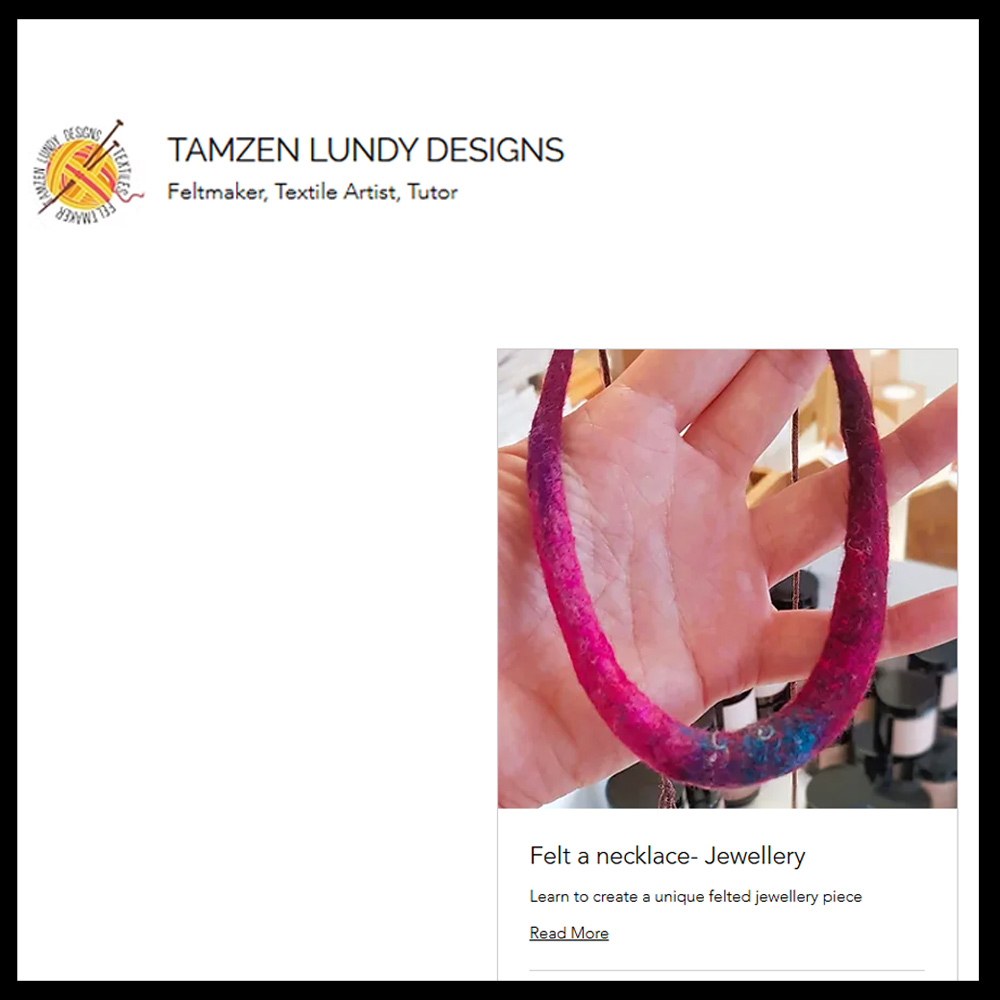
Guild member Tamzen Lundy is part of the Gather Collective at Southwells, Market Square, Kildare Town. She is hosting a Wet Felted Jewellery Workshop on Sunday, February 16th, from 2 to 4 PM.
Learn how to make a wool and silk necklace, suitable for beginners, fun and full of creativity!
It would be lovely to share an ongoing monthly series about opportunities to learn feltmaking in Ireland. If you are a member who teaches felting (wet, needle or a combination, please let us know at feltmakersIE@gmail.com
Disclaimer for Feltmakers Ireland Blog
Feltmakers Ireland aims to share information about awards, education, events, exhibitions, and opportunities that you will find interesting. Our sharing is neither paid for by nor an endorsement of these individuals or organisations.
Contact Us: If you have any concerns about content, please email us at feltmakersie@gmail.com.
Questions: For questions about content, please follow the link to the organisation involved in hosting the event.
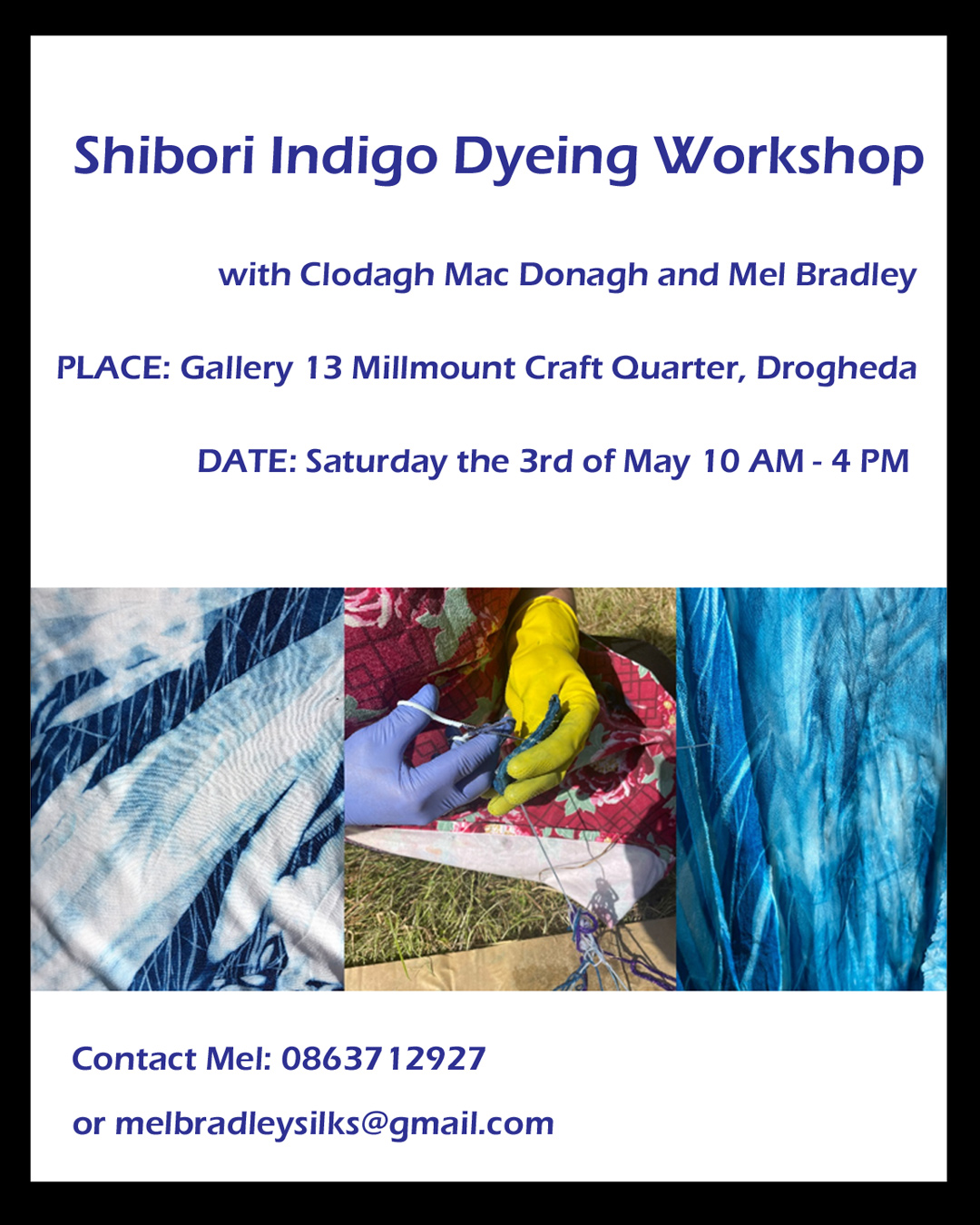
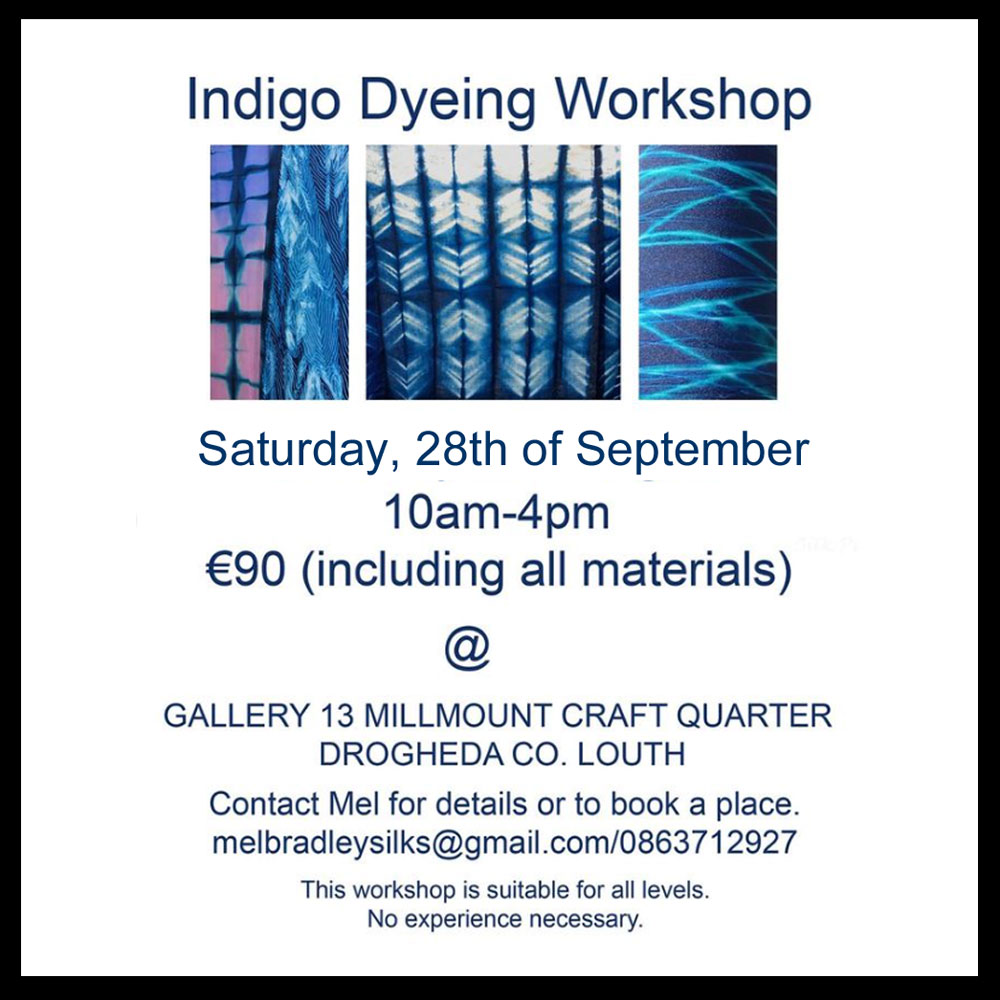
Sign up for an Indigo Dyeing Workshop with tutors (and guild members) Mel Bradley and Clodagh Mac Donagh this Saturday.
Learn the Japanese art of Shibori (creating patterns on fabrics) using techniques such as Kumo (tying and clamping), Arashi (using poles to resist the dye), and Itajime( folding and clamping). Immerse your fabrics in an Indigo Dye bath and be amazed as the magic of dye turns to a vivid indigo blue.
Workshop suitable for beginners and intermediate students.
Feltmakers Ireland aims to share information about awards, education, events, exhibitions, and opportunities that you will find interesting. Our sharing is neither paid for by nor an endorsement of these individuals or organisations.
Contact Us: If you have any concerns about content, please email us at feltmakersie@gmail.com.
Questions: For questions about content, please follow the link to the organisation involved in hosting the event.
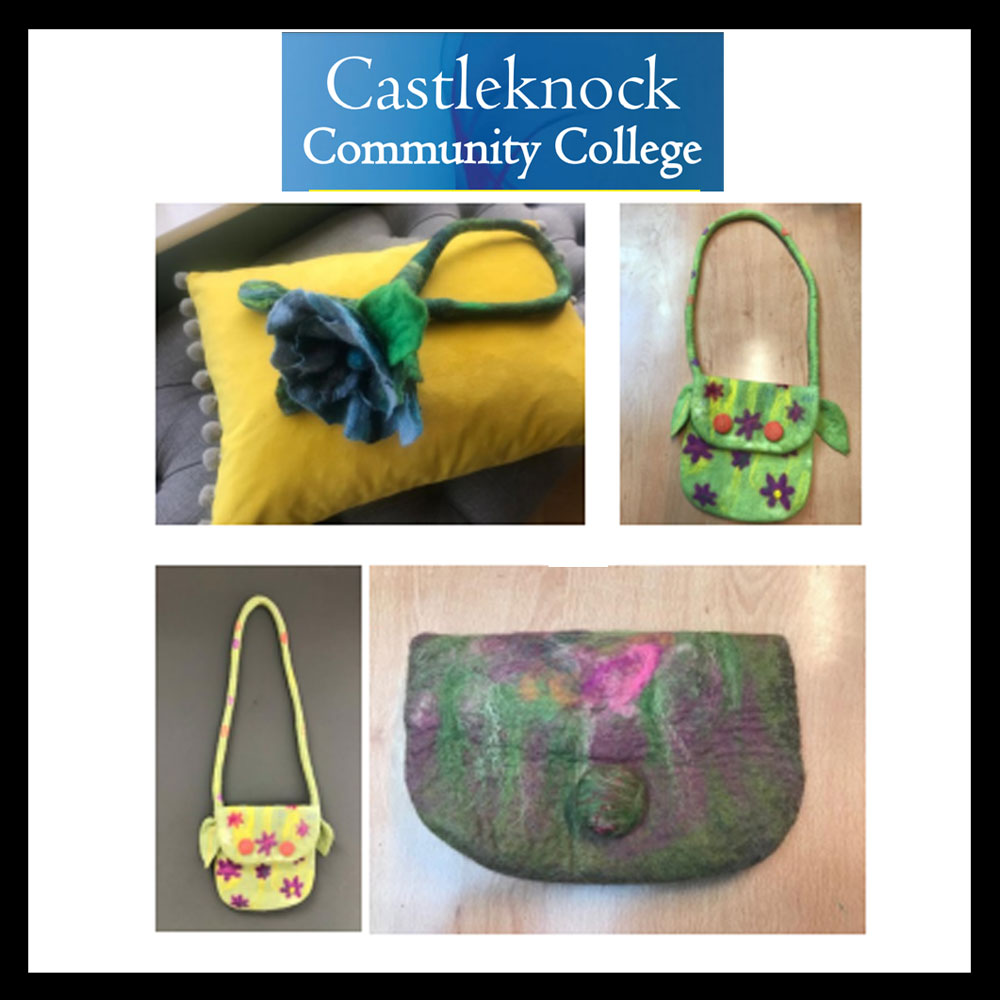
Clodagh Mac Donagh teaches an eight-week Wet Felting Class via Castleknock Community College. This course, aimed primarily at beginners, is a hands-on course, using just your hands, wool fibre, soap (no glue), and warm water to create decorative and practical items. Among the items that participants will produce are jewellery, purses, bags, pouches, felt flower brooches, bowls, and felt pictures to frame.
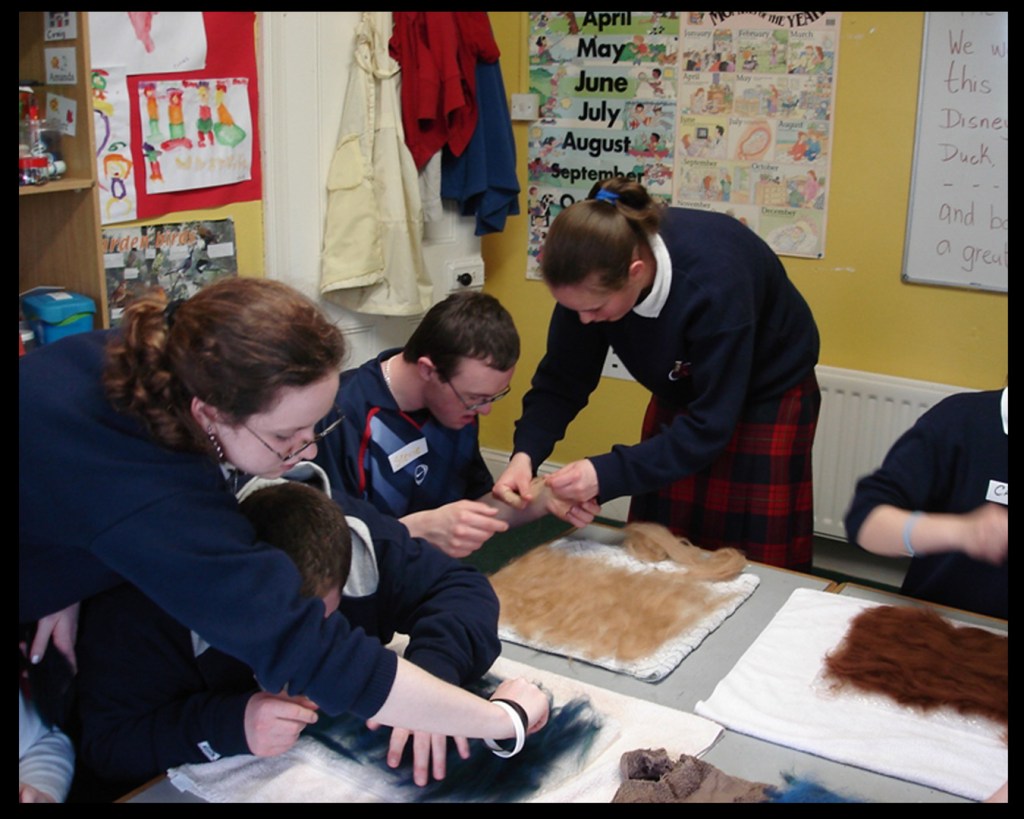
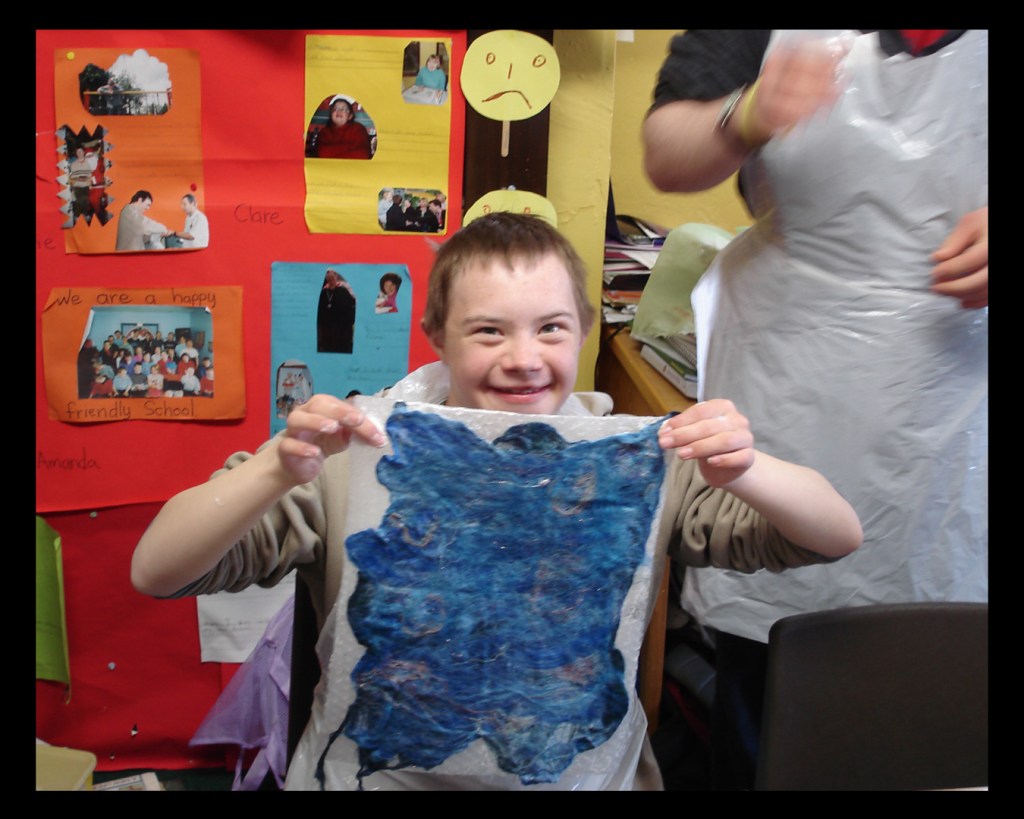
Tutor: Clodagh Mac Donagh is an art educator and feltmaker who has spent most of her life working in education, teaching and lecturing art at the 2nd and 3rd levels. She has spent the last 12 years facilitating Artmaking in the Intellectually Disabled Sector. Moreover, Clodagh is a long-time member of Feltmakers Ireland!
Note: Materials provided.
When: The class starts Monday, the 23rd of September and runs from 7 to 9 PM, for 8 weeks.
Feltmakers Ireland aims to share information about awards, education, events, exhibitions, and opportunities that you will find interesting. Our sharing is neither paid for by nor an endorsement of these individuals or organisations.
Contact Us: If you have any concerns about content, please email us at feltmakersie@gmail.com.
Questions: For questions about content, please follow the link to the organisation involved in hosting the event.
Clodagh McDonagh writes the blog about our February Sunday session. Thank you, Clodagh!
There was a great turnout on the first Sunday Session of 2023 , on 12th February, for a very busy `hands on` double session with Annika Berglund, and South African sheep and Alpaca breeder, Grant Bartholomew.
Many of you will have heard about FI’s project exploring the possibilities of sheep`s wool available to us here in Ireland. Annika is to be really commended for the hard slog that she and her wool project team has put in over the last two years studying ,learning and trialling many of the various indigenous and local sheep fleeces available here, with their particular properties, and possibilities. A book is in the works, full of useful information and practical tips, based on the wool group’s research, which will be released very shortly.
Annika had done lots of preparation for the session, she began by showing everyone some samples, pointing out the varieties of colours, tones, and textures of the different wools. All of the wool had been carefully washed, combed (carded) and weighed, and tied into 10gm bundles, with identifying labels.
Personally, I offered early on to help produce a few samples, however, easier said than done! The method of laying out the different breeds is completely different to using the very tame and biddable imported Merino wool `tops’ which leave its native Australia to be processed in China or Germany, Italy or the UK.
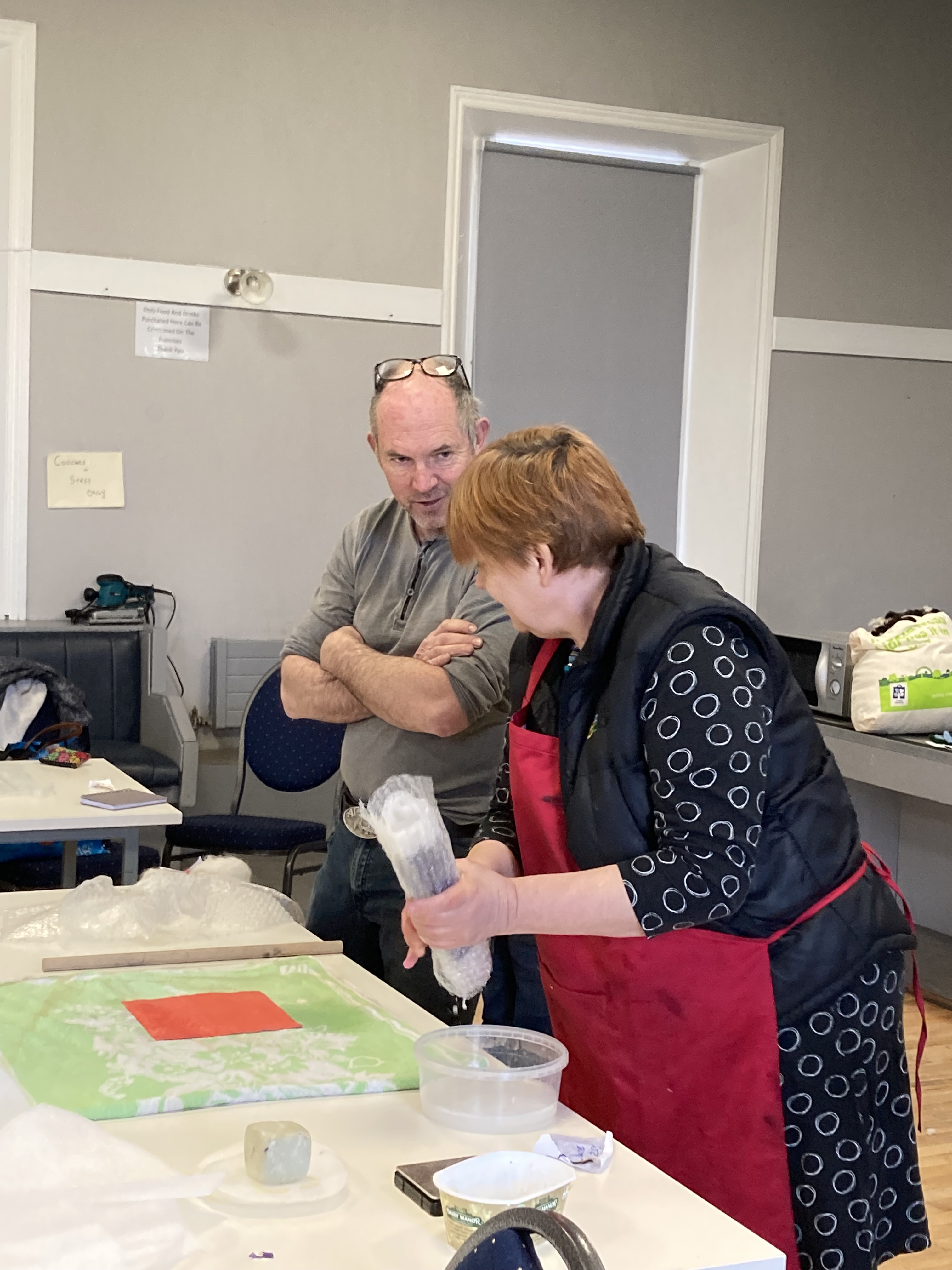
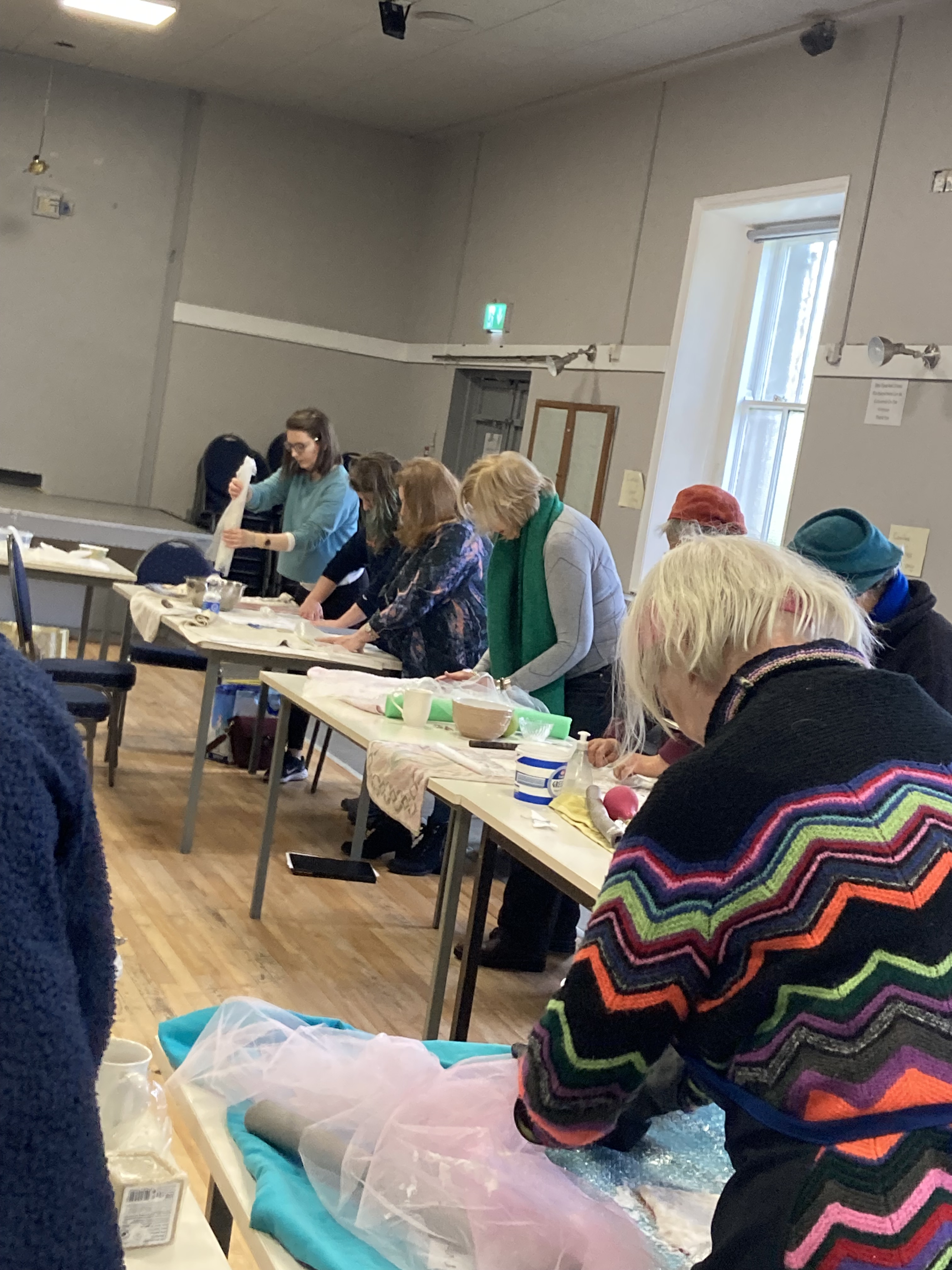
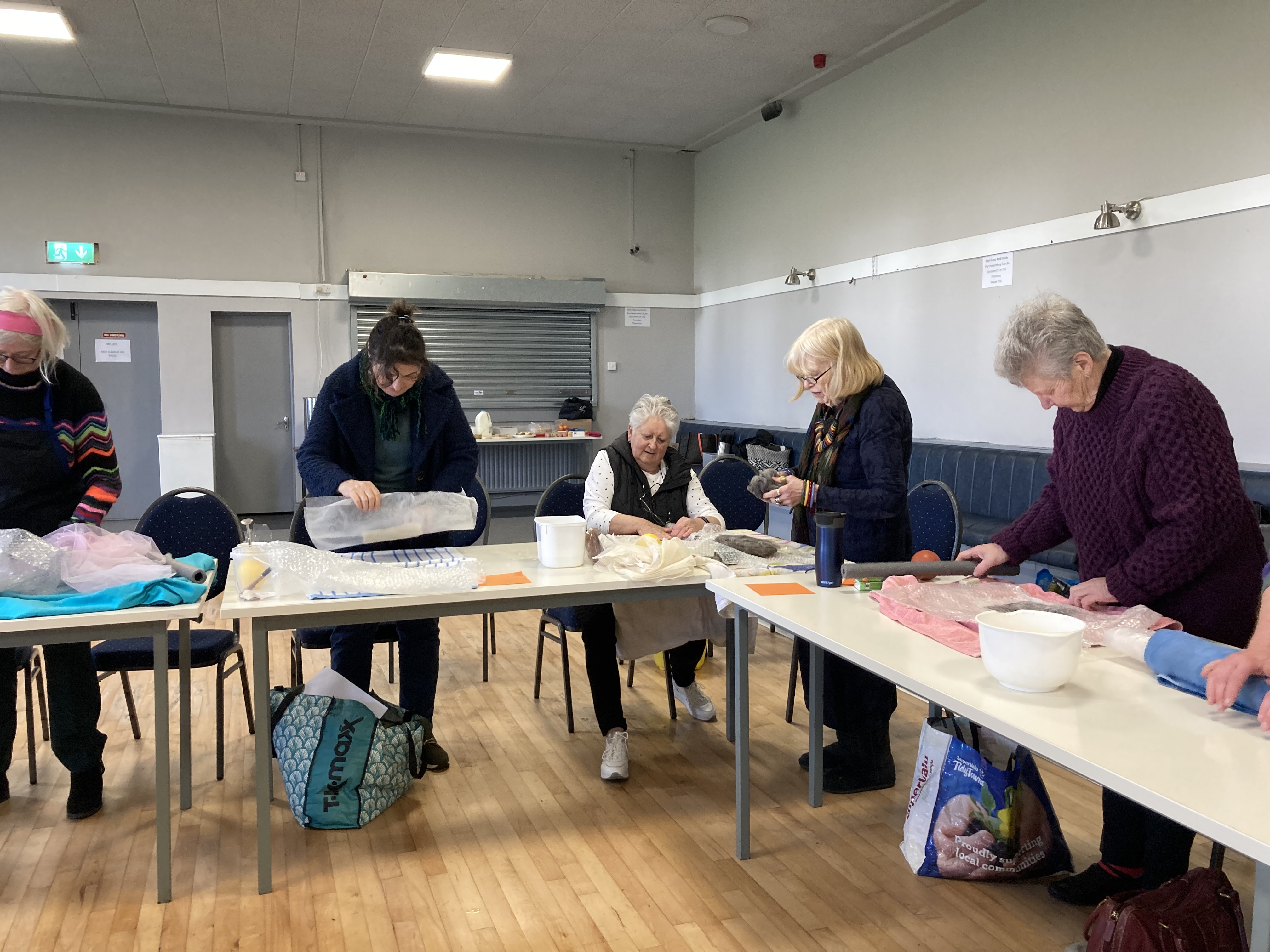
Annika had many tips for handling the fibre, including laying it down very finely on bubble wrap using a 20cm x 20cm paper template to help guide the process. Other tips included using a wooden dowel as a roller, using minimal water and even using liquid soap (or melted olive oil `bar` soap) on its own to help tame the rough fibres. To help speed up the process, there was a microwave on hand to heat the wool to encourage felting and even a sander too.
Annika encouraged everyone to have a go, and we were allowed to take the finished square home, or alternatively to cut them up and swap part of it with another participant. There was lots of comparing of notes between participants on their varying experiences, with plenty of ideas for future sessions.
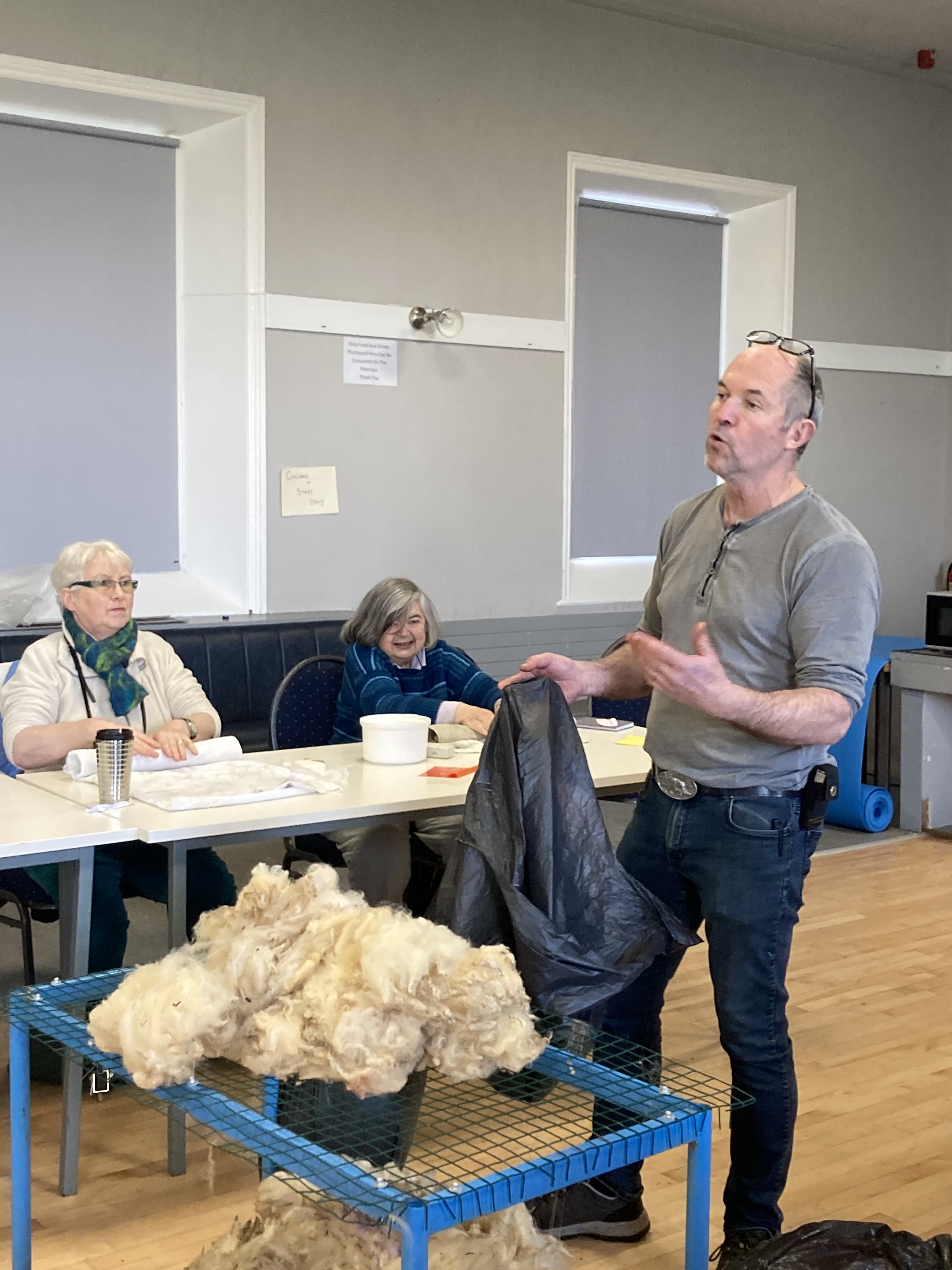
Grant began the second part of the session by setting up his fleece sorting table, a metal framed table with an open metal gridwork top, and placed the raw sheep fleece on it to start the process of judging it to find the best parts before it was to be washed and processed.
Grant gave us a basic lesson in how to sort out the bad from the good, which bits to avoid, and even which fleeces to discard entirely if they had been badly shorn, (double cut), holding a staple length to show us, stretching it to see whether it would break, which would form lumps in the fibre if left in during the process. Some of the fleece might be discarded simply if it was too dirty or if it retained the colour of the farmers identifying marks, purple, for example, by using iodine liquid to stain the fleece. At times up to 20% might be lost on removing vegetation from the fleece, and washing can remove approximately 40% of the weight. It takes Grant approximately 20 minutes to sort each fleece, we were amazed at his speed, and many of us were shocked to see him discarding at least 30 or 40% of the whole amount.
According to Grant, the business of processing sheep and alpaca fleeces for a living can be very trying as there is a huge amount of legislation surrounding the industry, and obtaining a licence for washing fleeces commercially is practically impossible at the moment.
We will do further sessions using Irish wool when the book is published, so if you missed this session, there will be more chances to get hands-on using Irish wool.
If you are in a position to get to Castleknock once a week for 10 weeks, this might be for you:
Feltmaking with Clodagh Mac Donagh
Course Content: Welcome to the wonderful world of wool. Using beautiful Merino wool and other fibres to produce woolly works of Art. You will learn all of the terms and many techniques to create your own fabric and solid forms, from fluffy fibre, done using the wet felting technique. (Students will be required to pay a €25 materials charge)




 Feltmakers Ireland