Meet the Maker- Maria Mc Garry

Maria McGarry- Feltmaker

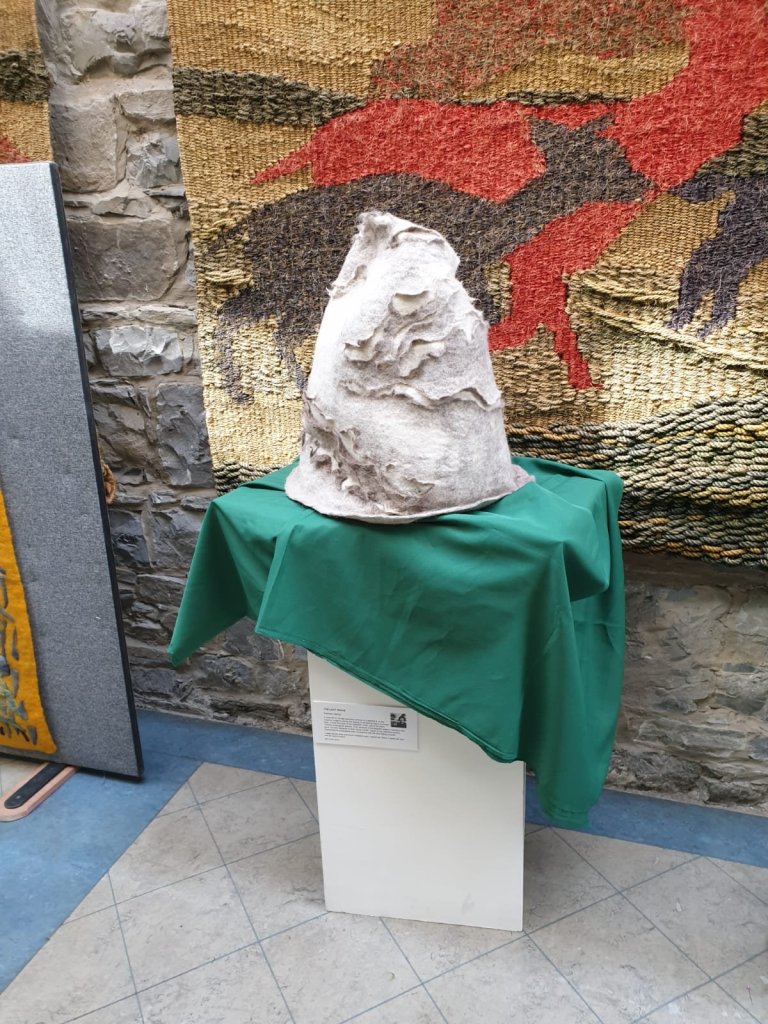
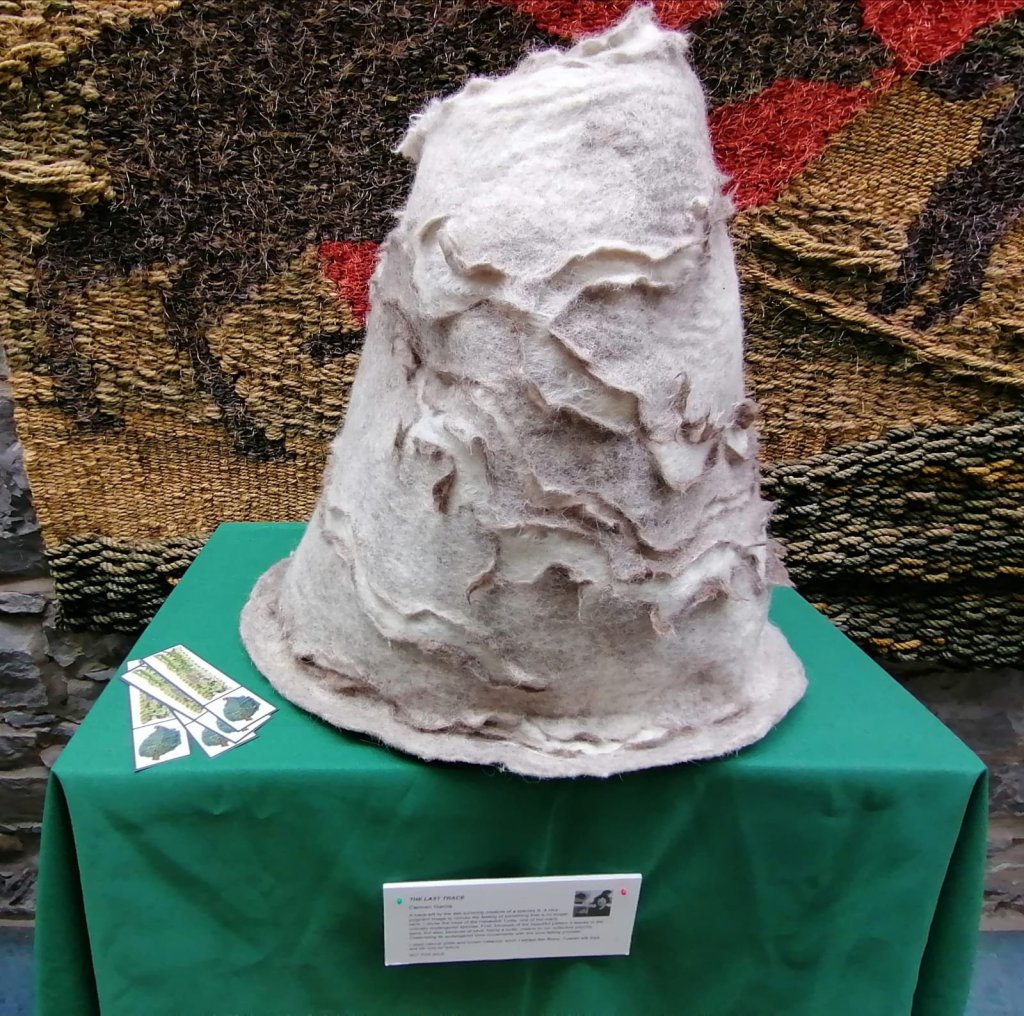
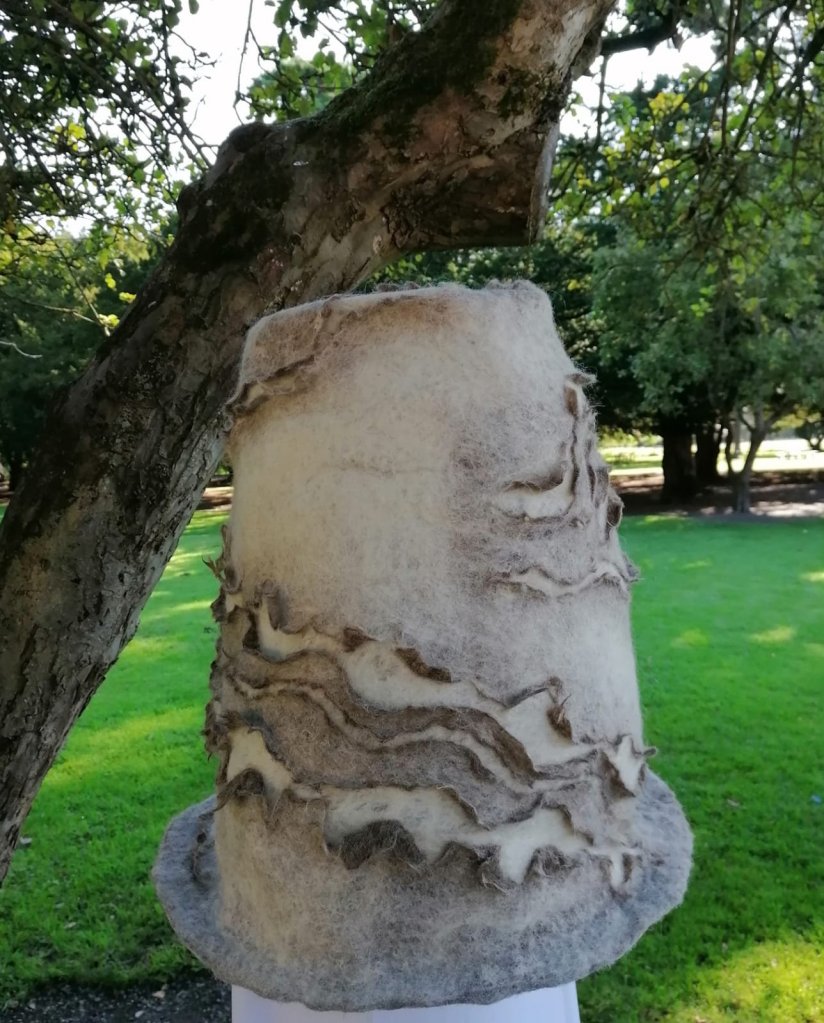
Maria entered her piece to the “Endangered exhition” entitled-‘Marsh Fritillary Butterfly’. In our series of interviews with the makers we asked Maria questions about her piece and her textile practice.

How does your entry to the ” Endangered Exhibition” respond to the title?

 The ‘Marsh Fritillary Butterfly’ (Euphydryas aurinia or as gaeilge, Fritilean Reisc) feeds on the ‘Devil’s Bit Scabious, Sussisa pratenis, flower’. The marsh fritillary is one of Irelands few legally protected butterflies under Annex ll of the European Union Habitats and Species Directive. The species relies on the Devils bit Scabious to lay their eggs, but the habitat for this plant is declining because of farming intensification, urban development, and monoculture forestation of traditional bog lands. I was inspired by a train conversation with Dr Ken Bond, UCC who has spent many years monitoring and protecting this species.

Crafting through the current crisis.

Looking back, I have been busy during lockdown. I completed my Art Textile Level 8 course at Crawford College Cork with my piece #ONE WORLD, which charts the spread of Covid 19 on a felt population density map of the world (up to 25/5/2020). This was part of a virtual exhibition ‘EMERGING’ at The Gallery 46 Grand Parade, Cork.

#ONE WORLD was taken from the Director-General of the W.H. O’s speech on 15/04/2020, as he voiced his major concerns about the viral spread in poor countries especially Africa. That was also the day that the U.S.A President decided to stop funding to the W.H.O. 2 million accumulated cases were reported worldwide that day and over 10,000 deaths in New York.

Detail of felt, Covid19 Clusters and viral spread up to 05/05/2020

COVID 19 sent the world into lockdown in March 2020. Something invisible could affect so many people on a global scale.  A world without borders! I wondered how I could visually represent the spread of this virus on the world map. I was inspired Renna Saini Kallat’s Woven Chronicle, 2011 which is a world interconnected that ‘with Globalisation, the privilege of free movement for some means forced displacement and migration for millions of others.’

I had another piece # TICK TOCK ( the cogs of climate change)  on exhibition at The Gallery ,46 Grand Parade for the ‘HAND’ exhibition, March 2020 ( a collaboration of Crawford College, textile students and UCC  drama students). This exhibition remained in place during lockdown.

My triptych, screen printed Nuno felted and embroidered piece, #FAKE NEWS is part of the Irish Guild of Embroiders 2020 exhibition at the Lexicon, Dunlaoighre

How I discovered felt and what it means to me.

In 2010 I saw an advert for the Basics and Beyond Feltmakers Ireland workshop in Lucan and am hooked ever since. I have met so many likeminded and lovely people. I have enjoyed the Sunday sessions at the Knockmaroon Gate in the Phoenix Park, and workshops given by other members of Feltmakers Ireland. I have taken part in incredible masterclass workshops with Gabrielle Kovacs from Hungary, Nancy Ballesteros from Australia, and last year with Leiko Uchiyama.

Inspired by all the exceptionally talented friends I have met through Feltmakers Ireland, I completed my Certificate in Visual arts in NCAD IN 2018 and have now finished Art Textile in Crawford College Cork. I am passionate about textile art and making. Feltmaking is my meditative space, because the art is in the consistency and gentleness of the laying and manipulation of the fibres. This cannot be forced or rushed and does require experience and practice. I love Nuno feltmaking and the lustre of combining silk with merino wool.

Because of lockdown I have a full house working from home so my feltmaking is on hold as   my kitchen table had to be cleared. I have lots of ideas brewing and cannot wait to get back at it. Thank you Feltmakers Ireland for all the inspiration, joy and friendships over the last 10 years.

Meet the Maker- Elaine Peden

Interview with Artist Elaine Peden.

Elaine Peden is a long time, committed member of Feltmakers Ireland. Once again she took part in this organised event and submitted a wonderful piece highlighting micro plastics in water pollution. A regular contributer to the “Element 15” textile group, exhibiting around ireland, Feltmakers thanks Elaine for her continuing interest in the organisation and for helping to publicise the craft.

” Dive straight in keep your eyes wide open ” : €500

Made during lockdown over a period of two weeks.

Working from home technology “zoom” became an integral part of my working day ,I craved the creative process. Wet felting became the perfect medium for me during lockdown and helped balance my ‘right and left’ brain .

Detail of Elaines piece

I made this piece outdoors ,laying out the fibres on our long hot Covid summer days. My work is process led ;colour plays an integral role in my work . I chose lemon and golden yellow as my primary colour base , (a colour I have avoided until now) the sun reflecting off the sea.

The circular openings draws the eye to look inside , the ‘Blue’ luminous fabrics and silks buried in the voids , reflects deep sea dumping , microplastics, and the Impact of consumer culture mainly the use of plastics on our oceans .

I believe we can create  awareness about deep sea dumping through Art .I believe Covid helped us reconnect with our Blue landscape.

Meet the Maker- Endangered -Yling Khaw

Yling Khaw, felt artist

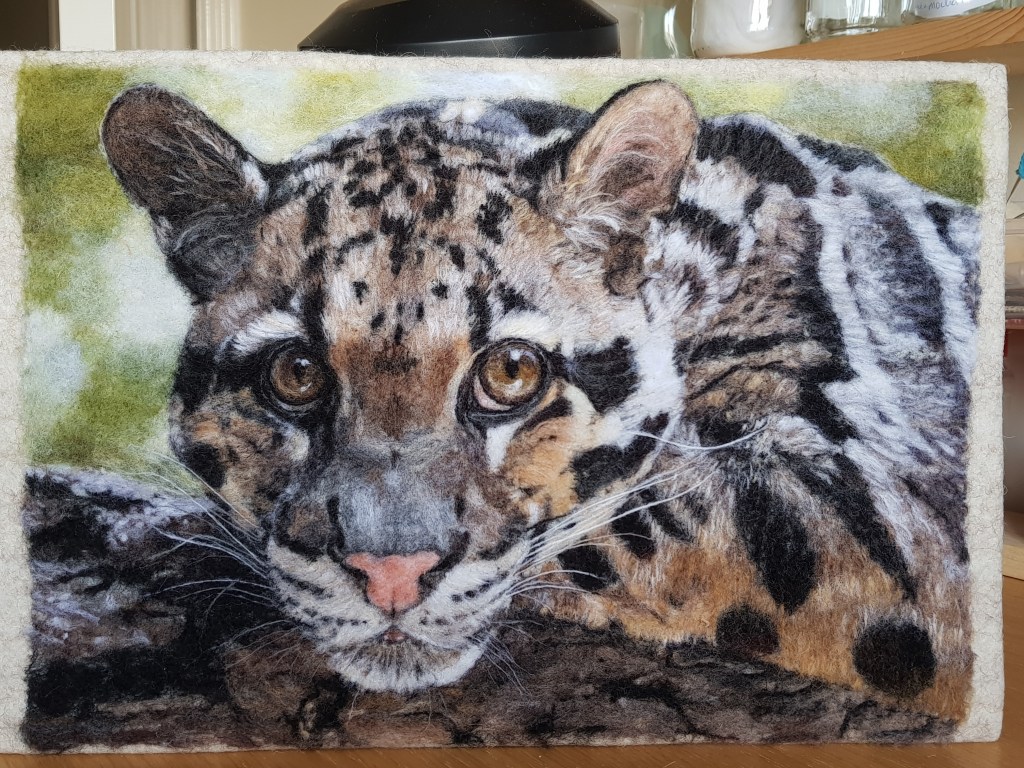
The Endangered Exhibition drew in new members to Feltmakers Ireland, to whom we welcome. Yling submitted a wonderful piece of work entitled “Clouded Leopard”. We asked her 3 questions about her work in response to the Exhibition title.

The Exhibition title- Endangered?- how does your piece respond to the title? your inspiration and methods etc
The tropical rainforest has been a lifelong love of mine even though I have lived in Ireland for the past 20 years. I grew up playing in streams, and had spent practically every weekend and holiday in the forest. My main interest is macrophotography of insects. 
Unparalleled diversity: A square kilometre of rainforest contains several thousand species; absolutely mind-boggling. Immersing oneself in it is a humbling experience.Not only is the rainforest disappearing fast, it is nearing an irreversible tipping point beyond which it can no longer sustain itself.The loss of such a magnitude of living beings is heart-breaking. I bear witness.
I chose the Clouded Leopard because it is native to my birth country and its survival depends on presence of primary (pristine) rainforest. It is an elusive, beautiful cat, well known for it’s tree-climbing skills. 
I am grateful to Endangered Exhibition for raising awareness of our planet’s collapsing ecosystem. I take this opportunity to challenge the viewer to look him in the eye and say one does not care.
Feel the heart break and take action. 


Method: Needle felted merino roving on 100% wool felt sheet.Photo credit: Wikimedia commons.

Crafting through the current crisis, with the pandemic have you found more or less time to craft, has it inspired you or have you found it more difficult- discuss
For me, the crisis meant a combination of maternity leave and lockdown with two young kids. I felted a little every evening. Felting has helped me maintain my sense of self. 

Felt- how you discovered it, what it means to you
I was looking for a craft that looked attractive, yet flexible and forgiving. Needle felting is also very exciting due to the endless possibilities! Even better, it is a natural compostable material!

In January 2020, I got a box of needles, felt, core wool, 40 colours of dyed Merino and embarked on my felting journey. This art form is as fun as it is therapeutic. 

We thank Yi ling for her participation in this event and congratulate her on the quality of her work, especially as she is so new to the craft and has managed to jugle so much through lockdown! We look forward and anticipate seeing more from this artist.

Meet the Maker- Interview with Claire Merry

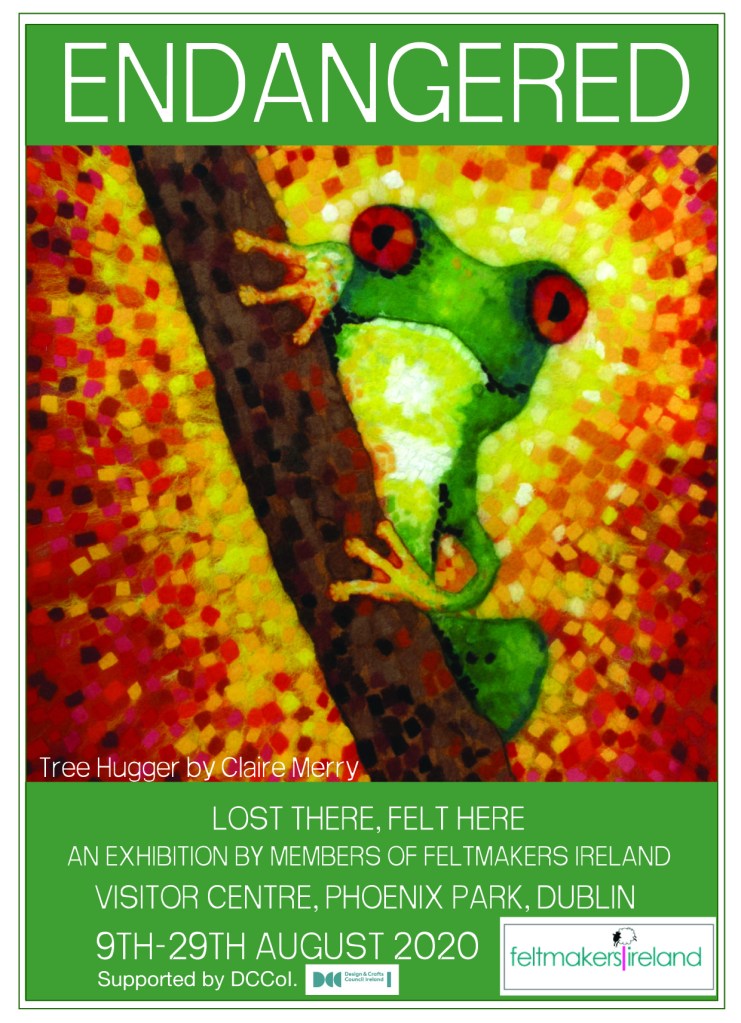
piblicity poster- created by Tamzen Lundy, featuring the work of Claire Merry.

Its been a strange and in many ways a sad year. In January when Feltmakers ireland launched the “Endangered- lost there felt here” exhibition title, we did not know and could never have imagined how changed our world would become in 2020.

A global pandemic that might endanger human life and our very understanding of how we live would evolve. Covid- 19, coronavirus, socially distant, bubbles, pods and zoom all entered our vocabulary. We became news addicts, home schoolers, front liners, essential, non-essential, unemployed.

We have had to pivot the way we work, change the way we socialise and adapt the way we think. But as Charles Darwin put it- “its not the strongest of the species that survives, but the one most adaptable to change.”

Here at Feltmakers Ireland we mourned not seeing our members and friends face to face at Sunday sessions. We tackled zoom like the best of them and have held all our committee meetings remotely.

We’ve had had to cancel the best laid plans- two workshops with international tutors travelling from Canada and Australia ( postponed) and we have had to “pivot” so much that it’s left us dizzy!

We wanted to press ahead with our exhibition plans, now more that ever the title “endangered” seemed to resonate. We had 20 wonderful entries, from dedicated craft maker, artists. Our judges have told us that the quality made their jobs very difficult indeed.

The committee decided that because of the efforts of the artists and the quality of the work received as well as a motivator to the rest of us, we would like to show you all the pieces submitted-  in an online way.

We reached out to the member makers and asked 3 standard interview questions. We hope that the work and the artists answers inspire you to keep crafting through the crisis.

Interview 1- artist CLAIRE MERRY, whose piece entitled “tree hugger” was chosen for our publicity poster, above.

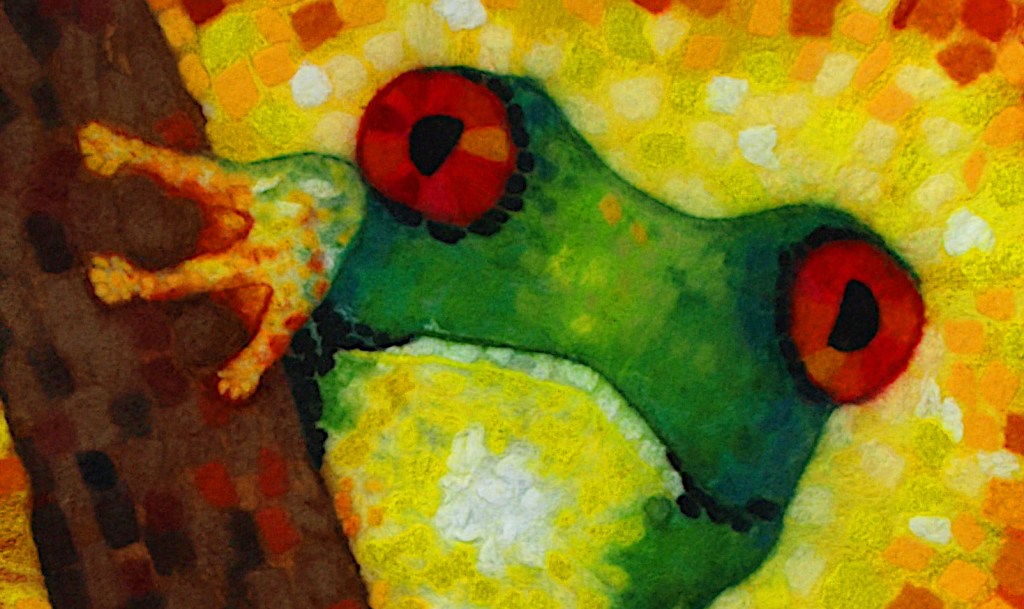
claire Merry- Tree Hugger, entry to “Endangered Exhibition 2020”

The Exhibition title “Endangered”- how does your piece respond to the title? What was your inspiration and the methods you use?

I entered two pieces to the exhibition- the first, “ Tree Hugger”- €750

These tail-less amphibians are wonderfully diverse many with fantastic colouring. Sadly many find themselves in an increasingly inhospitable world. Large numbers are listed as ‘critically endangered’. If we could all hug a tree and embrace the endangered habitats. We and the world would reap the reward.

The making of this piece-I have started playing around with mosaics recently. It’s possible to see the influence in this piece. I used prefelt to imitate tiles. 

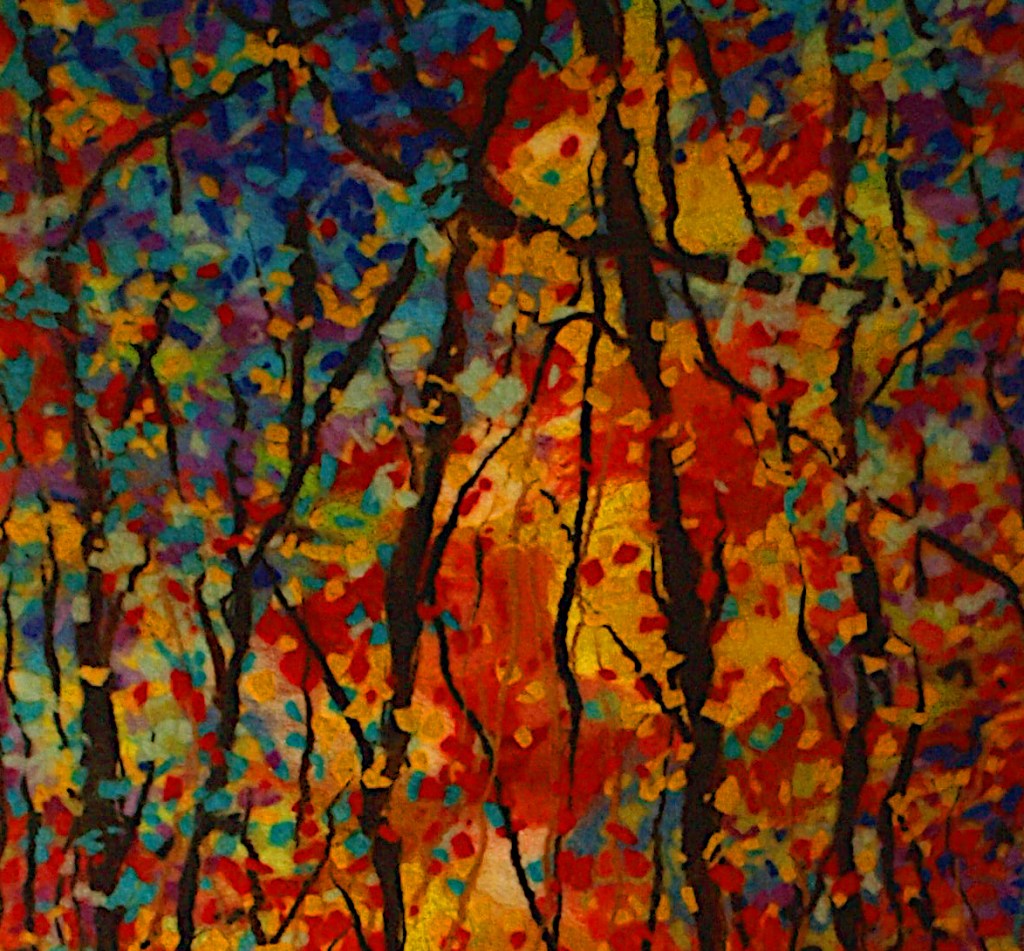
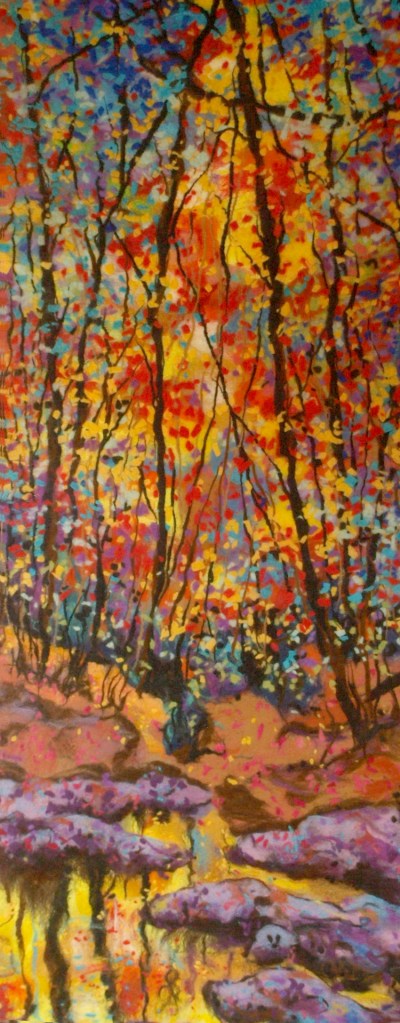
My second piece- “BEAUTIFUL SUNSET OR DEADLY FIRE”- €850. 

The impact of the fires in Australia profoundly affected me. The loss of life, human and animal, habitats destroyed, homes and land devastated. The really sad news emerged that 85% of fires were triggered by human activity including arson as well ascarelessness and recklessness. 

I thought, wouldn’t it be lovely, if we could turn everything around and celebrate a beautiful sunset and the life of of the ecosystem living there. 

I spend a lot of time laying the fibres. Then I am up and down a ladder in order to view the piece as it’s growing. I love adding prefelt to drop in colour. 

Crafting through the current crisis, with the pandemic have you found more or less time to craft, has it inspired you or have you found it more difficult?

During lockdown it was great to have crafts to divert my attention 

from the terrible news that was emerging. I was lucky to have supplies.For a craft person they are as critical as the sliced pan and loo rolls.  

It wasn’t always easy to get down to work but once I did I could ignore the news and live in my head. 

Felt- how you discovered it, what it means to you?

I describe myself as a craft butterfly. Over the years I have been involved in so many areas. Textile, jewellery, ceramics and felt. I first came across felt at Bloom in 2008 when I saw a demonstration by Feltmakers, it really captured me. I love colour and find felt is a perfect medium for it. The versatility of felt means that there is always something new to discover. 

I have had fun with 3d, needle felting and clothing. I find working on a submission stretches me and makes me try something new. 

You can see more of Claires work at www.merryland.ie

Natural Rhythms- Nancy Ballesteros Workshop

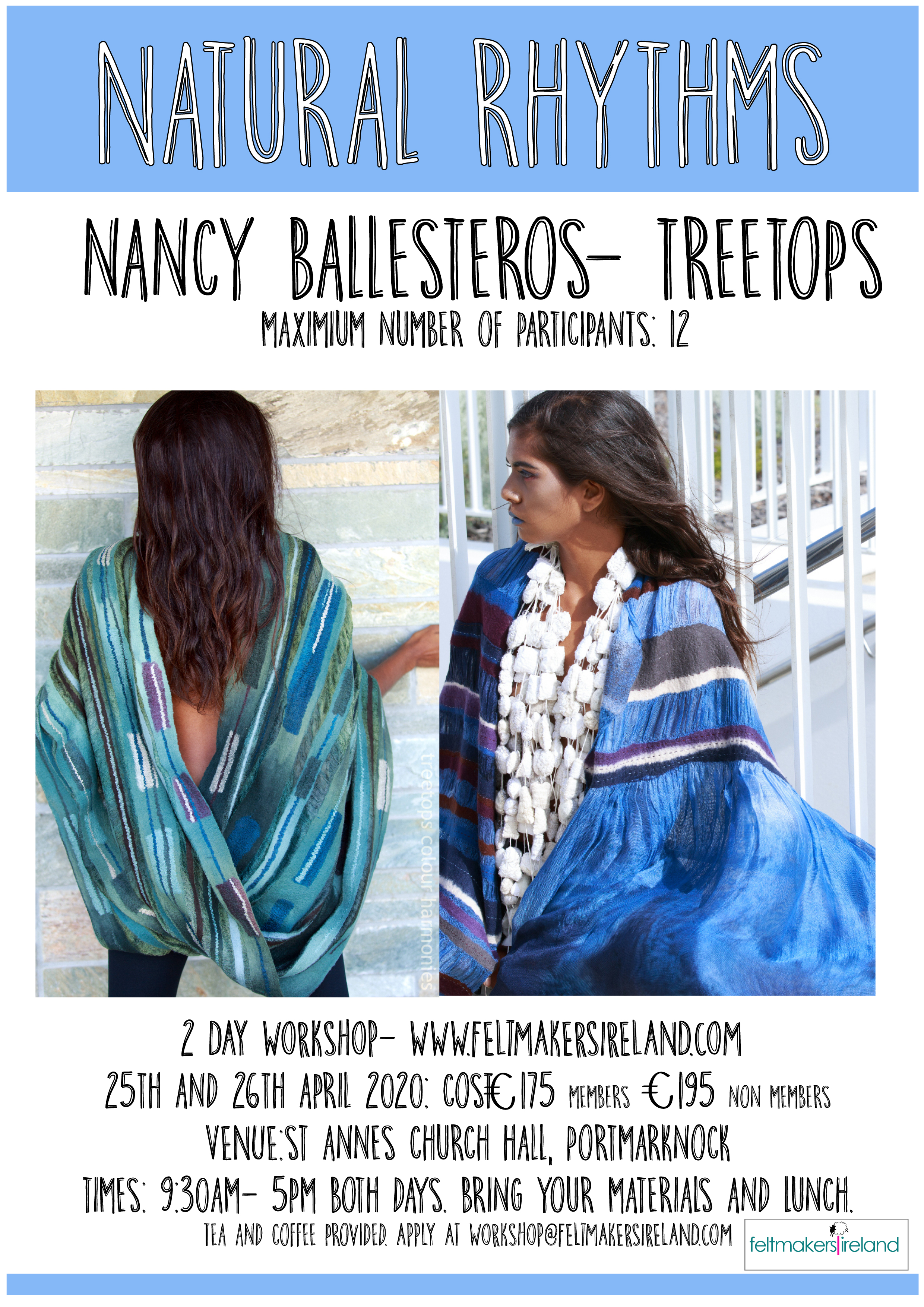
NATURAL RHYTHMS NANCY APRIL 2020Nancy Ballesteros from the renowned “Treetops Colour Harmonies” in Australia is planning a series of workshops in Europe in 2020. We are delighted to announce that she will be hosted by Felt makers Ireland on 25th & 26th of April 2020.

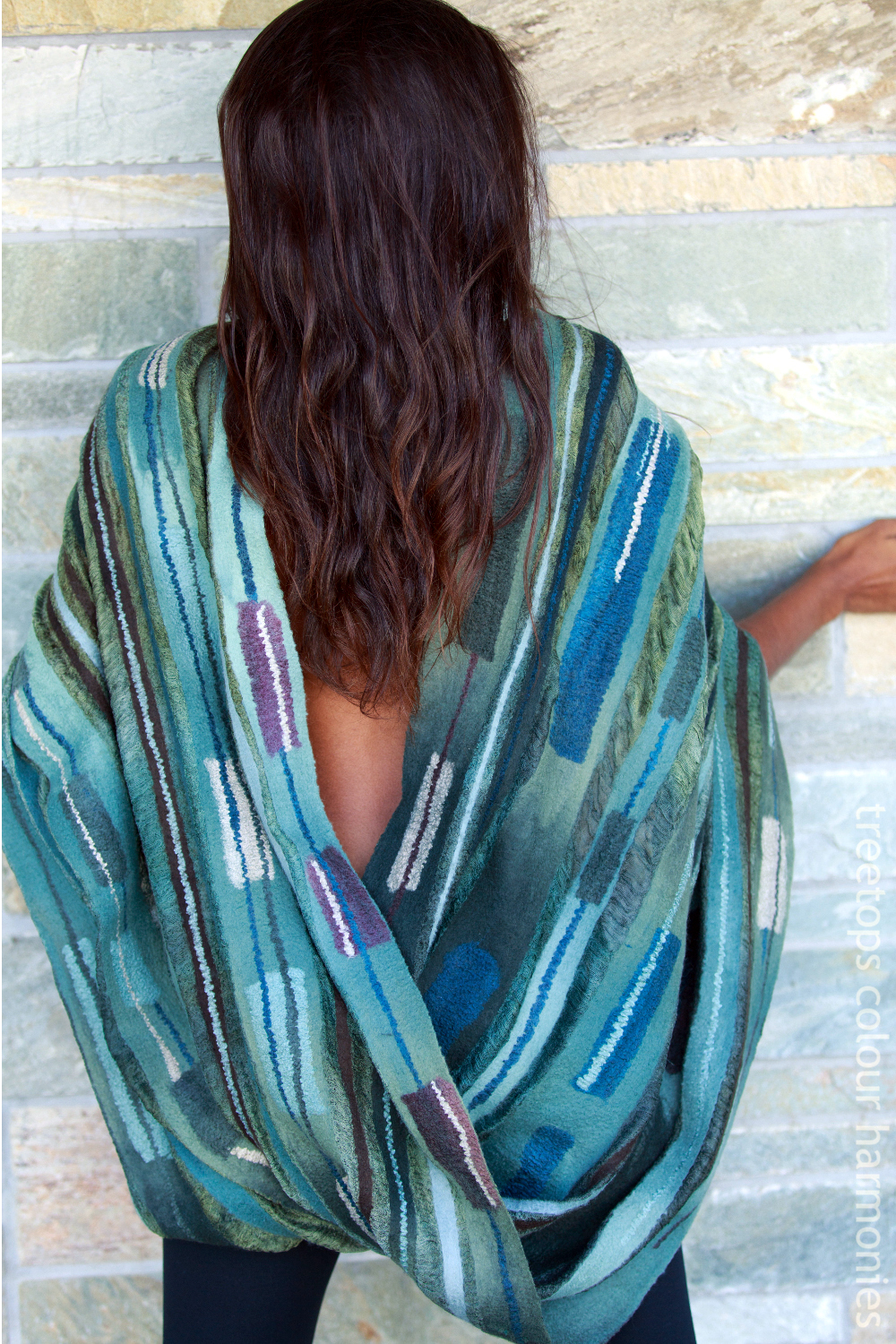
This is a 2-day workshop- of sampling and flat felt making, with particular attention on colour relationships. Suitable for all levels of felt makers. We would especially like to encourage people who attended the 2020 or 2019 Basic and Beyond session to apply… this will increase your skill level and there will be assistance available.

Last year we interviewed Nancy- read on to see her answers and be inspired.

Tell us a little about you as a person, Nancy?

I grew up in Tulsa, Oklahoma with an artistic father and creative mother who bestowed me with a love of art and textiles.  While at University I stumbled upon an opportunity to learn how to spin yarn, I took to it like a duck to water.  Spinning continued to be my passion for many years after finishing a degree first in pre-Veterinary Medicine that finally changed to Biology/Geology.  In 1986, I was made redundant from my corporate job and decided to follow my textile passions.  I began by selling handspun yarns. It quickly became apparent; however, that what people really loved about my creative efforts was the passion and flare I had for colour.  So, I decided to do just that – create colour!  In 1990, my husband Mark and I re-located to Perth, Australia where I immediately launched an international web-based business called Treetops Colour Harmonies.

I feel very lucky to be able to work ‘from a home-based studio’. We had the opportunity to purpose-build a passive solar studio/workshop into our house design. My space contains both my Treetops Studio and my own workspace intermingled. There are separate dyeing and storage areas.  My family has, in self-defence, set up “Wool Free Zones” in the rest of the house…

How and when did you start Felting?

I first learned how to felt at a spinning retreat in America. It wasn’t till I moved to Australia that I really developed my passion for felting.  Nuno felt making was just being developed by Polly Stirling. It just so happened that Polly was teaching her technique at our First Southern Hemisphere Felting Conference in Bunbury, Western Australia. That changed the course of my felt making. Nuno allowed us, in the warmer Southern Hemisphere, to make lighter weight cloth, but most of all it was the ability to create my own cloth that fascinated me!
Tell us about your process from conception to creation and what is your motivation?

In a nutshell, I love to “Investigate Ideas”.  I’m always asking myself “How”, “Why” and “What if”…  I believe it’s my science background having an on-going conversation with my Art-self.  I think about things a lot, and then I play. I like explanations, but then I’m happy to break rules…  I love creating Nuno for fashion.

NANCY BALLESTEROS (2)

What currently inspires you?

Last year, having seen some gorgeous but very expensive striped deck chair fabric, I decided to set aside a month and embark on a journey of creating Stripes! I had never much liked stripes before…! I became fascinated with the idea of “What constitutes a ‘Great Stripe’?” That question soon morphed into “HOW does one create a great Stripe design?” After experimenting a bit, I very quickly realised it wasn’t as simple as it appeared!

To stay focused on my journey, I decided that I needed the pressure of ‘going public’.  I declared that “I was going to make and post a Stripe sample every day for 30 days” – I called it “My 30-Day Stripe Library Challenge” (you can find in on my website at https://treetopscolours.com.au/natural-rhythms-30-day-challenge/). The name, after my challenge, from ‘Stripes’ to ‘Natural Rhythms’ when I realised that ‘Stripes’ were really only one part of a broader category of Linear Patterns, and my interests included both.

Along this journey, I discovered how the Fibonacci sequence was a great tool to help me design a more balanced ‘Natural Rhythm’ pattern. It also tapped into my 30+ years of working with colour theory!  Along the way, I have had to create a method of “working with wet wool” to obtain sharper linear elements.  The seeds of this idea had been sewed several years earlier when working with my Silk Hankies.

I will be teaching these ideas in Europe in 2020. There are several workshops on offer from creating your own ‘Natural Rhythms’ garment, wrap or scarf. Or you can choose to happily fill 2 or 3 days with creative play ‘Developing your own Sample Library of Natural Rhythms’ – the possibilities of colour and movement are endless!

From Felt makers Ireland, “thank you Nancy” for taking the time to complete this interview with us. We really love to learn about our fellow felters artistic pathways and do hope that we will see you face to face in Ireland in the very near future!

APPLICATION FORM FOR WORKSHOP- NOW OPEN

NATURAL RHYTHMS NANCY APPLICATIONform 2020

For more workshop details see: https://treetopscolours.com.au/more/information/workshops/  or visit my website on www.treetopscolours.com.au

You can also follow Nancy on FB and Instagram:

FB: www.facebook.com/treetopscolours

Insta: www.instagram.com/treetops.colours

NANCY BALLESTEROS3

Natural Rhythms- Nancy Ballesteros Workshop

NATURAL RHYTHMS NANCY APRIL 2020Nancy Ballesteros from the renowned “Treetops Colour Harmonies” in Australia is planning a series of workshops in Europe in 2020. We are delighted to announce that she will be hosted by Felt makers Ireland on 25th & 26th of April 2020.
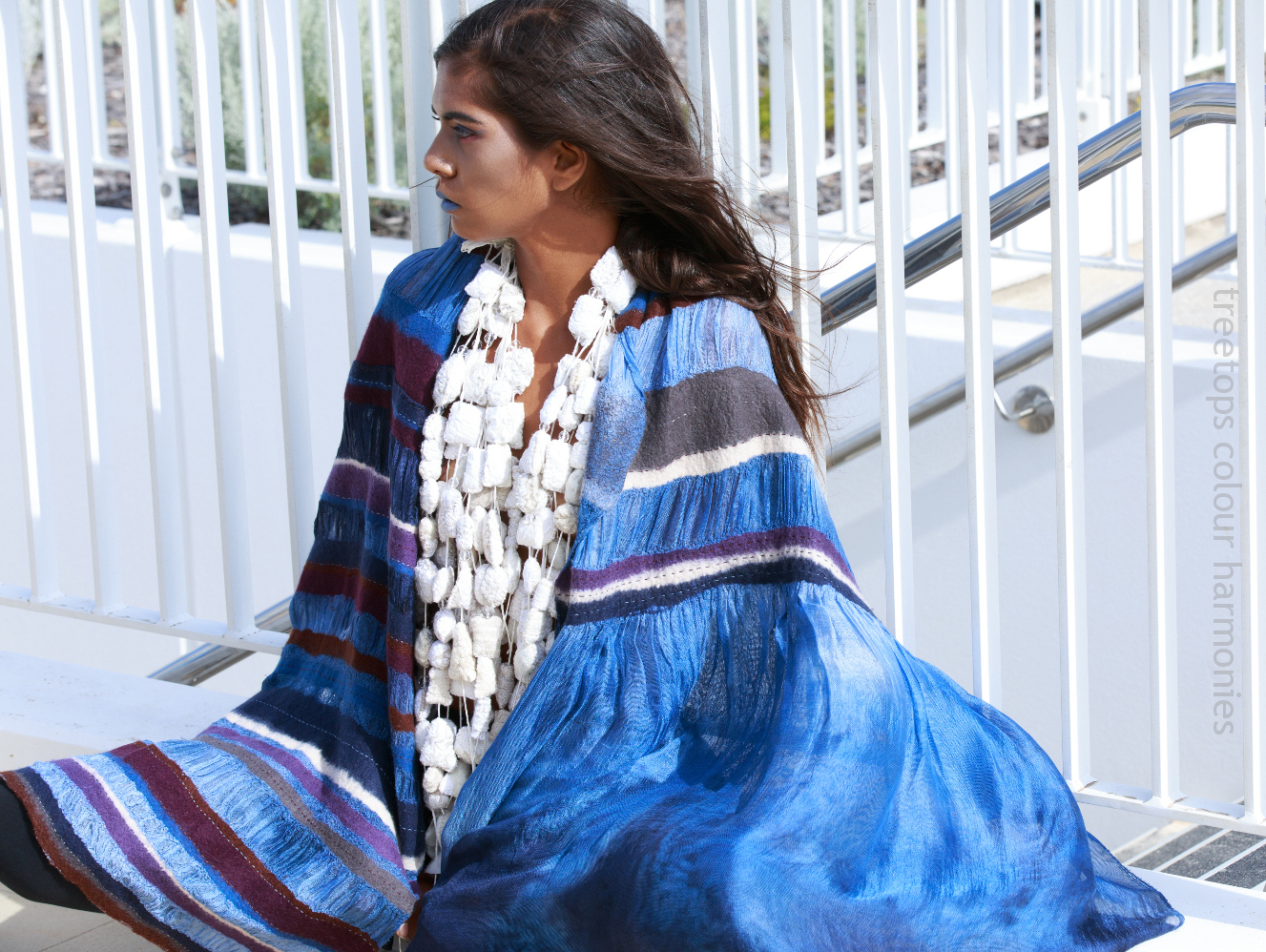
This is a 2-day workshop- of sampling and flat felt making, with particular attention on colour relationships. Suitable for all levels of felt makers. We would especially like to encourage people who attended the 2020 or 2019 Basic and Beyond session to apply… this will increase your skill level and there will be assistance available.

Last year we interviewed Nancy- read on to see her answers and be inspired.

Tell us a little about you as a person, Nancy?

I grew up in Tulsa, Oklahoma with an artistic father and creative mother who bestowed me with a love of art and textiles.  While at University I stumbled upon an opportunity to learn how to spin yarn, I took to it like a duck to water.  Spinning continued to be my passion for many years after finishing a degree first in pre-Veterinary Medicine that finally changed to Biology/Geology.  In 1986, I was made redundant from my corporate job and decided to follow my textile passions.  I began by selling handspun yarns. It quickly became apparent; however, that what people really loved about my creative efforts was the passion and flare I had for colour.  So, I decided to do just that – create colour!  In 1990, my husband Mark and I re-located to Perth, Australia where I immediately launched an international web-based business called Treetops Colour Harmonies.

I feel very lucky to be able to work ‘from a home-based studio’. We had the opportunity to purpose-build a passive solar studio/workshop into our house design. My space contains both my Treetops Studio and my own workspace intermingled. There are separate dyeing and storage areas.  My family has, in self-defence, set up “Wool Free Zones” in the rest of the house…

How and when did you start Felting?

I first learned how to felt at a spinning retreat in America. It wasn’t till I moved to Australia that I really developed my passion for felting.  Nuno felt making was just being developed by Polly Stirling. It just so happened that Polly was teaching her technique at our First Southern Hemisphere Felting Conference in Bunbury, Western Australia. That changed the course of my felt making. Nuno allowed us, in the warmer Southern Hemisphere, to make lighter weight cloth, but most of all it was the ability to create my own cloth that fascinated me!
Tell us about your process from conception to creation and what is your motivation?

In a nutshell, I love to “Investigate Ideas”.  I’m always asking myself “How”, “Why” and “What if”…  I believe it’s my science background having an on-going conversation with my Art-self.  I think about things a lot, and then I play. I like explanations, but then I’m happy to break rules…  I love creating Nuno for fashion.

NANCY BALLESTEROS (2)

What currently inspires you?

Last year, having seen some gorgeous but very expensive striped deck chair fabric, I decided to set aside a month and embark on a journey of creating Stripes! I had never much liked stripes before…! I became fascinated with the idea of “What constitutes a ‘Great Stripe’?” That question soon morphed into “HOW does one create a great Stripe design?” After experimenting a bit, I very quickly realised it wasn’t as simple as it appeared!


To stay focused on my journey, I decided that I needed the pressure of ‘going public’.  I declared that “I was going to make and post a Stripe sample every day for 30 days” – I called it “My 30-Day Stripe Library Challenge” (you can find in on my website at https://treetopscolours.com.au/natural-rhythms-30-day-challenge/). The name, after my challenge, from ‘Stripes’ to ‘Natural Rhythms’ when I realised that ‘Stripes’ were really only one part of a broader category of Linear Patterns, and my interests included both.

Along this journey, I discovered how the Fibonacci sequence was a great tool to help me design a more balanced ‘Natural Rhythm’ pattern. It also tapped into my 30+ years of working with colour theory!  Along the way, I have had to create a method of “working with wet wool” to obtain sharper linear elements.  The seeds of this idea had been sewed several years earlier when working with my Silk Hankies.

I will be teaching these ideas in Europe in 2020. There are several workshops on offer from creating your own ‘Natural Rhythms’ garment, wrap or scarf. Or you can choose to happily fill 2 or 3 days with creative play ‘Developing your own Sample Library of Natural Rhythms’ – the possibilities of colour and movement are endless!

From Felt makers Ireland, “thank you Nancy” for taking the time to complete this interview with us. We really love to learn about our fellow felters artistic pathways and do hope that we will see you face to face in Ireland in the very near future!

APPLICATION FORM FOR WORKSHOP- NOW OPEN

NATURAL RHYTHMS NANCY APPLICATIONform 2020

For more workshop details see: https://treetopscolours.com.au/more/information/workshops/  or visit my website on www.treetopscolours.com.au

You can also follow Nancy on FB and Instagram:

FB: www.facebook.com/treetopscolours

Insta: www.instagram.com/treetops.colours

NANCY BALLESTEROS3


Interview with Marjolein Dallinga

Mature tongue ,2017, Marjolein Darllinga

Later this year May 29th-31st FeltMakers Ireland will host the master felt maker Marjolein Dallinga from Bloomfelt. This should be a wonderful 3-day Felt making workshop that 12 lucky participants will enjoy. Ahead of this trip, we reached out to Marjolein to ask about her work, her feltmaking journey and what inspires her textile practice.Grey matter 2019, Marjolein Darllinga

Tell us a little about you as a person? e.g. upbringing/ where you work/ work other than felt, etc

I was born in the Netherlands, moved in my thirties to Canada, where I married, and we have three boys.

I studied History of art, psychiatric nursing and fine arts in the Netherlands.

I live with my family north of Montreal in a very small village in the middle of the Laurentiens Woods,

We live on a former farm from Irish settlers where we built a beautiful art studio.

I spend all my days on my art

How and when did you start Felting… what is your experience, tell us a little about your journey with felt?

I started felting when my first child was born,24 years ago.

I wanted to make natural toys, and felting seems to be a perfect medium for that.

I made toys from wool with the wet felting technique for years, and then it changed to wearables, costumes, and slowly to art pieces.

My meeting with the Cirque du Soleil was a major event for me; I learned and received so much from it.

Tell us about your process from conception to creation and what is your motivation? e.g. needle/ wet/nuno… for hobby/ creativity/ art/ fashion/ health

For me, felting is really a profession. I practice this art every day.

I never use the felting needles; I only use the wet felting techniques. I make some fashion items and accessories, mostly as a commission. Then, costume design for wearable art shows, theatre or Cirque. As art objects, I make sculptures in all kinds of sizes, mostly for exhibits around the world.

In the last few years, I have concentrated on very large felted sculptures. I received several grants to do different projects.

Lately, I am busy with film and stop motion with my felted pieces

I am also experimenting lately to combine felt with other mediums.

Teaching is very important to me; I like to share and meet other artists.

I feel very grateful that the wool came on my path; it has brought me all over the world and has given me so many beautiful meetings.

Pink matter 2019, Marjolein Darllinga

 What currently inspires you?

I finished an exhibit last autumn which I have worked one and a half years for.

Since I returning back home, I started to look at all my former work and realized that many pieces are not finished and need more work. I am currently working on many pieces at the same time lately with other mediums. I like to go back to painting and do more short movies with my felted pieces.

You can find out more about the work of Marjolein at the below links. We thank her very much for taking part in this interview and supplying the wonderful images of her work. Feltmakers Ireland is really looking forward to the May workshop. This workshop will be held on 29th-31st May, Venue TBC ( Dublin). The application form is not yet ready- we will inform you when the application opens.

Info

bloomfelt.com

Instagram: bl00mfelt

Facebook: bloomfelt

Pinterest: Marjolein Dallinga

Movies:

https://vimeo.com/375907238

Interview with Fiona Leech

Chance-something red
Fiona Leech

Fiona Leech is a member of Felt makers Ireland. You may recognise the piece above as it was chosen by Filtti Finland to represent the Irish submissions for the “Something Red” exhibition brochure and flyers during the summer of 2019.

I started following Fiona on Instagram last year as we both undertook the #100daysproject. This is a free project that anyone can enter with the hashtag 100days. Creatives of all disciplines commit to undertake (as the name implies) 100 days of doing something, it might be painting, poetry, photography or journaling and the Instagram community supports you; Through sharing posts and following.

Fiona works under the name @feltathome and I know that I am looking forward to seeing more of her work in 2020.

fiona leech

Tell us a little about you as a person?

I am a sixties child, born in Dublin and a mother of three. I finished school and went to college in the mid-eighties – and yes, I had the dubious hairstyles too! I studied design at what is now D.I.T. specialising in theatre set and costume design. I worked as a freelance theatre designer, occasionally dabbling in scenic art from the early nineties until around 2009.

I’ve always had a passion for textiles; knitting, crocheting and sewing from a very young age. I was taught by both my grandmothers and was loved by the nuns for my enthusiasm! My father was an architect and came from a family of amateur artists. My parents were singers too, but I definitely did not inherit that particular talent! A weird fact about me is that I get tingly sensations when I see colour and texture and can’t visit a wool shop without touching all the yarns! (Probably too much information!!)

How and when did you start Felting… tell us a little about your journey with felt?

During my time as a design tutor at Ballyfermot College of Further Education, I was constantly drawn to the textile studio and was very envious of the students. So, a couple of years after my third child was born, I stopped working in theatre and began exploring other options that would allow me to create work while being at home. I had experience of working with many different materials during my years in theatre; from timber, metal, clay, fibreglass, plaster to name but a few. I even did a bit of brick laying on set once, but it was always the textiles that I loved working with, and I tried to incorporate textiles into my designs as often as I could. I harboured an ambitious dream to knit a theatre set one day but never found the right director to indulge me! I started to doodle in notebooks, collage, paint and stitch but it wasn’t until I took myself off on a basic felt making course, given to me as a mother’s day treat, that I became really excited about so many new possibilities opening up to me. I could now make my own textured blank canvases. That was about 10 years ago and have been slowly finding my feet since with this versatile new medium.

fiona leech

Tell us about your process from conception to creation

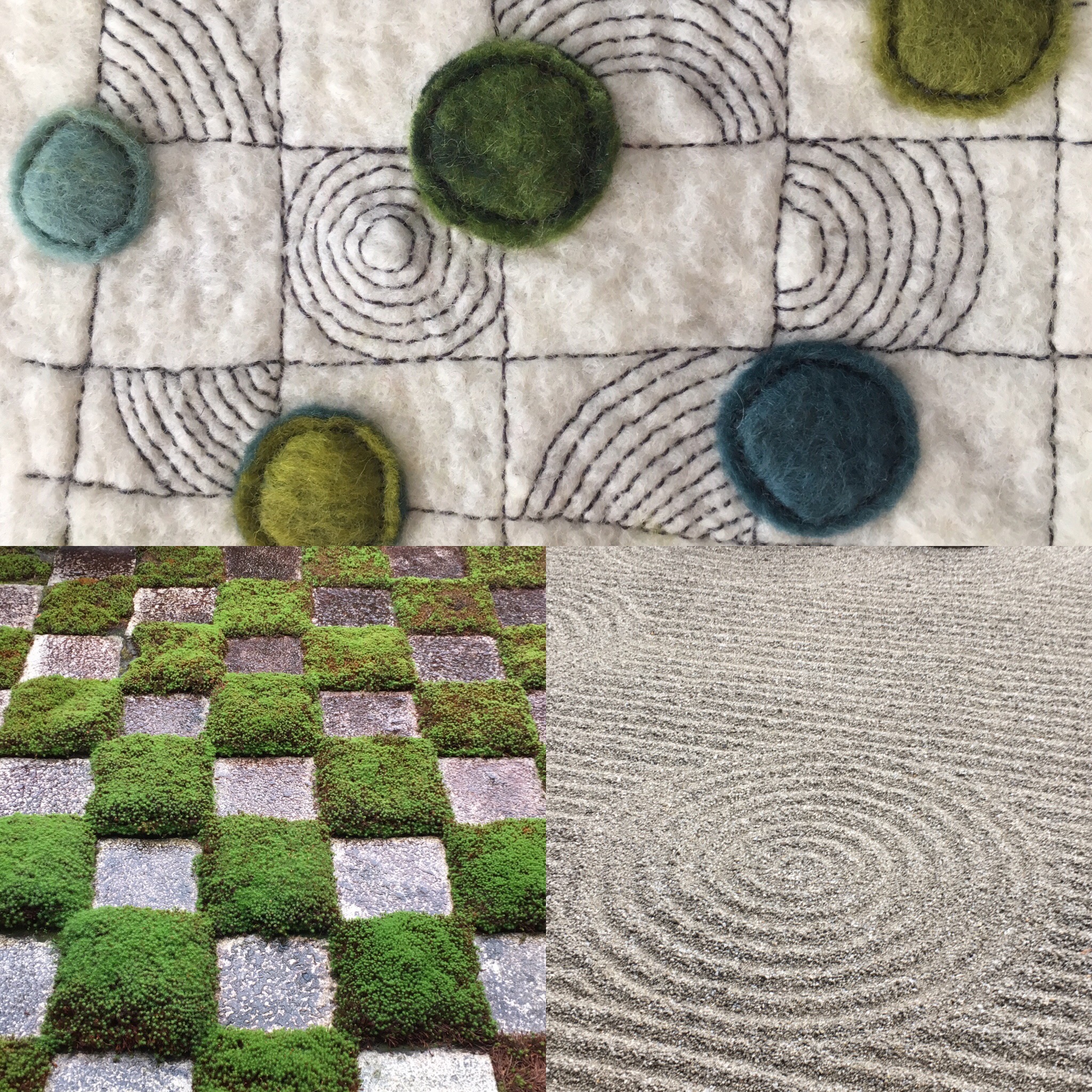
Coming from a disciplined design background, my work is mostly abstract. Quite measured. Simple with clean lines, using stitching as a drawing tool, rather like my ink pen that I used to do technical drawings with. I premake the felt that I use in batches and then chop it up, layer and stitch. Hand stitching is an integral part of my work as I like the control that I can achieve by slow stitching. The varying nature of the handmade felt background determines the unique look of each piece. I mostly make wall hangings and framed pieces.

Photography plays a large part in my creative process; I draw inspiration from the thousands of photos that I take. I love the details, the minutiae of everything from the mundane to the miracles of nature. Colour is also hugely important to me.

fiona leech 100 days

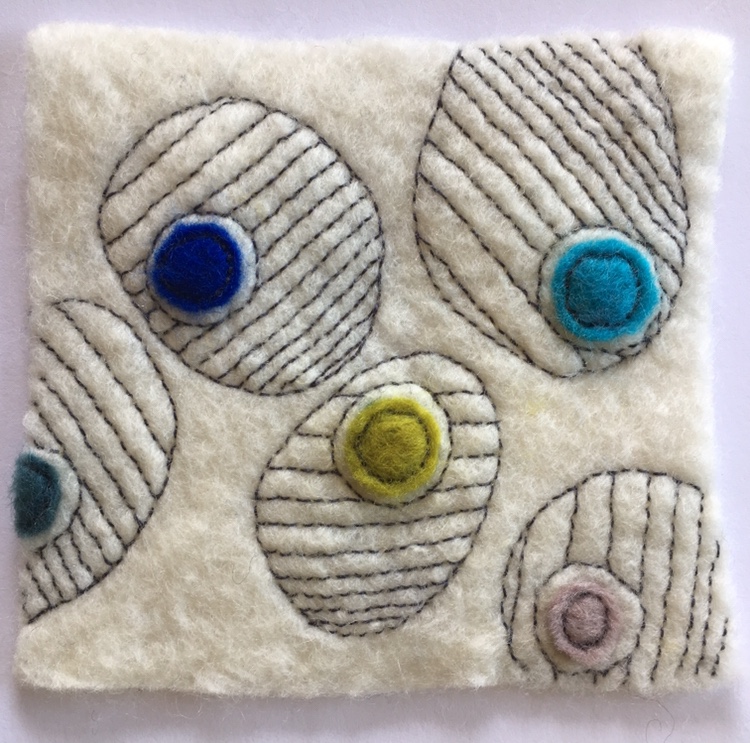
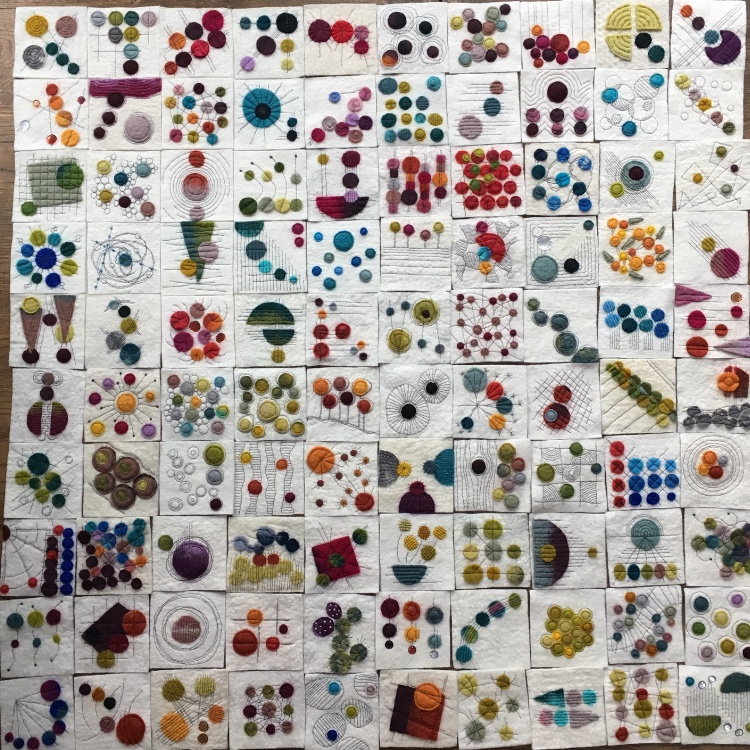
I recently took part in an online 100-day challenge to create a piece of art every day for 100 days. I’m no stranger to working within parameters, such as working with scripts, spaces and budgets so I set myself a strict brief. With the theme ‘circles and lines’ I could only use felt and threads on 10 x 10 cm felt squares. The objective was to help with intuitive creativity and force me to focus. I found the speed with which I had to work exhilarating and created something different every day. Some I love, some not so much but that’s part of the process. The project evolved in a way that I never expected. It was restrictive and challenging but hugely constructive. I’ve ended up with 100 small abstract pieces that stand alone but also work as a large tapestry of felt mosaic tiles. I now have the task of joining them all together.

Perhaps the most thrilling event of last year for me was being invited to be part of the

Felt makers ‘Something Red’ exhibition in Finland. It was exciting as I’d never exhibited anything before, and I felt honoured to have been included. Being part of the Felt makers Ireland community has opened my eyes to the amazingly talented women working with felt in such diverse ways. It’s truly inspiring and I’m looking forward to being more involved in the future.

What currently inspires you?  

I am a fan of textile installation art. The work of Sheila Hicks and Shiota Chiharu really inspires me. I see it as the perfect union of texture and theatre. I love the drama of large scale works that take your breath away. I would jump at the chance to work on such a large scale if an opportunity ever arose. But for the moment I’ll concentrate on my next venture. A simpler brief I think…..

Felt makers Ireland would like to thank Fiona for taking the time to answer our interview questions and supplying the wonderful images of her work.

You can follow Fiona’s work on Instagram

@feltathome, she often also sells at @dublin8craftmarket and in Stoney Batter

fiona leech

Interview with Yaroslava Troynich

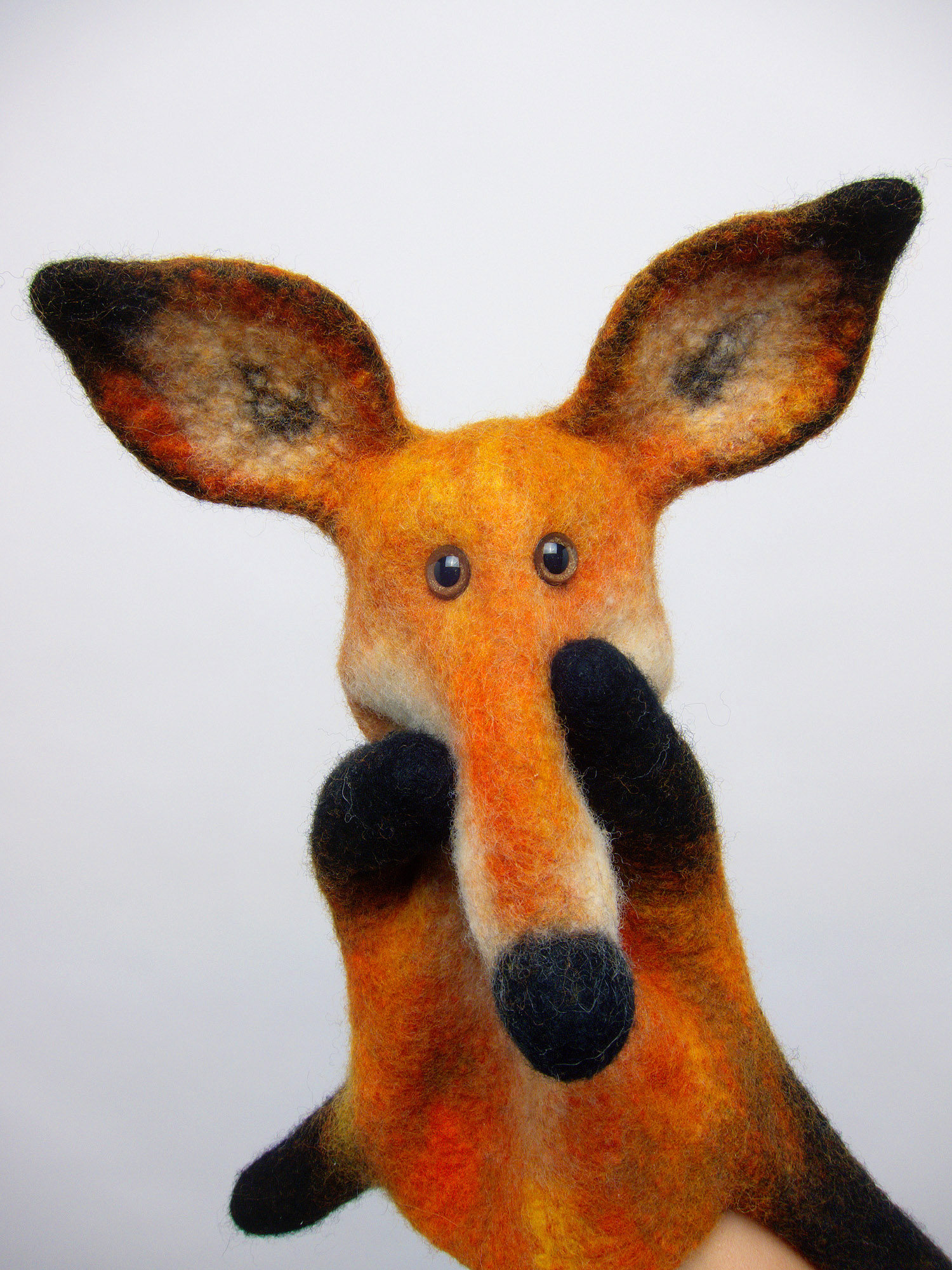
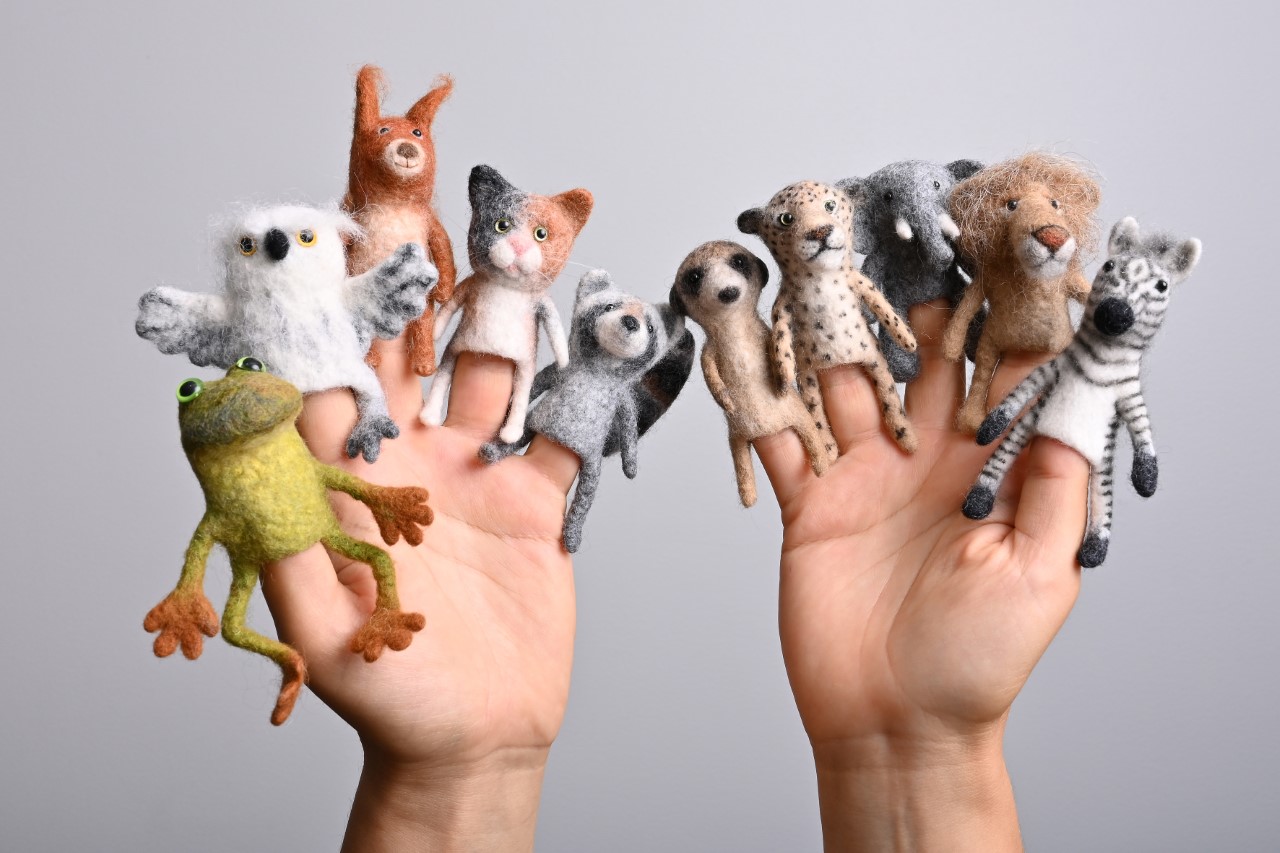
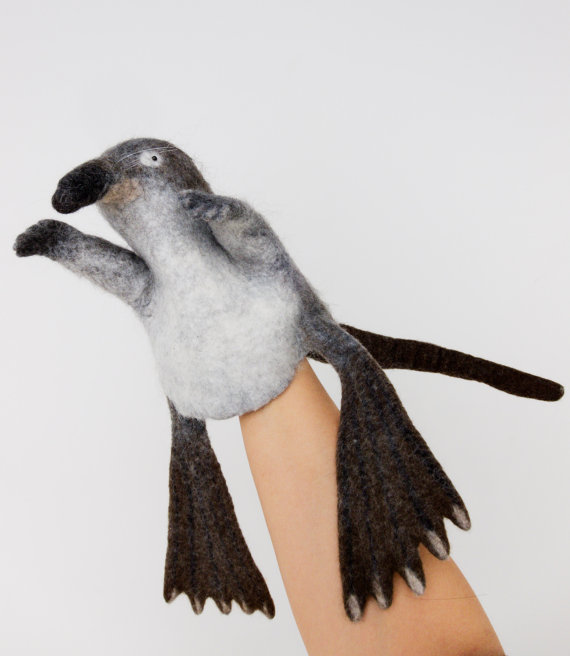
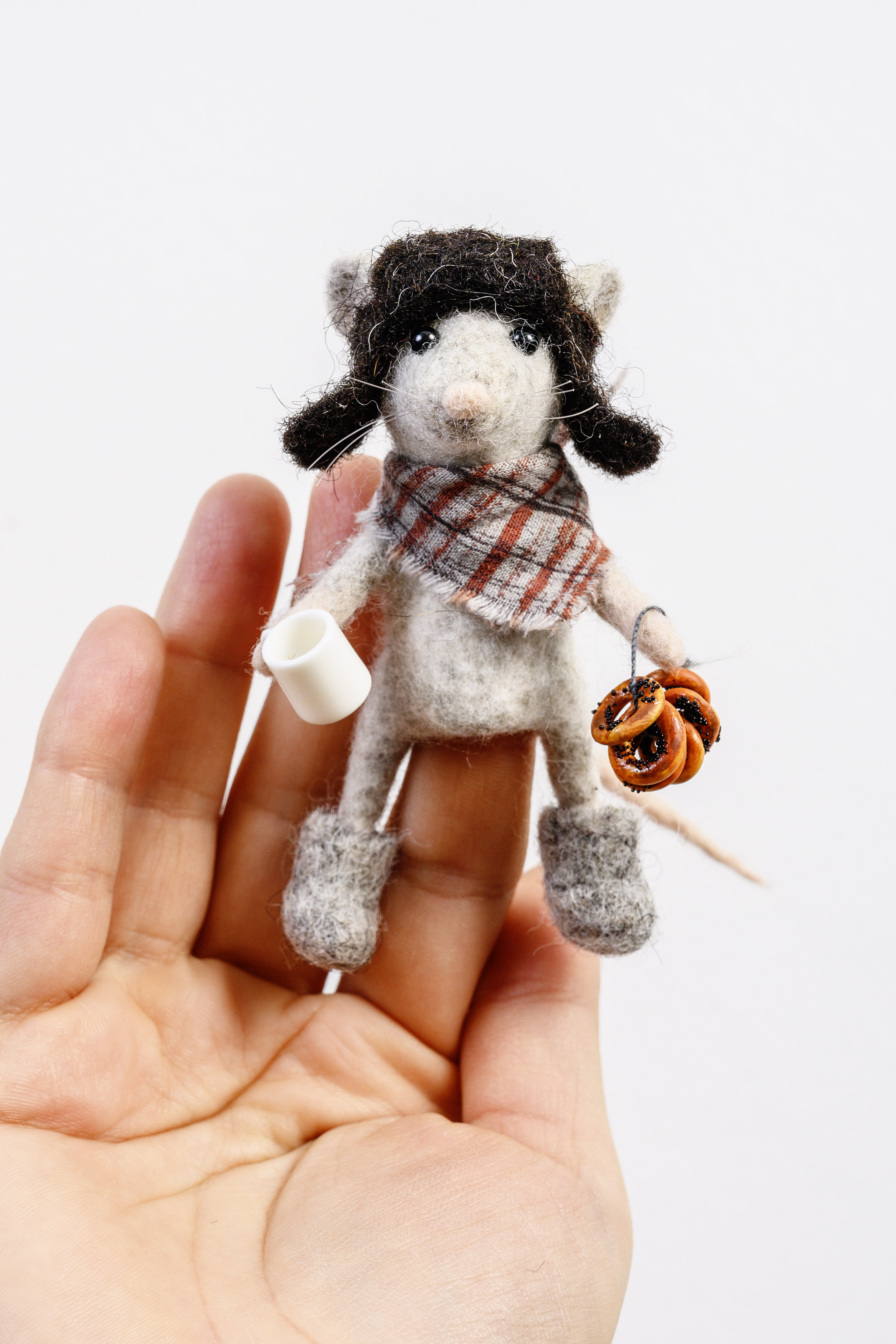
YAROSLAVA TROYNICHFelt makers Ireland follows several felt makers on Instagram to get our regular fix of inspiration. A member put us in touch with Yaroslava Troynich, a 41yr old Russian textile artist, based in Helsinki, Finland.  Her specialty is felted animal puppets. She says “this is fun textile way to worship wildlife” we decided to get in touch to find out more…

 Tell us a little about you as a person? e.g. upbringing/ where you work/ work other than textiles…

My life seems to me like a huge pile of wool, which I could transform into endless forms.

I was born in USSR and had no artistic background in my family. As a child I was fond of sewing textile toys and dreamed about art school and industrial design. The next big dream was to become a policeman to fight for justice and make the world better. However, the world itself captured all my attention so in the end I graduated from university as a journalist! For several years I have been traveling the world and contributing to Cosmopolitan and National Geographic in Russia and continued to write for local media after moving to Finland in 2007.

Most of all I loved to make stories about remote places, where wildlife, traditional lifestyles and crafts remain. The best moments of my life have mostly connected to wildlife – snorkeling with manta rays in Galapagos, planting rainforest for orangutans of Borneo or searching for the sloths in the Amazon.

Humans and wild nature cohabiting and environmental issues were always on my top interest list.

How and when did you start your textile journey… what is your experience, tell us a little…

Once in 2009 I came across of artwork done by Stephanie Metz. Her meaningful sculptures made of white wool and some experimental textile pieces were shockingly modern, pure contemporary art.

In Russia felting is very traditional craft and to me it felt quite outdated. But this was the first moment I began to look at it differently. My inner artist woke up. I tried needle felting and was amazed of wool’s ability to take any shape. But I really fell in love with wool after my first wet felted piece. The feeling of soapy babbles on my hands and witnessing of wool fibers transformation into something totally new – this magic has forever bewitched me. Quite soon I realized that I want to work with 3D-felt. In my childhood I loved “bibabo”, traditional Russian hand puppets, with their history dated back to 17 century and originated in Italy and France. Ideas came fast and naturally. My first fox puppet was born, and it felt like a real gift from textile and craft gods. Surprisingly, combination of traditional felt with traditional toy turned in to very modern and unique art object. Suddenly everything came together: my love of puppets, of wildlife and of wool. That is the story of my own transformation into textile artist specialized in felted animal puppets.

My artwork is my small personal contribution to environmental awareness. These puppets are really great communication gadgets. They help to connect parents with children, create new stories and learn new things. They have strong social position – they support environmental education and promote love to animals. My special pride if they work with ecologists in the national parks and museums and with teachers and psychologists.

I have been learning a lot from great textile artists to develop my own skills, tried new areas of textile art but nothing makes me as happy as these animal puppets. Felting process itself has great art-therapeutic effect on me. So, I do share these benefits with others on my workshops around the world. I love to teach adults and transform them into artists and kids at least for a day. This transformation is no less amazing than wool metamorphoses. Sometimes I feel that it can be my real vocation to inspire people for creating via my puppets.

thumbnail_Bibabo_Puppets_3YAROSLAVA TROYNICH

Tell us about your process from conception to creation and what is your motivation? e.g. for hobby/ creativity/ art/ fashion/ health/ money…

My strongest motivation is a game with the world, special quest. I want to explore its secrets and search for opportunities to create new, positive and inspiring things.

Almost all my ideas I draw from the nature. Weird animals, beautiful animals, endangered animals. While visiting national parks I have chance to encounter wildlife closer. Even though I don’t follow physiological accuracy in my work, I study animals a lot, examine pictures, watch nature documentaries and read about their habitats and personal lives. I am minded in spirit of minimalism, restrained Scandinavian design and naive art, so I try to create live animalistic images using as little details as possible. But I also like to add some humor or bright travel and cultural heritage inspired details to my work. Especially, I feel free with my finger puppet collection. Some animals can wear Russian felted boots at some occasions and use the laptops at their homes. This kind of art makes me play all the time. I draw very poorly, so my rare sketches look like ugly construction schemes. More often I just have an idea inside my head and then test it directly on the wool. Complicated shapes I break into many simple forms and play with it. I combine different felting technics but my main one is wet felting. There are wool, soap, water and hands only. I use a lot of different fibers for creating animal hair, especially I love hairy goat mohair. I try to make my felt durable and flexible in the same time to keep the most of mobility for the toys. Sometimes my projects involve dyeing of materials and even painting on top of the wool toys.

It is weird, but 3D objects at first are just flat and in the beginning of my journey I was too depending on the patterns and constructive solutions but nowadays I become increasingly aware of limitless sculptural opportunities of felt. You can always change, reshape, improve. Felt makes me feel braver as an artist because in this process even apparent mistake can turn in to genius idea. Besides, it is difficult to make mistake with animals – they always come out wonderful. Probably, because they are born twice – at first from the idea and wool and then again become alive on top of the hand while playing.

il_570xN.762203968_7y1s
YAROSLAVA TROYNICH

What currently inspires you? 

Lately I am passionate about the animation to give my puppets even more life and voice. It is inspiring to integrate and collaborate different types of art and creativity in to the one beautifully felted structure. Well, and sponsors of all my ideas and inspiration invariably remain wildlife and life itself, with all that everyday routine and new changes. The coolest ideas come to me when traveling or hang out in the mountains, through the forest or along the cold ocean. The Amazon jungle and Himalayan snowy peaks are my eternal favorites.  But during my life in Finland, I fell in love with the north. Perhaps the northern animals are not the most vivid and expressive as objects for creativity, but the power of life in northern nature, with its short as a flash summer, is simply unique.  This power nourishes me. In Finland, people are very respectful to their nature resources, and this gives me the feeling that I am in the right place. After all, partly my work is pure nature worship, and toys are a tribute to the nature.

Thank you Yaroslava for taking the time to answer our questions for supplying the wonderful images of your work and for providing the dose of Instagram inspiration that we need. If you want to see more follow Yaroslava at the below.

Instagram

@yara_bibabo

#yaroslavatroynich

VPP_7219
YAROSLAVA TROYNICH

Interview:Tara Kennedy for Feltmakers Ireland

Tara Kennedy_ Awakening Belief_ 300dpi_ Photo by Beyton ErkmanAs part of our interview series and as we look forward to the Knit & Stitch show, Feltmakers Ireland is reaching out to participating and exhibiting artists. Tara Kennedy kindly agreed to respond to our interview questions about her journey and work. We have included links to her social media accounts at the bottom. Be sure to check out this inspirational artist.

 Tara Kennedy for Feltmakers Ireland

 Tell us a little about you as a person? e.g. upbringing/ where you work/ work other than textiles…

Ever since I can remember I have only ever been interested in the creative arts. As a child I always had a pencil in my hand, drawing at every opportunity. Having a mother with an interest in the arts and supervising children’s art clubs she would spend time with me making and creating all kinds of creations. She always had a sewing machine, (and still does), with a little old chest of drawers next to it, full of sewing and crafting bits and bobs including a little lidded basket full of buttons. I now have this chest and the basket is full of much the same. She made endless clothes for both me and my sister and even for our dolls and toys as well as most of the soft furnishings for every room in the house.  With all this creativity surrounding me I found it comforting and inspiring.

Tara Kennedy_ Hope Emerging_ 300dpi

How and when did you start your textile journey… what is your experience, tell us a little…

I went straight to Art college as soon as I could, happy to leave the constraints of school behind. I studied fashion and textiles for 4 years at the Berkshire College of Art and Design specialising in Knitwear. In my final year I was sponsored by two yarn companies who gave me huge quantities of yarn on cones, many of which I still have and use. I was also given lots of embroidery threads and wools from a great Aunt who was a big cross stitch enthusiast and I have been using many of these in my work ever since. I like the idea of using these old materials, along with recycling many other unwanted textiles to create unusual surface decoration, something I became fascinated by.

After graduating I set up my own knitwear business. A year later I went into partnership with Tim Kennedy, a fellow student and who a few years later I married. We developed our business adding items for interiors, selling at craft fairs and in small gift shops and galleries.

Over the years I developed, added and altered what I made but knew I only ever wanted to create art working for myself. After many years, my sales started to fall as the British handmade craft industry struggled against cheaper handmade imports. I was also starting to feel my work was becoming repetitive and undemanding and felt the need to challenge myself and develop more as an artist, free from commercial restraints. This was a turning point for me and decided it was the right time to move my work in a more meaningful direction.

Tara Kennedy_ Empathy_ 300dpi_ photo by Beyton Erkman

I came across the OCA, Open College of the Arts, and enrolled in a distance learning BA in Creative Arts, specializing in Fine Art and Textiles. This course was very convenient at the time, enabling me to wind down my craft business at the same time and have a small part time job, which I still have to this day. The course opened new and exciting ways of working, using new materials and helping me to be freer and more experimental. It was a valuable experience requiring both dedication and self motivation. My studies developed around subjects of personal identity with the contrasting cultures and religions of my ancestors having a big influence on me. It led me down an intriguing path of Eurasian studies, embracing politics and history, social and cultural change. These concepts had become an integral part of my work and I felt I had only just touched on the surface of ideas. I needed to develop this theme further, so I applied for an MA in Textile art at the University for Creative Arts in Farnham. This turned out to be the best thing I have ever done!  Being able to explore any creative pathway of my choosing and making whatever I desired was an incredible luxury and a significant journey.

Tell us about your process from conception to creation and what is your motivation? e.g. for hobby/ creativity/ art/ fashion/ health/ money…

My main motivation would have to be the reaction I have from creating and making. The feelings of comfort, tranquillity and wellbeing that come with the process is invaluable.
The work I undertook on the Masters course is the basis of my current work which continues to develop and change. My initial inspiration came from a need to express this unity of my mixed cultural heritage which then evolved into being less personal and became an expression of humanitarian unity. I made extensive research examining different cultures and religions in conflict and the effects of their suffering. The despair I feel of this suffering from conflict drives me to express important messages of acceptance, empathy and hope.  I feel It’s possible through understanding these messages there could be more harmonious outcomes in the world.

My present work now is about creating expressions of hope emerging from this pain. I aim to leave an impression on the viewer, causing them to contemplate and consider but it’s not essential to me they understand what it’s about. People see different things and I find it intriguing to hear their views and how it makes them feel.

My sketchbook has been invaluable in helping me to progress and develop my ideas. I collect information connected to my theme alongside related images of colour, form and texture and use these to help create ideas. I then make numerous drawings, creating shapes, patterns and forms in various scales, out of which designs for finished pieces transpire.

Tara Kennedy_ Hope Emerging detail 1_ 300dpi

The materials I use are chosen for their soft tactile quality to create a comforting feeling which include yarns, threads, carded wool and fabrics. I use various techniques including knitting, wrapping, felting, knotting and stitch depending on the expression, for example I often use knotting to convey tension, felted holes to express suffering and shibori felting to suggest buds of hope.

I have also realised how significant process is and how the act of wrapping and binding not only feels therapeutic but adds to the feeling of protection and healing.

The designs of my pieces take the forms of soft sculptures, wall hangings and more recently works on canvas. I use the imagery of cages suggesting protection, bundles and wrapped lengths conveying togetherness and trailing lengths to convey the spreading of hope.

Colour is also central for the expression, using blood red to suggest suffering and ivory to convey hope and often using a graduation of the colours from one to the other.

I also create detailed drawings which provide an alternative viewpoint and compliment my 3D work.

Tara Kennedy_ Continuous_ photographed in Somerset_300dpi

What currently inspires you?  

My work will continue to evolve, and I hope to work on many different concepts. In fact, I am presently planning other work on a very different theme after undertaking a month’s art Residency at the Textile Centre in Blonduos, Iceland with the ‘Textile Echoes’, a group of four textile artists. My work as a textile artist is usually inspired by emotional connections so the idea of coming to Iceland and using landscape and nature was to be a new and exciting challenge. After a few weeks of trips out exploring in the north I finally discovered the emotive feeling I had been hoping for.  The awareness of immense space from the endless landscape became increasingly overwhelming. Being totally absorbed by these incredible surroundings and the continually changing scenery I started to develop some ideas for a piece expressing these sensations. It was important to me I use solely Icelandic materials applying all the colours of the land from the black sand of the beaches to the imposing white snow topped mountains and everything else in-between.

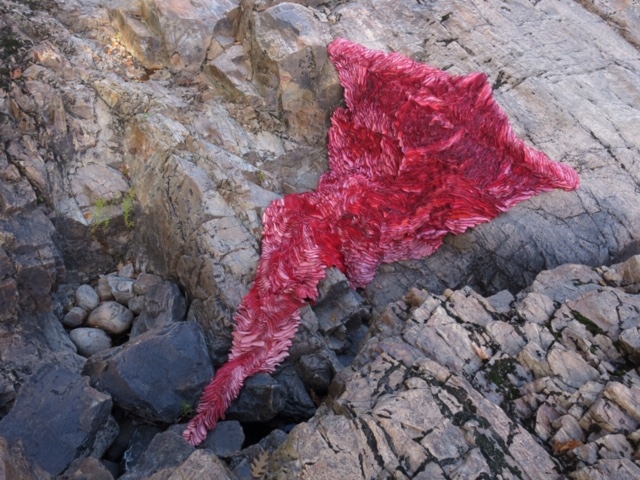
From all this inspiration I created a 37-metre-long wrapped piece using Icelandic yarn, horsehair, raw sheep’s wool, fish skins and yarn dyed from Icelandic plants. By making such an extensive piece using a repetition of technique it helped me to express this continuous landscape.

I took the final piece to the coast, a short distance from Blonduos, and photographed it stretched out along the shoreline. It felt appropriate and was perfectly positioned amongst all the colours involved.

This piece is just the start of new making, working with landscape, experimenting with natural dye and natural materials. Wool will always feature in my work, as my favourite material whether felting, knitting, stitching or wrapping it.

Thank you so much to Tara Kennedy for taking part, for your inspirational images and work. We look forward to seeing and hearing more.

Website: www.tarakennedy.co.uk

Facebook:@tarakennedytextileart

Instagram:@tarakennedytextileart

Tara Kennedy_ Becoming_ 300dpi