Event: Feltmaker Needed – Wool and Primary Producers’ Stand – Dingle Food Festival

The Irish Grown Wool Council, established in April 2023, will be hosting a
marquee at the Dingle Food Festival this Saturday, the 30th and Sunday the 1st, in
association with local Primary Producer Farmers.

They would like a member of Feltmakers Ireland to demonstrate feltmaking to the Food Festival’s visitors. They will also be selling copies of the Guild’s recently published book, ‘Exploring Irish Wool for Feltmaking’. {See the bottom of this post for contact details}.

The Irish Grown Wool Council’s VISION is:
“Bringing Wool stakeholders across the Island of Ireland together to realise the potential of wool as a natural, sustainable and versatile material, by building on its rich heritage, enhancing understanding and appreciation of the characteristics of Irish Grown Wool, facilitating collaboration in product/market research and ultimately applying innovative product solutions to address current challenges and create future opportunities.”

The Wool Council will have various displays on wool products ranging from beautiful textiles handcrafted by local artists, right through to Wool Insulation, which is made using waste wool as part of our circular bio-economy drive under our sustainability slogan – “Waste is a resource in the correct hands”.

MTU Tralee Circular Bio-Economy Southwest Cluster (Catriona Power) hosts the recently created, virtual Wool Research & Innovation Hub and will outline wool research being done by the R&I Hub.

The Dingle Hub, represented by Dinny Galvin, will be doing a display and talk on how, if we had a Biodigester on the Dingle Peninsula or elsewhere in Kerry Irish wool could be scoured locally at scale. Wastewater from washing could be a valuable feedstock for the Biodigester. The UCC team investigating the use of wastewater from a mooted local scouring plant in a biodigester will also attend.

If you are in Dingle for the food festival, call in at the marquee to see our products and meet the makers. Stay for a discussion on how we may develop the wool industry and hopefully get farmers a better price for our wool.

The marquee (stall 56), is based in Orchard Lane, beside Jerry Kennedy Butchers.

For and on behalf of the Irish Grown Wool Council,

Pat Byrne – Chairman

To arrange to demonstrate feltmaking at the festival, email Pat – pat.byrne@theagileexecutive.ie
Vendor Opportunity: Sheepdog Trials 2023

Feltmakers Ireland received this announcement and thought it may be of interest. We do not know the organisers.

Taking bookings for the International Sheepdog Trials 2023, which is being held in Blessington at Three Castle Farm on the 8th, 9th and 10th of September.

The world of sheepdog trialling may be unfamiliar to some, but The International Sheepdog Trial is known around the world as one of the largest events in the sheepdog calendar. The event will attract a global audience and is hoped to give a significant boost to the local economy.

The International Sheepdog Trial 2023 is designed to test the best working dogs’ abilities in an environment close to true working life​. 

The event will showcase the talents of 60 dogs from across Ireland, England, Scotland, and Wales. These 60 dogs will consist of the top 15 dogs selected from each nation’s National Trial, which will take place throughout July and August.

​The International Sheep Dog Trial is the pinnacle in the sheep dog trialling calendar, and its venue rotates around the four nations yearly, with Ireland being lucky enough to be the host Nation for 2023.

It’s going to be a big event with a family day out, and as this trial attracts people from the continent, too, it should be a nice event for crafters. This event is only coming to the south of Ireland every 8 years.

All sorts of crafts are welcome. We love to get crafters with wool, as it is a sheepdog trial, and for crafters that have anything that has to do with sheep or sheepdogs in their creativity.

There is a trader application form to be filled out to ensure your spot. The price for a 3X3 place is 200 euro for the 3 days. (You have to bring your own marquee.)

Here is the link to the trader application form – https://www.electricevents.ie/sheepdog-trials-trader-application-form

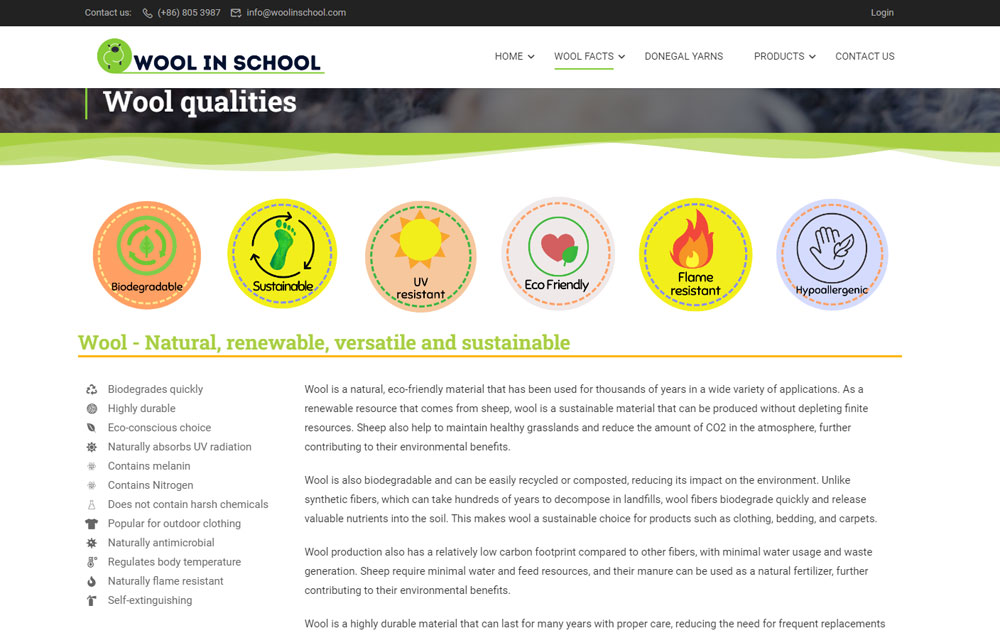
FYI: Wool Facts via Wool in School website

Wool in School is a wool-inspired education company. They are committed to increasing the awareness of wool’s production and sustainable qualities in the school, home, and community environment. They sell colourful display boxes for classrooms containing fun, educational and creative resources, making it easy for teachers to integrate wool education into their curriculum. Additionally, they have kits for families.

They also have a wonderful fact page all about wool. Did you know that wool is UV resistant?

To learn more, visit their website – https://woolinschool.com/wool_qualities/

From Wool in School website

Exhibition: Oltre Terra – Why Wool Matters in Oslo, Norway

The Nasjonalmuseet has an exhibition that should be of interest to many feltmakers!

In “Oltre Terra. Why Wool Matters”, the multidisciplinary design studio Formafantasma investigates the history, ecology and global dynamics of the extraction and production of wool.

“Oltre Terra. Why Wool Matters” brings together various items relating to sheep farming and the wool industry: paintings, textiles, photographs and videos. A 1,700-year-old tunic, goat masks, and a commissioned video work by artist Joanna Piotrowska are just some of the objects on display. At the centre of the exhibition, visitors are invited to relax on a large carpet made of a type of wool that would normally be discarded by the wool industry. There is also plenty of research material that lets you delve deeper into the exhibition’s topics.

If you are unable to get to Norway, you can explore the exhibition in 3D – https://my.matterport.com/show/?m=4H2AHHF16o5

Additionally, there are five short audio recordings about sheep and wool that you can listen to – https://www.nasjonalmuseet.no/en/guide/oltreterra/

The exhibition runs through the 1st of October.

For more information, visit the website – https://www.nasjonalmuseet.no/en/exhibitions-and-events/national-museum/exhibitions/2023/oltre-terra.-why-wool-matters/

Event: Connemara National Park Celebration – July 1st

Via Suzanna Crampton on the Irish Wool Discussion Group on Facebook –

Connemara National Park will be celebrating its twinning agreement with Terra Nova National Park, Newfoundland, Canada, by undertaking a Heritage Event on Canada Day, the 1st of July 2023.

Among the day’s events is a focus on sheep and wool.

  • The staff in Connemara National Park have been instrumental in efforts to regenerate the Cladoir breed of sheep which was once found throughout Connemara but was pushed to the brink of extinction in recent years. The Cladoir sheep were known to have had fine wool which could be knitted or woven and was an important reason why the breed survived. To celebrate the importance of the wool for the regeneration of the breed, hand shearing of our Cladoir sheep flock will take place throughout the day, with the wool processed on-site in order to have a finished hand-knitted garment by the end of the day.
  • Connemara National Park holds a number of Heritage Breeds which include: Connemara Pony; Cladoir sheep; Galway Sheep; Irish Maol Cattle; and Old Irish Goat. A representative of each of these Rare Breeds Societies will be on hand to discuss each breed’s importance.

For more information, please contact the Visitor Centre on 095 41054 or 087 2919721

For a full schedule, visit the website – https://www.nationalparks.ie/connemara/special-heritage-event-on-july-1st-2023/

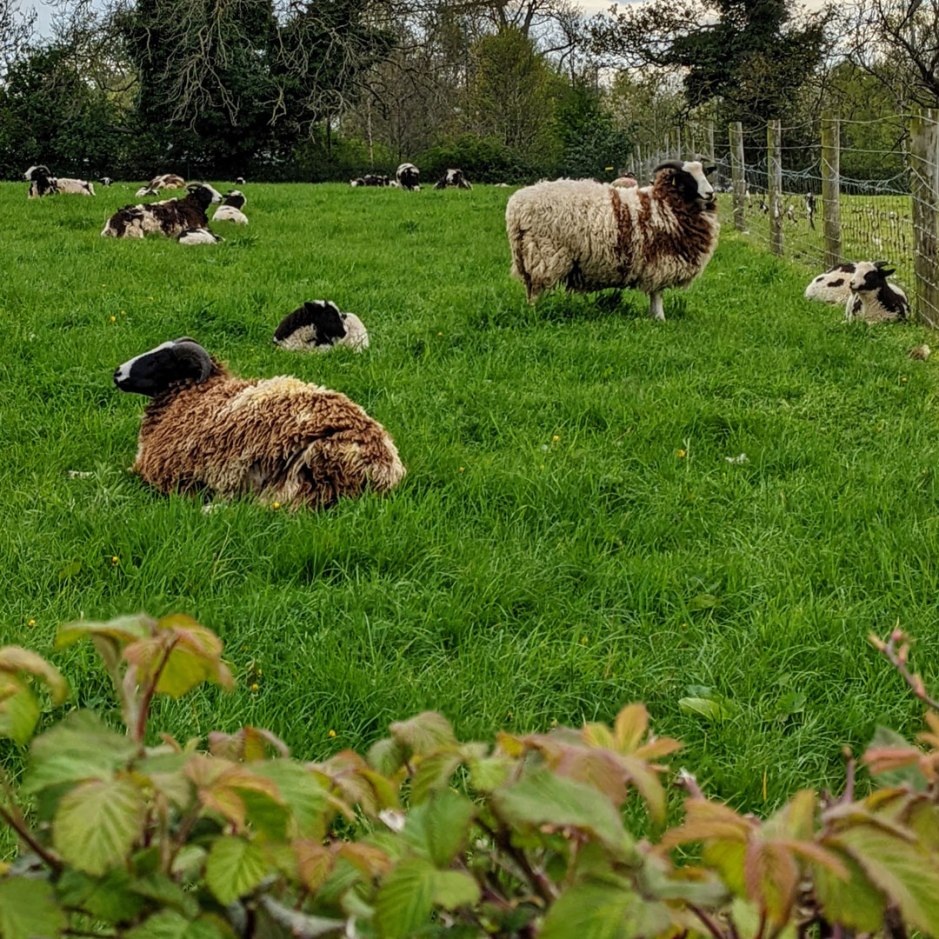
Cladoir photograph from Feltmakers Ireland’s book, ‘Exploring Irish Wool for Feltmaking’

News: Research and Innovation Hub to Support Irish Grown Wool Council

A newly established research and innovation centre, the Wool Hub, has been set up to offer technical knowledge and expertise to the newly formed, all-island Irish Grown Wool Council (IGWC). The hub aims to assist farmers, sole traders, enterprises, and anyone interested in maximising the potential of this natural Irish-grown resource by providing research, development, and innovation support.

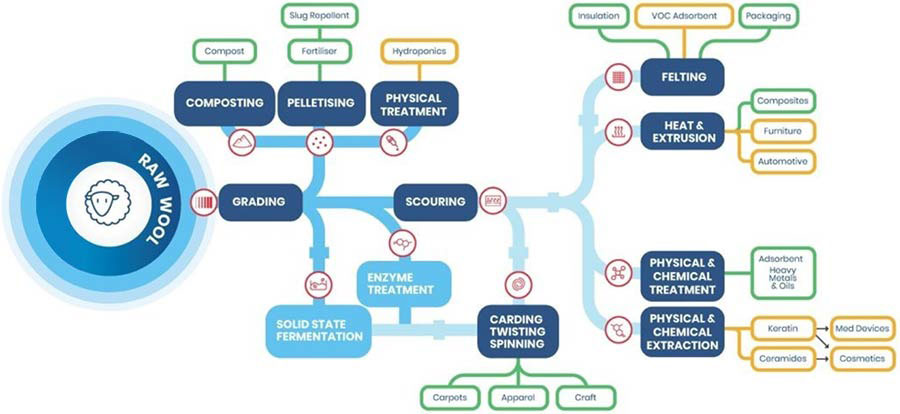
Image of the Uses of Wool via the Circular Bioeconomy Cluster Southwest, MTU. (Note that there is Craft and Felting, but they are disconnected).

Technical aspects of the Wool Hub will be facilitated by the Circular Bioeconomy Cluster Southwest at Munster Technological University (MTU), Tralee. To learn more, see this article on Agriland.

Happening Today: 3rd European Wool Day

The 3rd EUROPEAN WOOL DAY starts Sunday, April 9, in Zlatibor, Serbia, at 14:00, Central European Time.

If you cannot make it to Serbia, this hybrid event can be watched via live streaming at the EWE Foundation‘s YouTube channel: HERE.

A PDF of a schedule of the day’s events can be found HERE.

The film ‘The Legacy of Brigid: Irish Women in Wool’ by Deirdre Lane, ShamrockSpring, Ireland, is scheduled to be screened at 19:10, Central European Time. Feltmakers Ireland and our upcoming book, ‘Exploring Irish Wool for Feltmaking’ will hopefully be included, as we were part of the event in March.

Also included are presentations by Sandra King of Irish Fibre Crafters on the Wool Shop and Mandy Nash, who will share the International Feltmakers Association’s book ‘British Wool for Feltmaking.’

Recap: 2023 February Sunday Session at CIE Social Club, The Works, Inchicore (Irish Wool Edition)

Clodagh McDonagh writes the blog about our February Sunday session. Thank you, Clodagh!

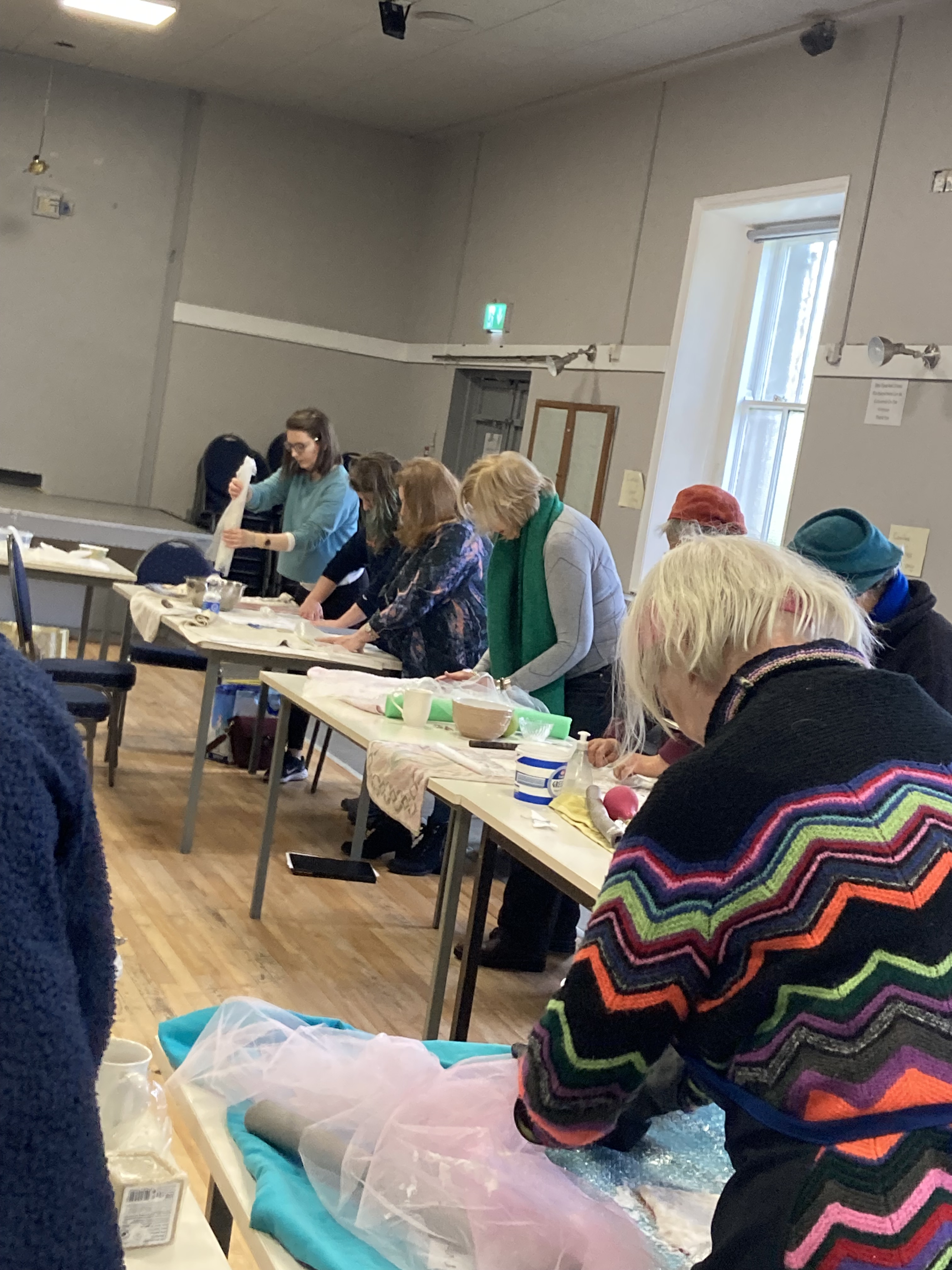
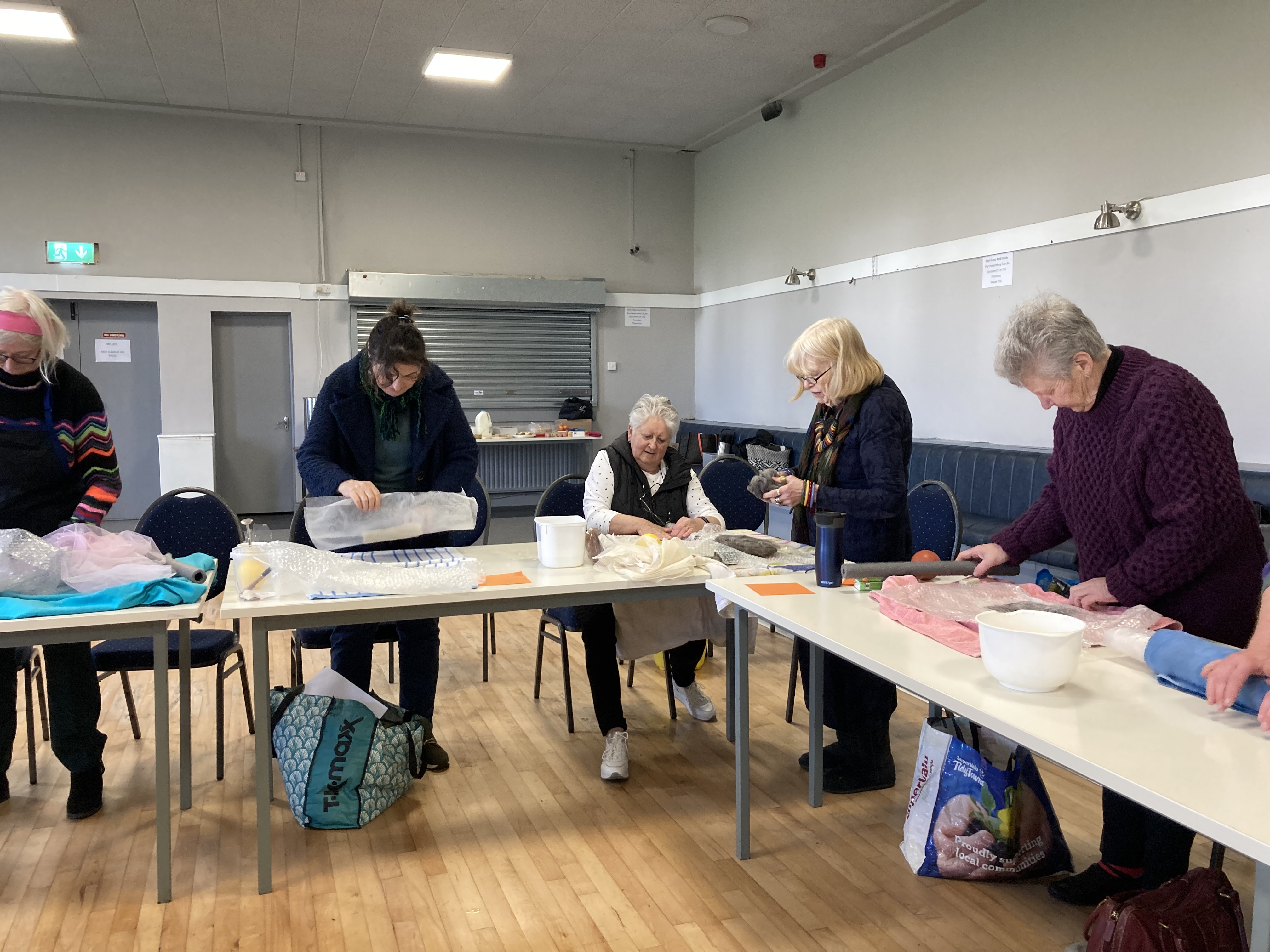
There was a great turnout on the first Sunday Session of 2023 , on 12th February, for a very busy `hands on` double session with Annika Berglund, and South African sheep and Alpaca breeder, Grant Bartholomew.

Many of you will have heard about FI’s project exploring the  possibilities of sheep`s  wool available to us here in Ireland. Annika is to be really commended for the hard slog that she and her wool project team has put in over the last two years studying ,learning and trialling many of the various indigenous and local sheep fleeces available here, with their particular properties, and possibilities. A book is in the works, full of useful information and practical tips, based on the wool group’s research, which will be released very shortly.

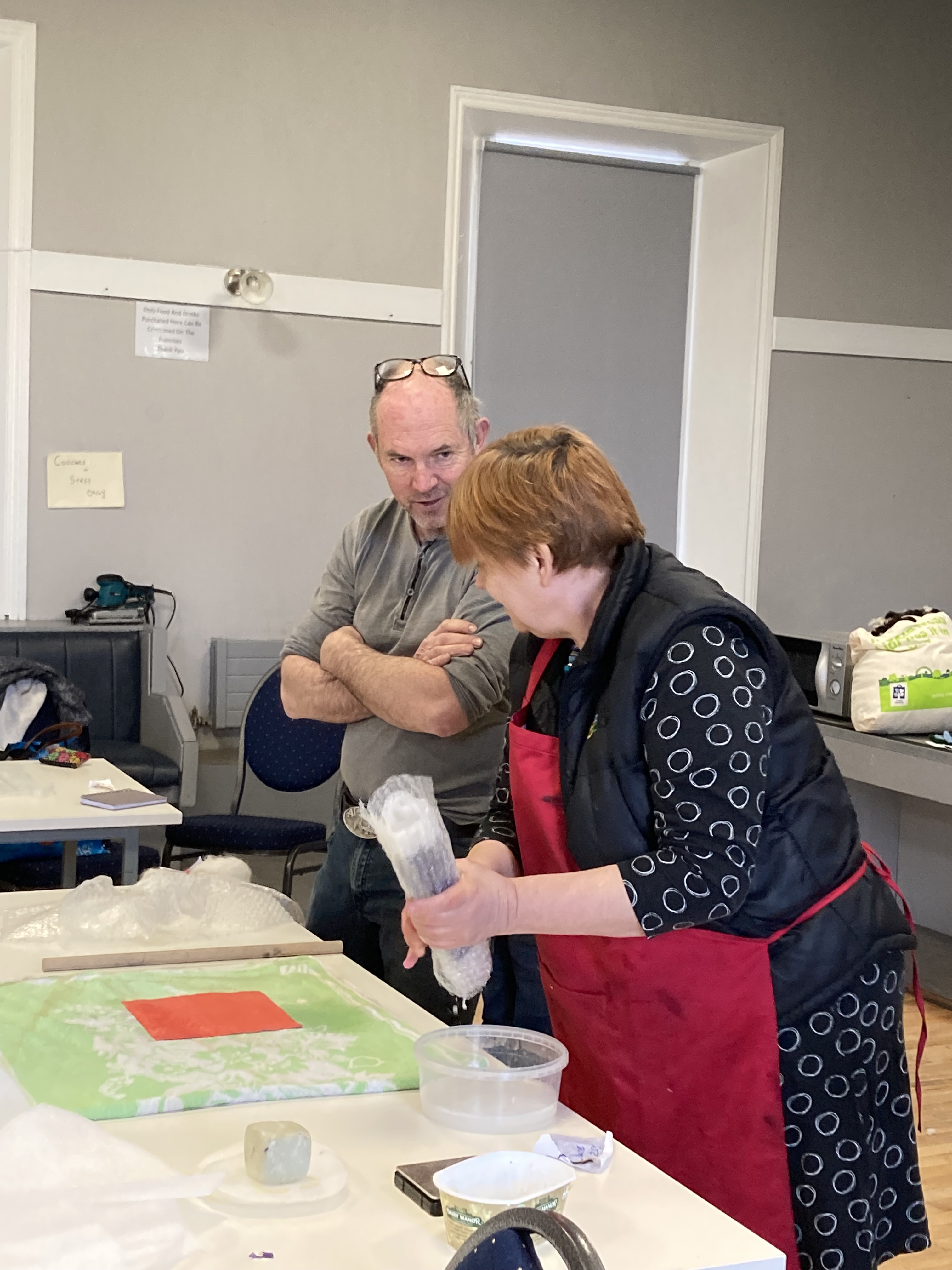
Annika had done lots of preparation for the session, she began by showing everyone some samples, pointing out the varieties of colours, tones, and textures of the different wools. All of the wool had been carefully washed, combed (carded) and weighed, and tied into 10gm bundles, with identifying labels.

Personally, I offered early on to help produce a few samples, however, easier said than done! The method of laying out the different breeds is completely different to using the very tame and biddable imported Merino wool `tops’ which leave its native Australia to be processed in China or Germany, Italy or the UK.

Annika had many tips for handling the fibre, including laying it down very finely on bubble wrap using a 20cm x 20cm paper template to help guide the process. Other tips included using a wooden dowel as a roller, using minimal water and even using liquid soap (or melted olive oil `bar` soap) on its own to help tame the rough fibres. To help speed up the process, there was a microwave on hand to heat the wool to encourage felting and even a sander too.

Annika encouraged everyone to have a go, and we were allowed to take the finished square home, or alternatively to cut them up and swap part of it with another participant. There was lots of comparing of notes between participants on their varying experiences, with plenty of ideas for future sessions.

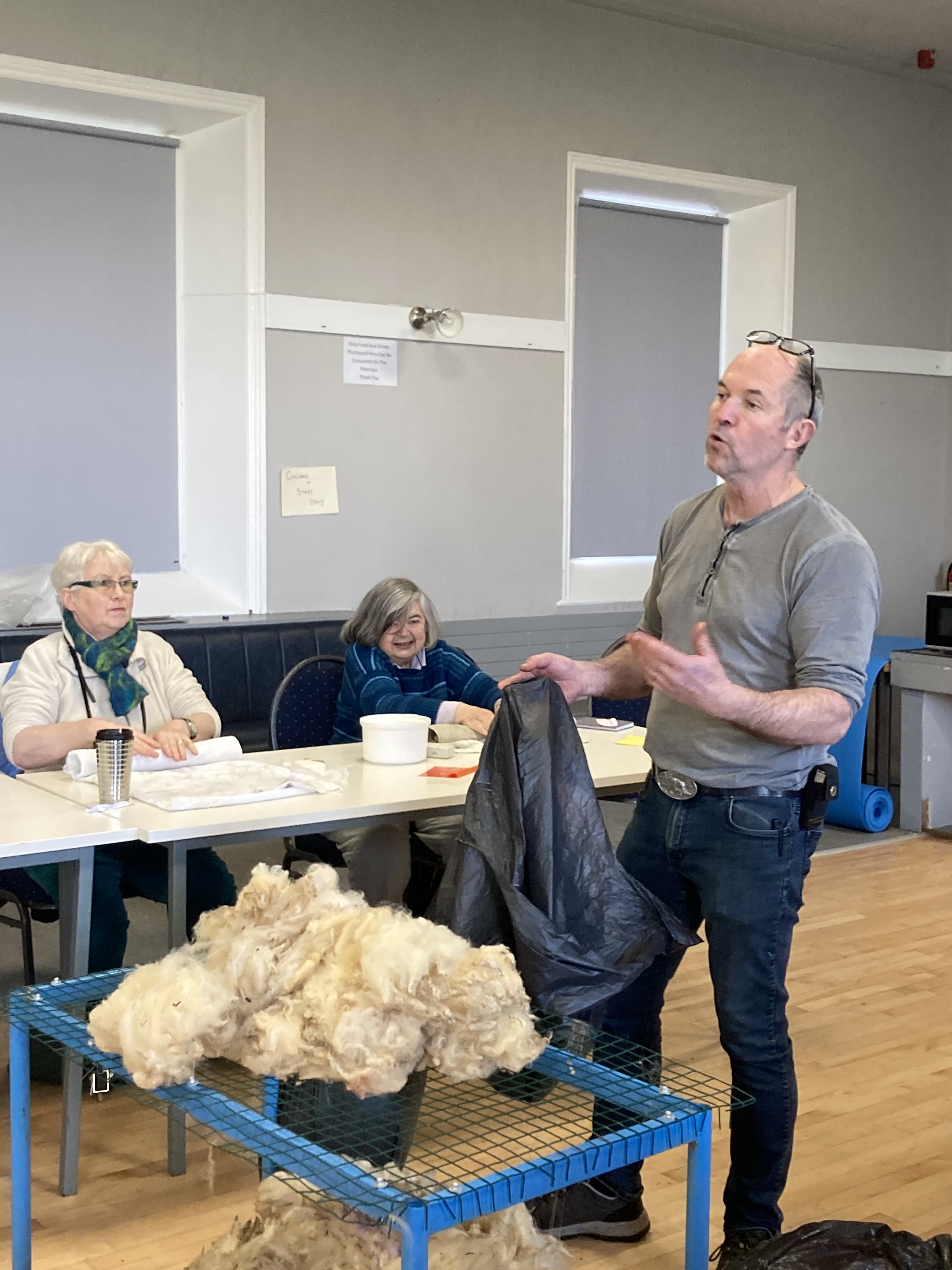
Grant began the second part of the session by setting up his fleece sorting table, a metal framed table with an open metal gridwork top, and placed the raw sheep fleece on it to start the process of judging it to find the best parts before it was to be washed and processed.

Grant gave us a basic lesson in how to sort out the bad from the good, which bits to avoid, and even which fleeces to discard entirely if they had been badly shorn, (double cut), holding a staple length to show us,  stretching it to see whether it would break, which would form lumps in the fibre if left in during the process. Some of the fleece might be discarded simply if it was too dirty or if it retained the colour of the farmers identifying marks, purple, for example, by using iodine liquid to stain the fleece. At times up to 20% might be lost on removing vegetation from the fleece, and washing can remove approximately 40% of the weight. It takes Grant approximately 20 minutes to sort each fleece, we were amazed at his speed, and many of us were shocked to see him discarding at least 30 or 40% of the whole amount.

According to Grant, the business of processing sheep and alpaca fleeces for a living can be very trying as there is a huge amount of legislation surrounding the industry, and obtaining a licence for washing fleeces commercially is practically impossible at the moment.   

We will do further sessions using Irish wool when the book is published, so if you missed this session, there will be more chances to get hands-on using Irish wool.

Again, Thank you, Clodagh for this write-up!