Feltmakers Ireland aims to share information about awards, education, events, exhibitions, and opportunities that you will find interesting. Our sharing is neither paid for by nor an endorsement of these individuals or organisations.
Contact Us: If you have any concerns about content, please email us at feltmakersie@gmail.com.
Questions: For questions about the content, please follow the link to the organisation hosting the event.
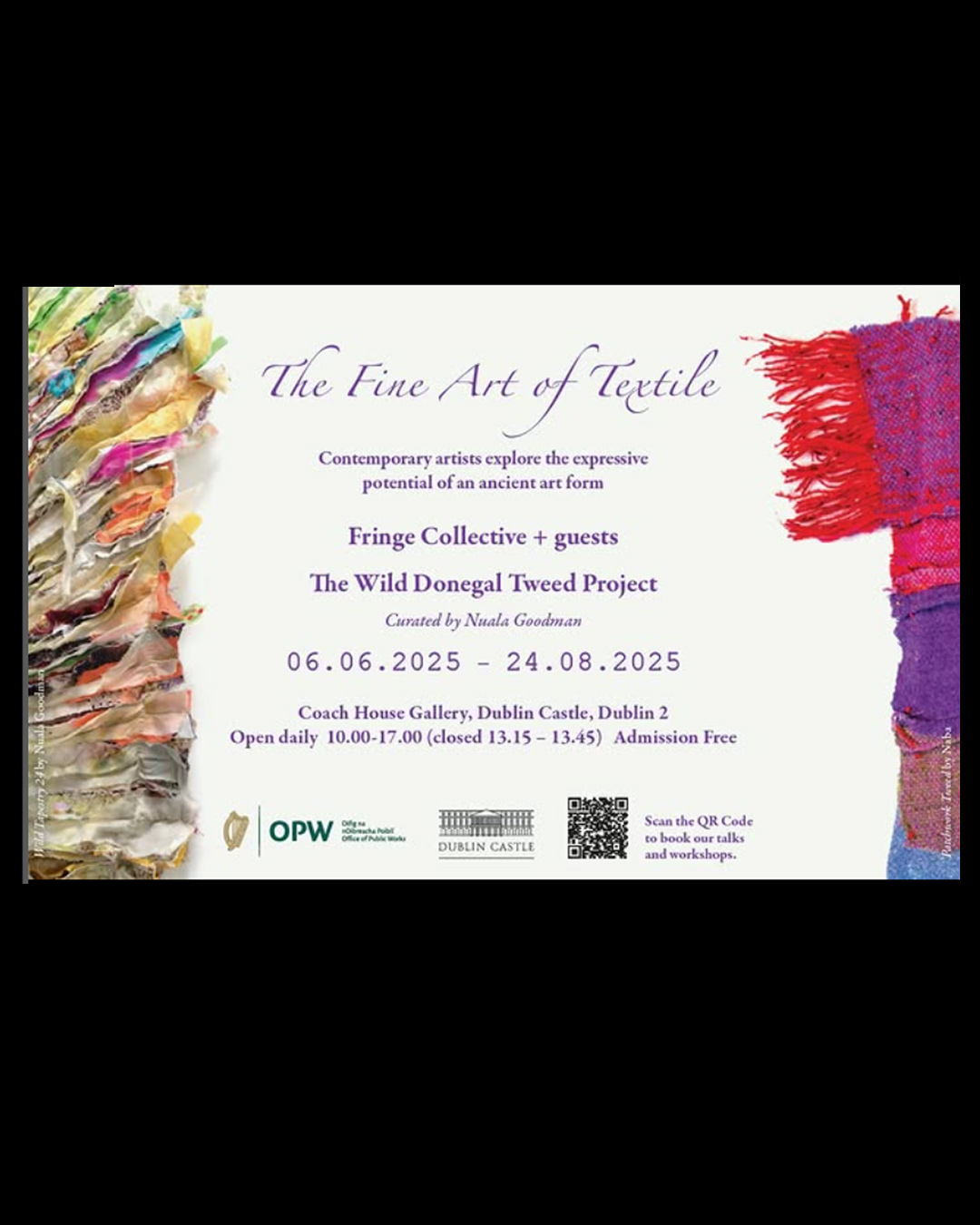
The Fine Art of Textile in the Coach House Gallery, Dublin Castle, is an international exhibition of contemporary textiles that cross artistic genres—painting, sculpture, drawing, and sewing. It is curated by Irish artist Nuala Goodman, with the assistance of Italian journalist Maria Luisa Caffarelli.
The exhibition’s core is the Milan-based collective ‘Fringe’, founded in 2022 by four female artists from different countries. Fringe is a vibrant, creative force exploring the expressive potential of textiles. There is Sanchita Ajjampur, who re-interprets the ancient skills of raffia weave and embroidery creating sustainable handcrafted works; Lisa Farmer, whose art pieces lie somewhere in between basketry and tapestry; Nuala Goodman whose ‘Wild Tapestries’ uses preloved and precious textiles to create works of art, and Colomba Leddi whose synthetic, linear forms create spatial redefinition.
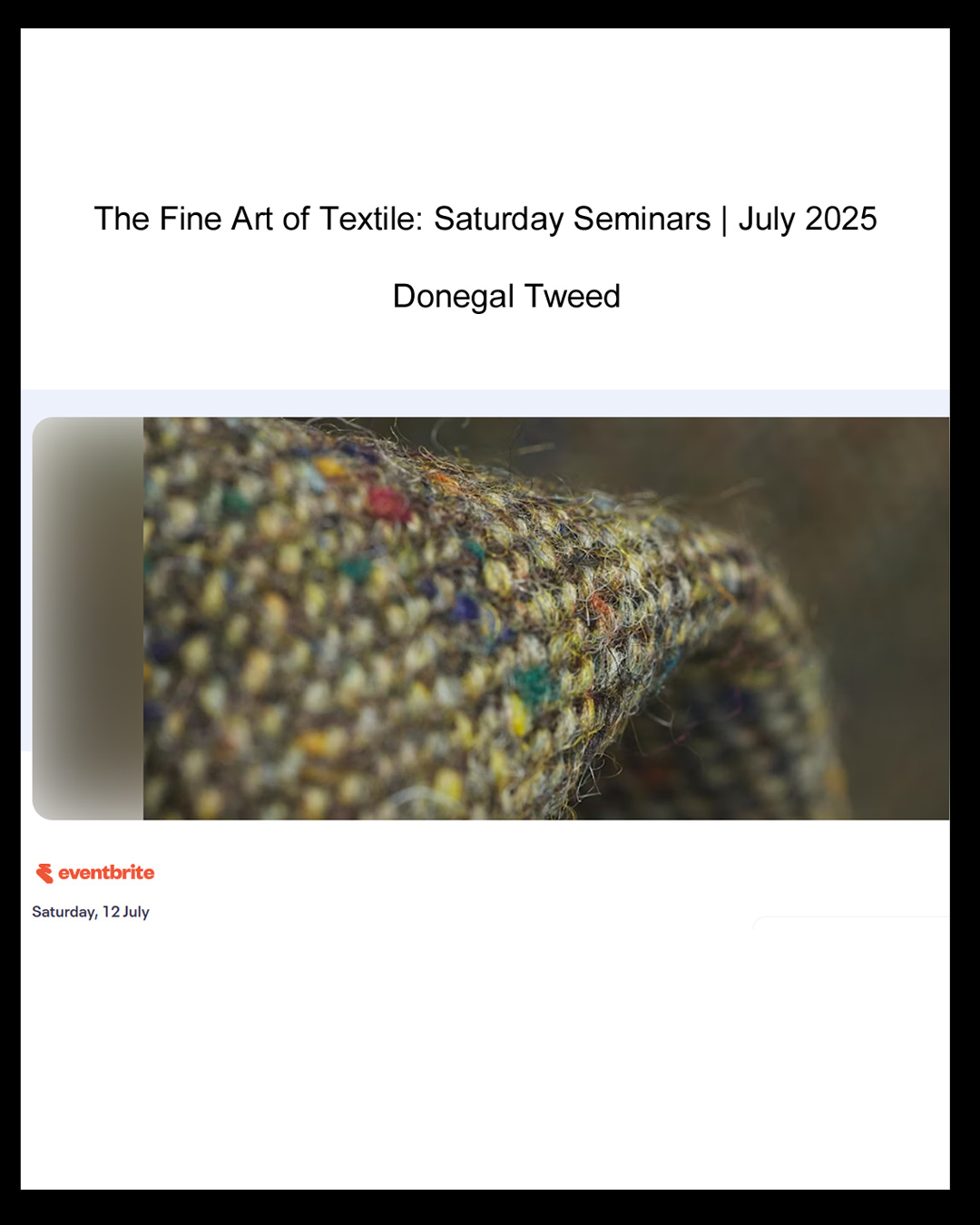
Curated by Irish artist Nuala Goodman, ‘The Wild Donegal Tweed Project’ is a collaboration between five Donegal tweed companies and art and design students from NABA(Nuova Accademia di Belle Arti) in Rome.
Through the Irish Times fashion journalist Deirdre McQuillan, the five Donegal companies (McNutt of Donegal, Magee 1866, Molloy & Sons, Triona Design and Studio Donegal) have donated their fabrics to the NABA textile workshop. The woven, natural and sustainable quality of Donegal tweed appealed to the students as an alternative to cheap synthetic materials. Tweed cushions (45 x 45 cm) were chosen as the ideal form for re-imagining techniques such as smocking, embroidery, felting, patchwork, layering and more.
– Text from the OPW.
Where: The Coach House Gallery, Dublin Castle, near the Chester Beatty. When: 6th of June, 2025 – 24th of August, 2025 Opening hours: 10 AM – 5 PM Free admission
Feltmakers Ireland aims to share information about awards, education, events, exhibitions, and opportunities that you will find interesting. Our sharing is neither paid for by nor an endorsement of these individuals or organisations.
Contact Us: If you have any concerns about content, please email us at feltmakersie@gmail.com.
Questions: For questions about content, please follow the link to the organisation involved in hosting the event.
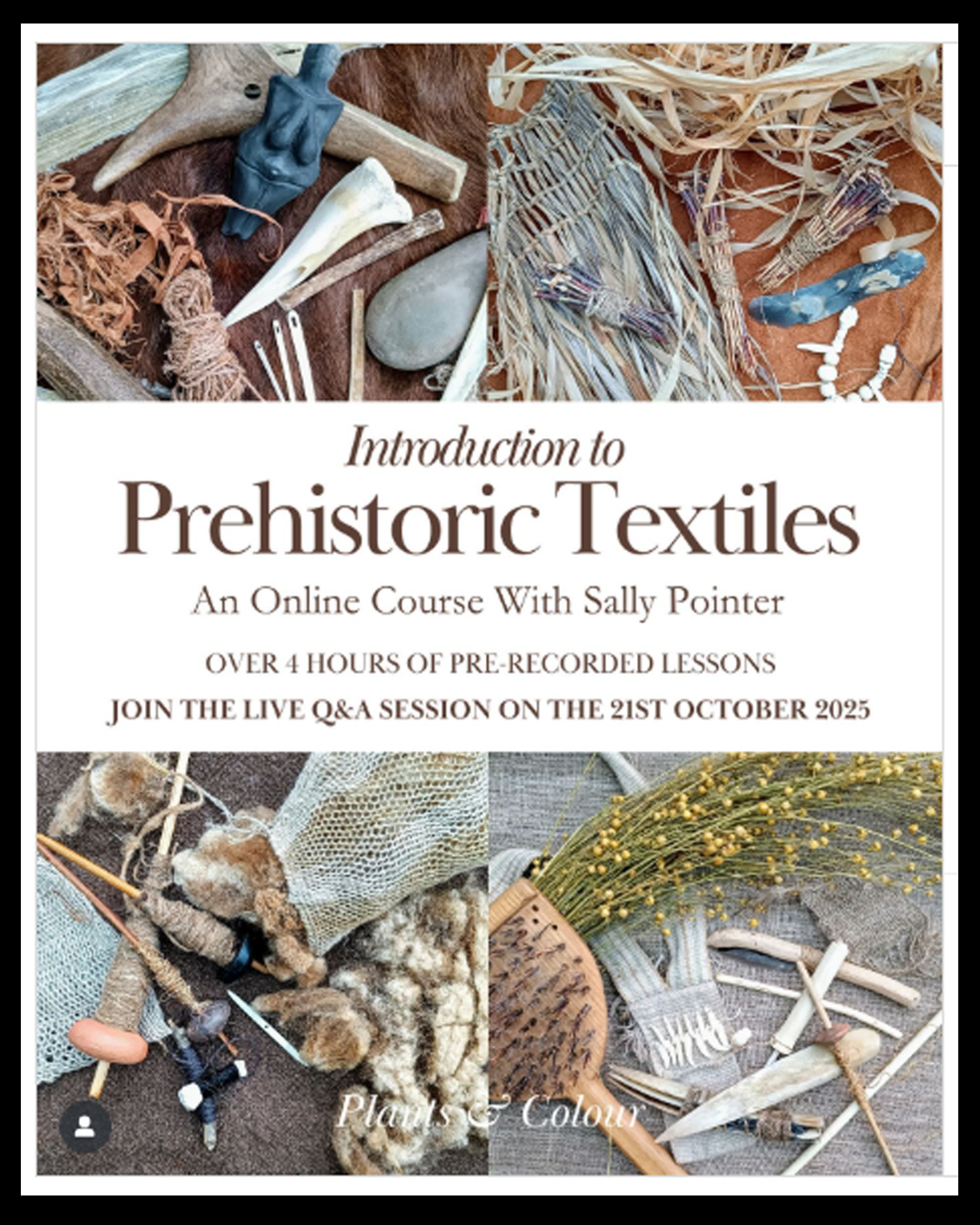
Sally Pointer’s “Introduction to Prehistoric Textiles” online course is now available on the Plants & Colour website.
This course provides a comprehensive introduction to prehistoric textile techniques, focusing on evidence from Northern Europe. Participants will learn about the evolution of textile tools and technologies through four pre-recorded video lessons, each approximately one hour long. A live Q&A session on the 21st of October, 5-6 PM will follow the course to address questions.
Lesson One: The Palaeolithic – ‘The String Age’
Lesson Two: The Mesolithic – Tree bast technologies
Lesson Three: The Neolithic – Linen
Lesson Four: The Bronze Age – Introduction of wool and changes in textile practices.
Feltmakers Ireland aims to share information about awards, education, events, exhibitions, and opportunities that you will find interesting. Our sharing is neither paid for by nor an endorsement of these individuals or organisations.
Contact Us: If you have any concerns about content, please email us at feltmakersie@gmail.com.
Questions: For questions about content, please follow the link to the organisation involved in hosting the event.
Guest blog post by Annette Woolley, Textiles Student at Liberties College
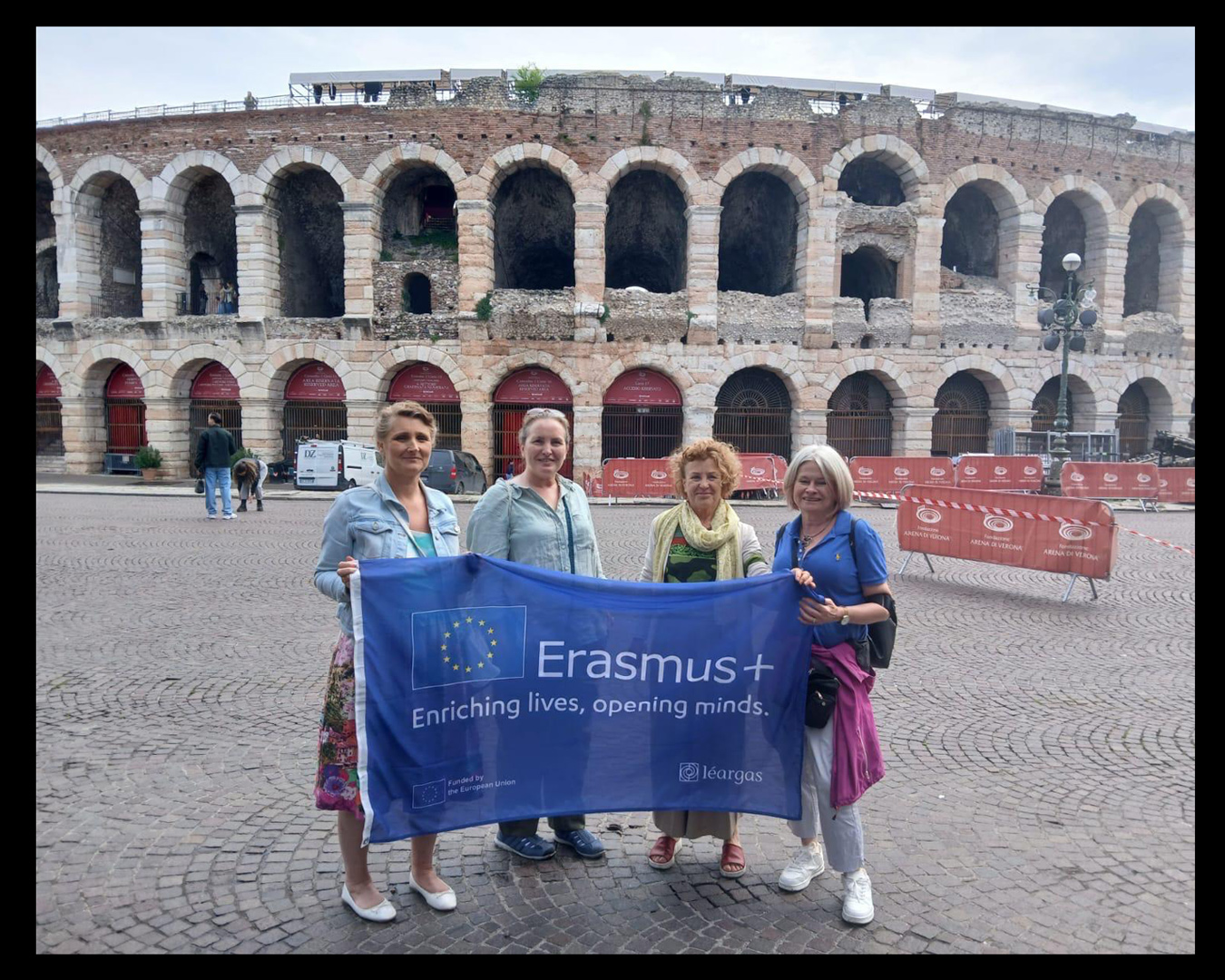
Annette, Debby (a Liberties College student placed in a glass studio), Mary Ivell, and Margaret.
This contemporary twist on the traditional 17th and 18th-century cultural tour of Italy recently saw three women of a certain age, aka ‘The Brescia Babes’, aka Textile Students of the mature type, undertake a whistle-stop adventure, desperately seeking sustenance with an artistic slant.
This is a short tale of how we managed to blag an all-expenses-paid trip and what we got up to while taking in the sights, experiencing the culture, being inspired, and making creative connections of the woolly kind.
It all started last Autumn, when we started the‘Heritage Textiles & Craft Revival & Renewal Course‘ at Liberties College Dublin. Our class numbered about a dozen ladies, all with a fetish for felt, wool, threads and ribbons (except for one extremely talented young man), all with different levels of experience or expertise from zero to hero! With the promise of learning how to appreciate art, weave, embroider, wet, needle or Nuno felt, fabric manipulation, appliqué, ceramics, drawing, design skills or developing customer service or gaining relevant work experience, we set off together on a journey that led to new skills, outlooks, and lasting friendships with a bunch of likeminded people, with a passion for crafting.
But whilst that itself was worth the mere €50 a year fee (includes all materials and no books needed), not to mention getting your Student LEAP card (a travel card for non-Irish readers)! Lo and behold, we get told about the chance to go on an Erasmus Programme.
Now, most people think this is what young students do, backpacking across Europe on the pretence of a learning opportunity. But guess what, even the young at heart can apply once they have their student card in their pocket. Plus, there’s no heavy lifting involved – unless you count the duty-free bags on the way home.
All we had to do was write a short paragraph on why we thought we should go and what we hoped to get out of it. I won’t lie, one of us is extremely technophobic, and I distinctly remember the three of us sitting in the Chester Beatty library after a class outing, with 10 minutes to go before the deadline, trying to write and submit her application and literally sending it with seconds to go. We hoped but didn’t expect to get selected, but if you’re not in, you can’t win!
Anyway, in the end, one of us got picked alongside eight other students from different courses, and while we were delighted for her, if we’re being honest, we were slightly disappointed, nay weljel? No, actually raging. (Editor’s note: For readers outside of Ireland, ‘raging’ means jealous or angry).
But as the saying goes, what’s meant for ya won’t pass you, and a few weeks later, myself and herself got a call out of the blue saying that more funding had become available, and there were spots for us if we still wanted them. I mean, as if we’d turn it down. After all this was, although technically not a free holiday as we did have to commit to “working” in a textile-related organisation, but our flights, accommodation, insurance were all arranged and paid for, plus we got an ample allowance to cover food, internal transport, entrance fees to museums, etc.
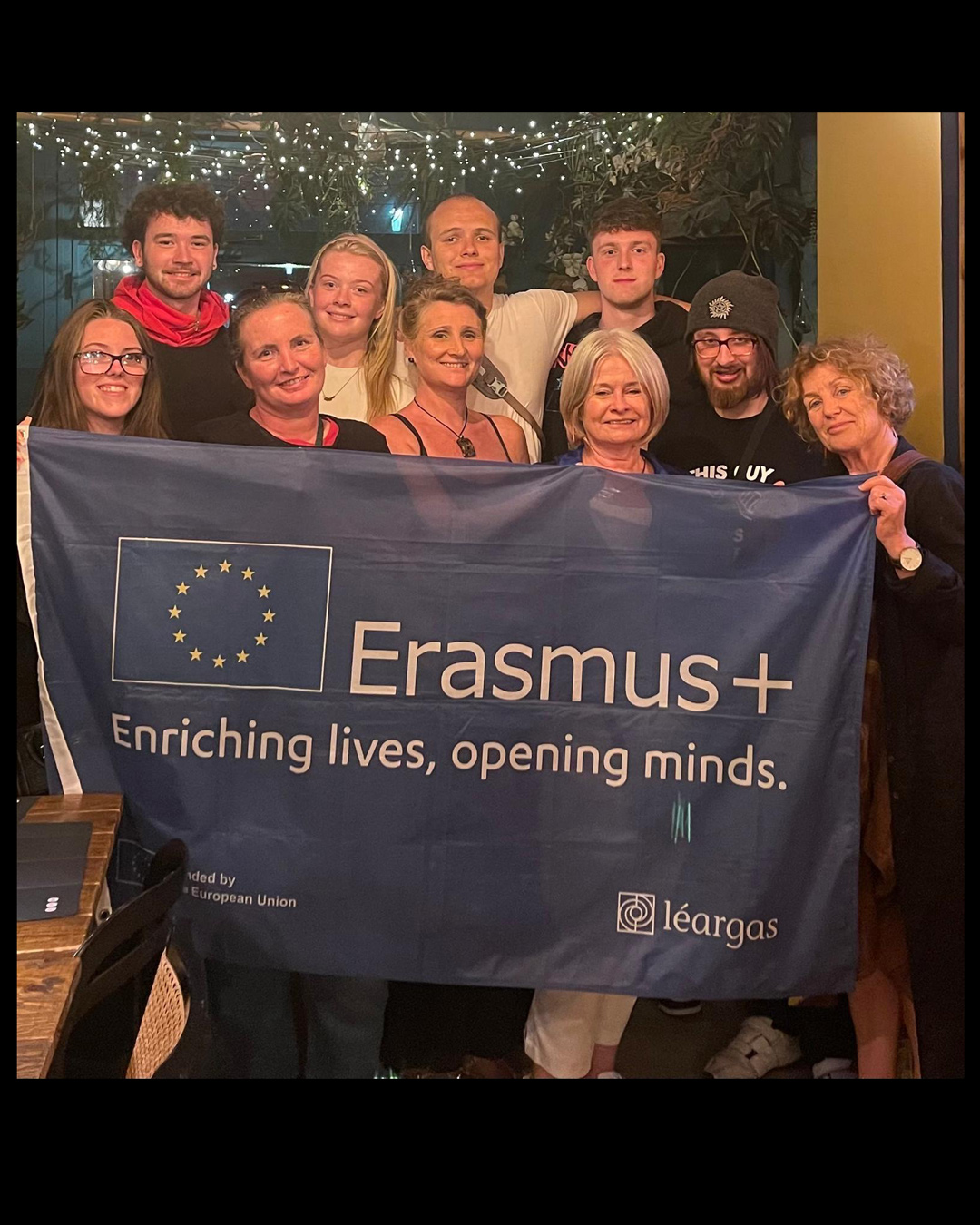
So, let’s cut to the chase, at the beginning of May, twelve students, including us wise women, travelled to Brescia, a beautiful city in Lombardy.
During our two weeks there, despite having to “go to work” ( you all know that crafting isn’t working; it’s playing with wool), we had ample time to travel by train to Venice, Verona, Milan, Bergamo, Lake Garda and Iseo. We explored our host town too and crammed in castles, cathedrals, amphitheatres, museums and art galleries. Needless to say, our step count was pretty high, but so too was the abundance of beautiful frescoes, amazing architecture and scenery that inspired the masters. We swam in Italian lakes, we ate homemade gelato, we conversed with the natives and made many, many magical memories.
But back to textiles! On our second day (the first was spent on a speedboat on the lake drinking Prosecco), we discovered wonderful local fabric stores, second-hand shops, and haberdasheries and filled our arms with wool, embroidered fabrics, buttons and beads, and vintage crochet. We’d worry about our luggage allowance when the time came.
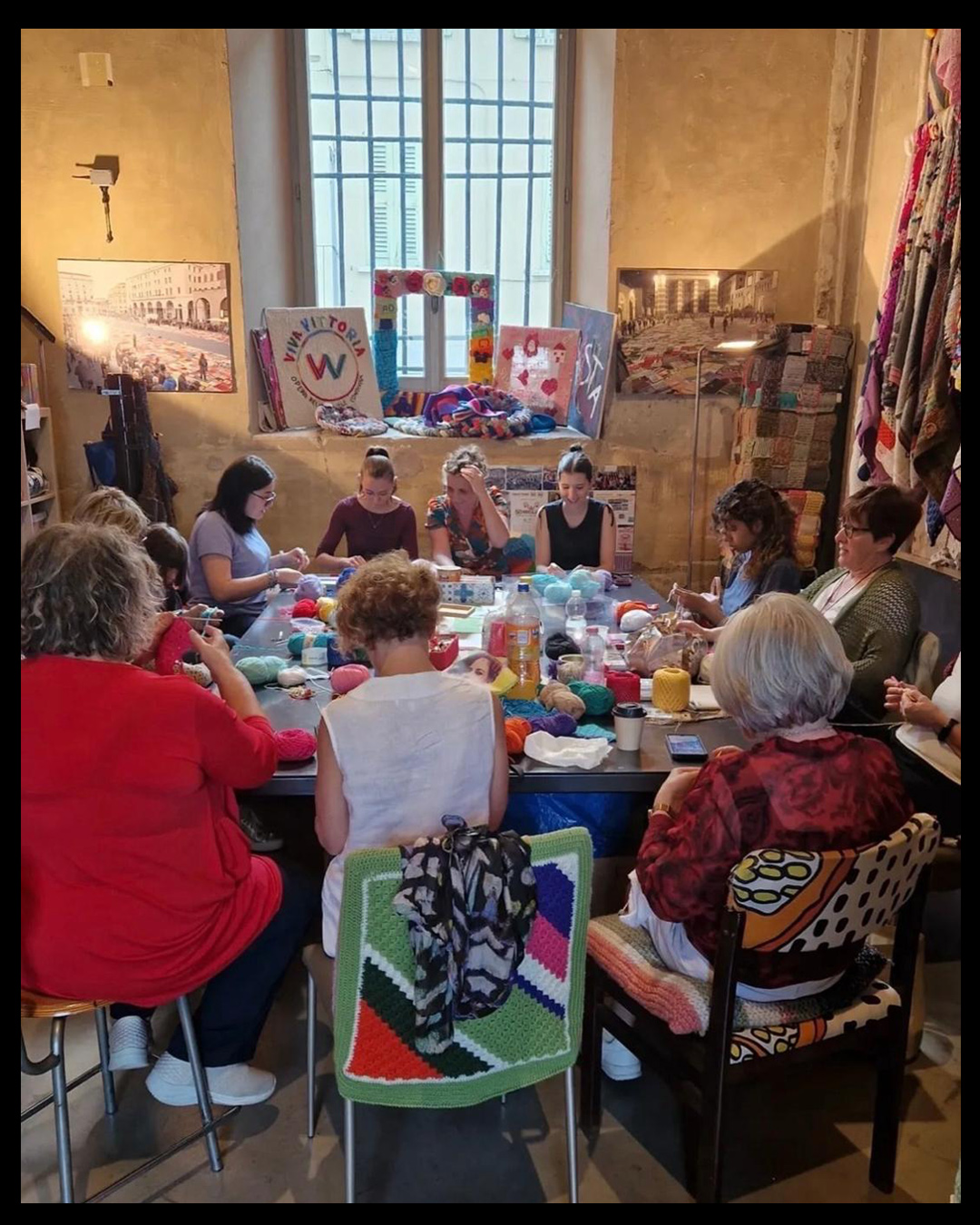
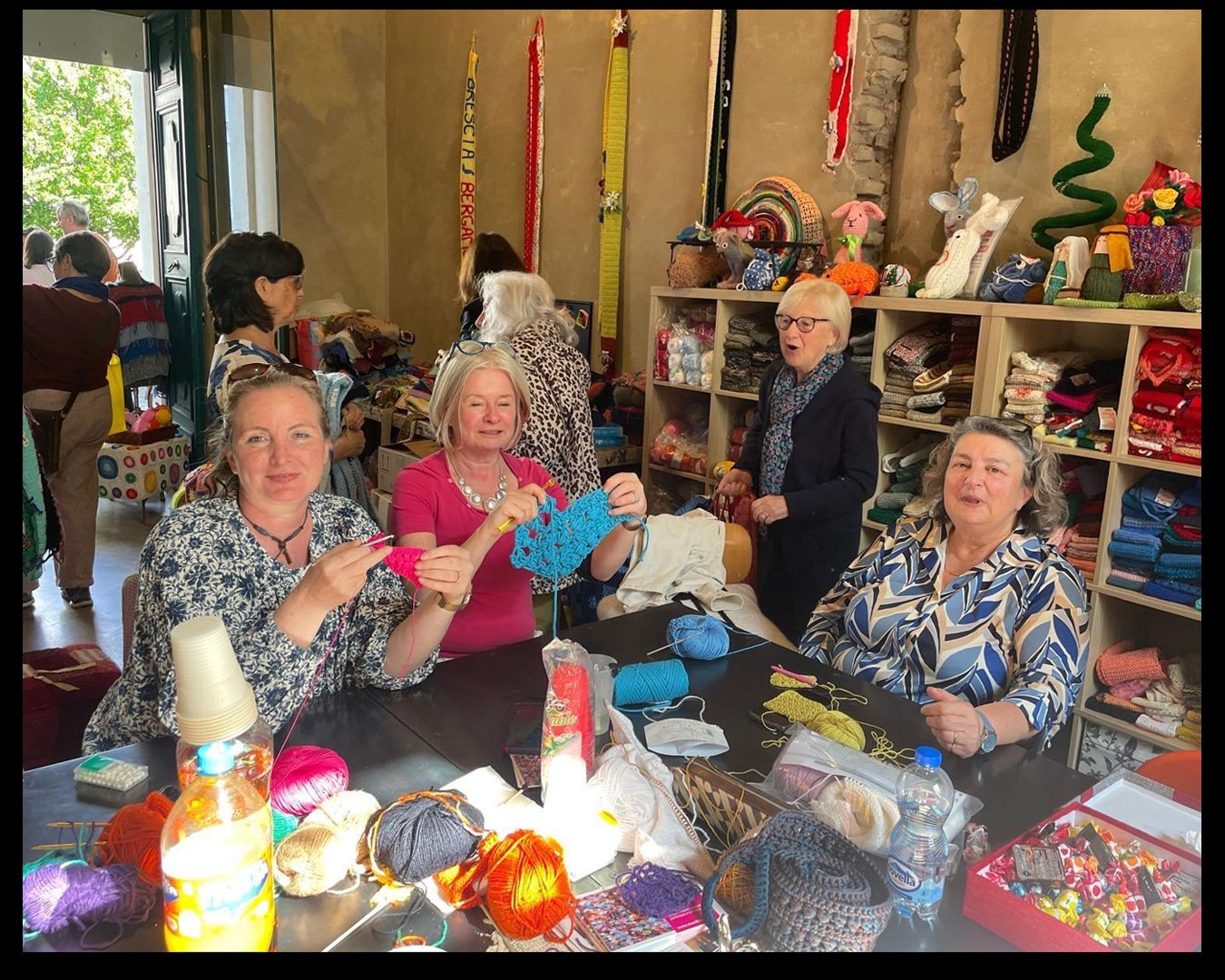
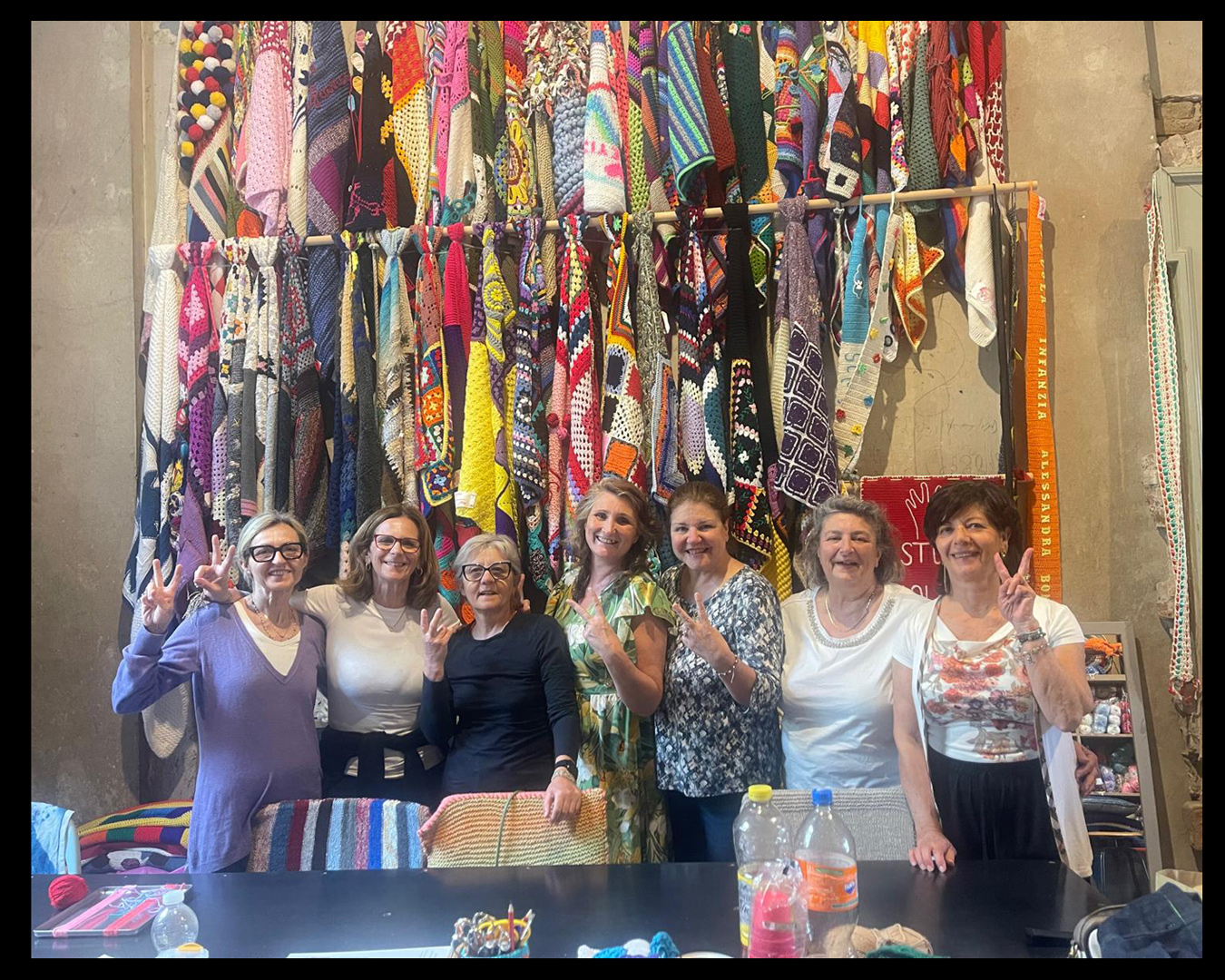
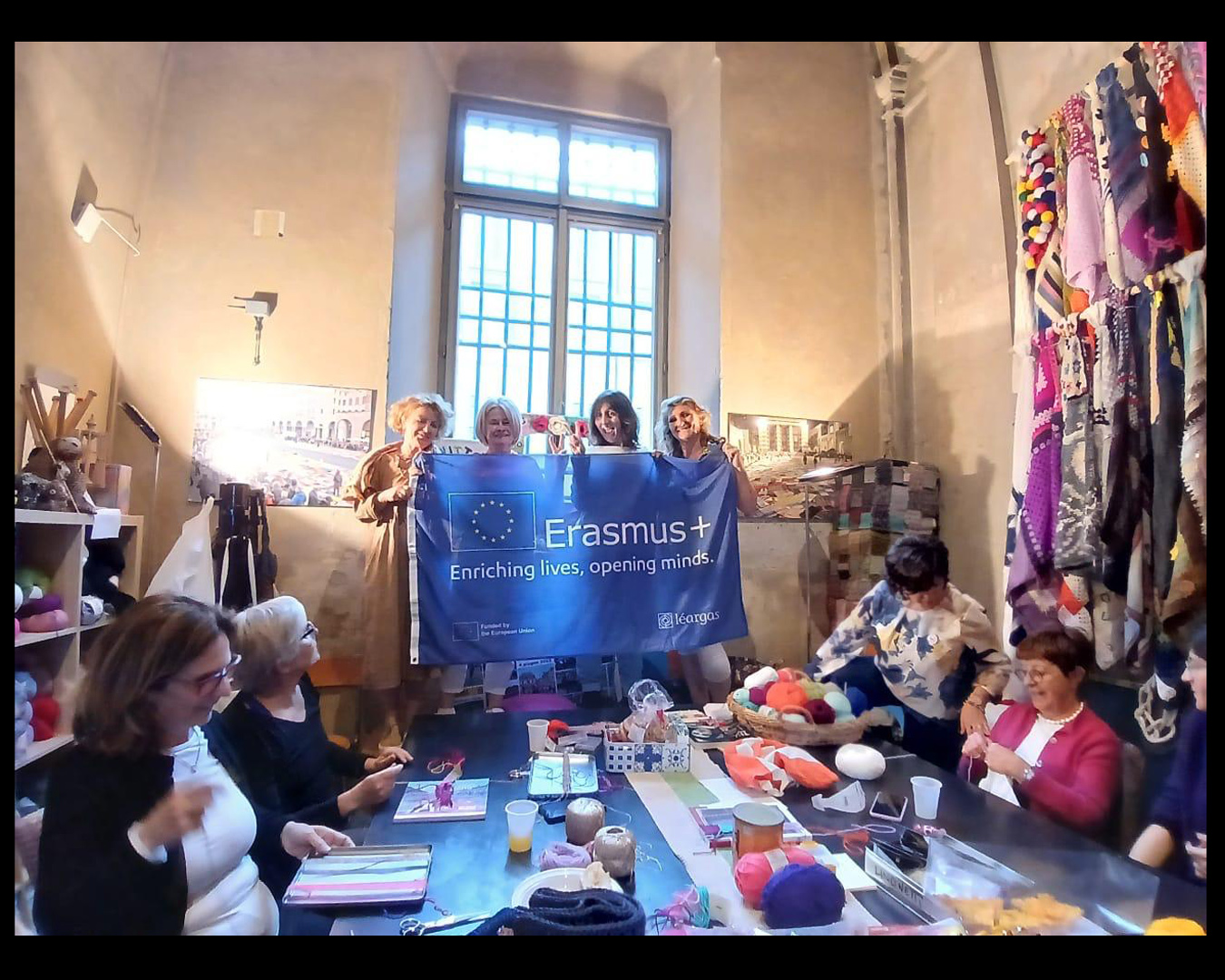
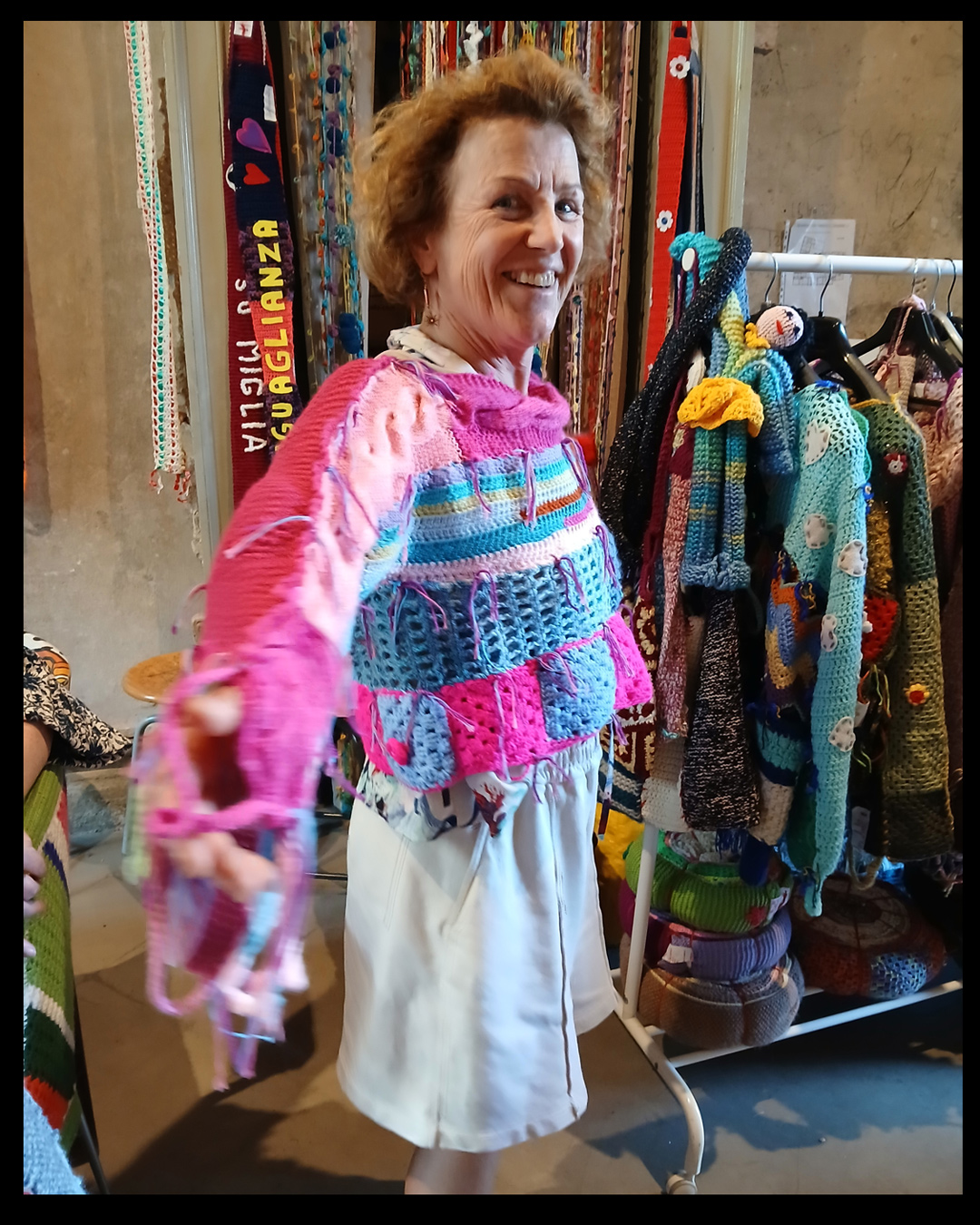
On the fourth day ( this sounds a bit biblical), we started our work placement at the wonderful Viva Vittoria. We had no idea what to expect. We had no Italian, just Google Translate on our phones, and to be honest, between the three of us, we had no skills in the knitting and crocheting department. So, uh ohh, guess what? This non-profit organisation is all about woolly squares. What to do?
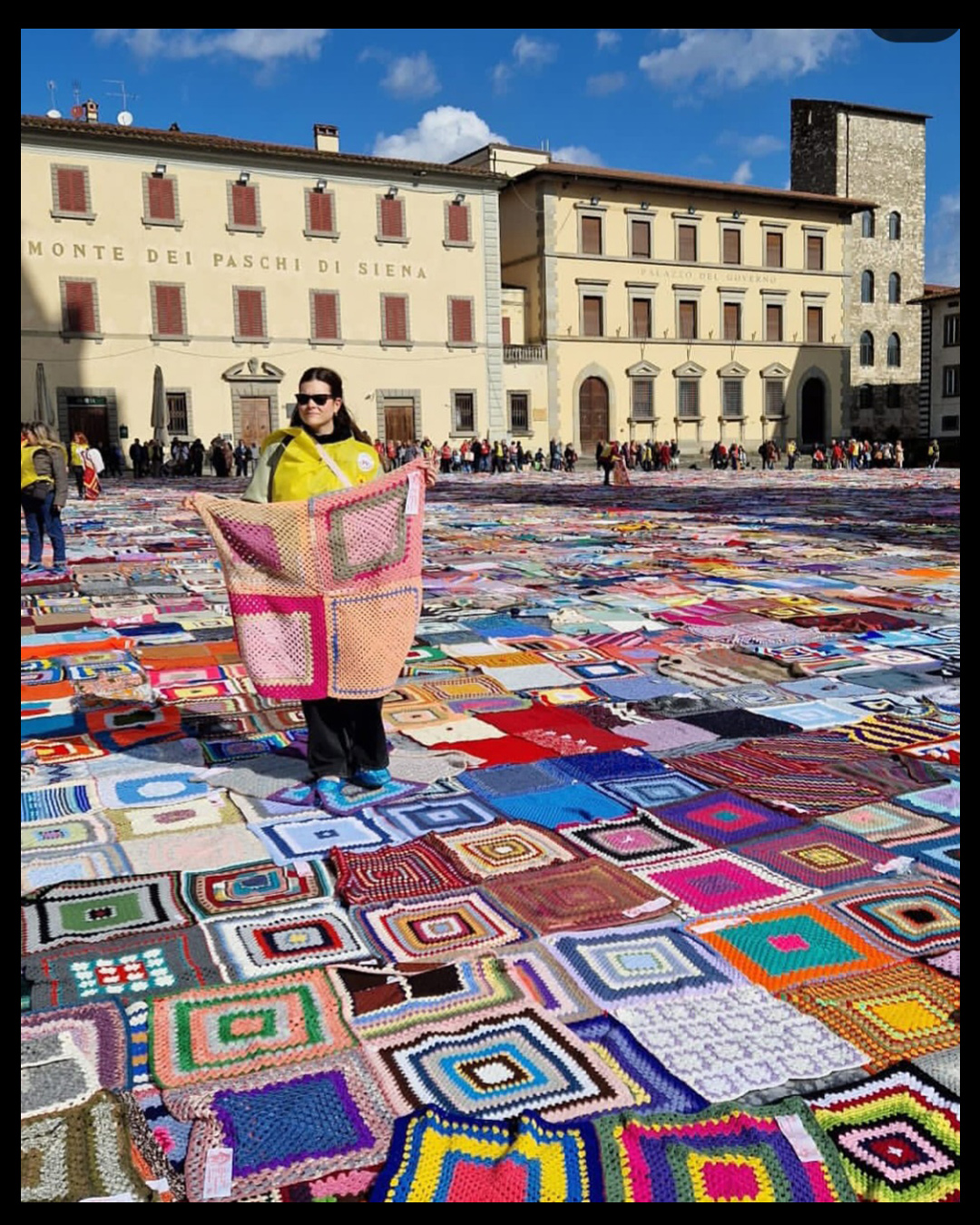
Square in Italy with crocheted squares from Viva Vittoria.
Well, considering that the crux of Viva is to raise awareness and funds for local domestic violence groups by creating or facilitating the creation of thousands of 50x50cm personalised woollen squares, which are then stitched together into blankets for display and sale in a prominent city attraction—think Dublin Castle courtyard—we felt slightly guilty about not being able to contribute enough during our placement.
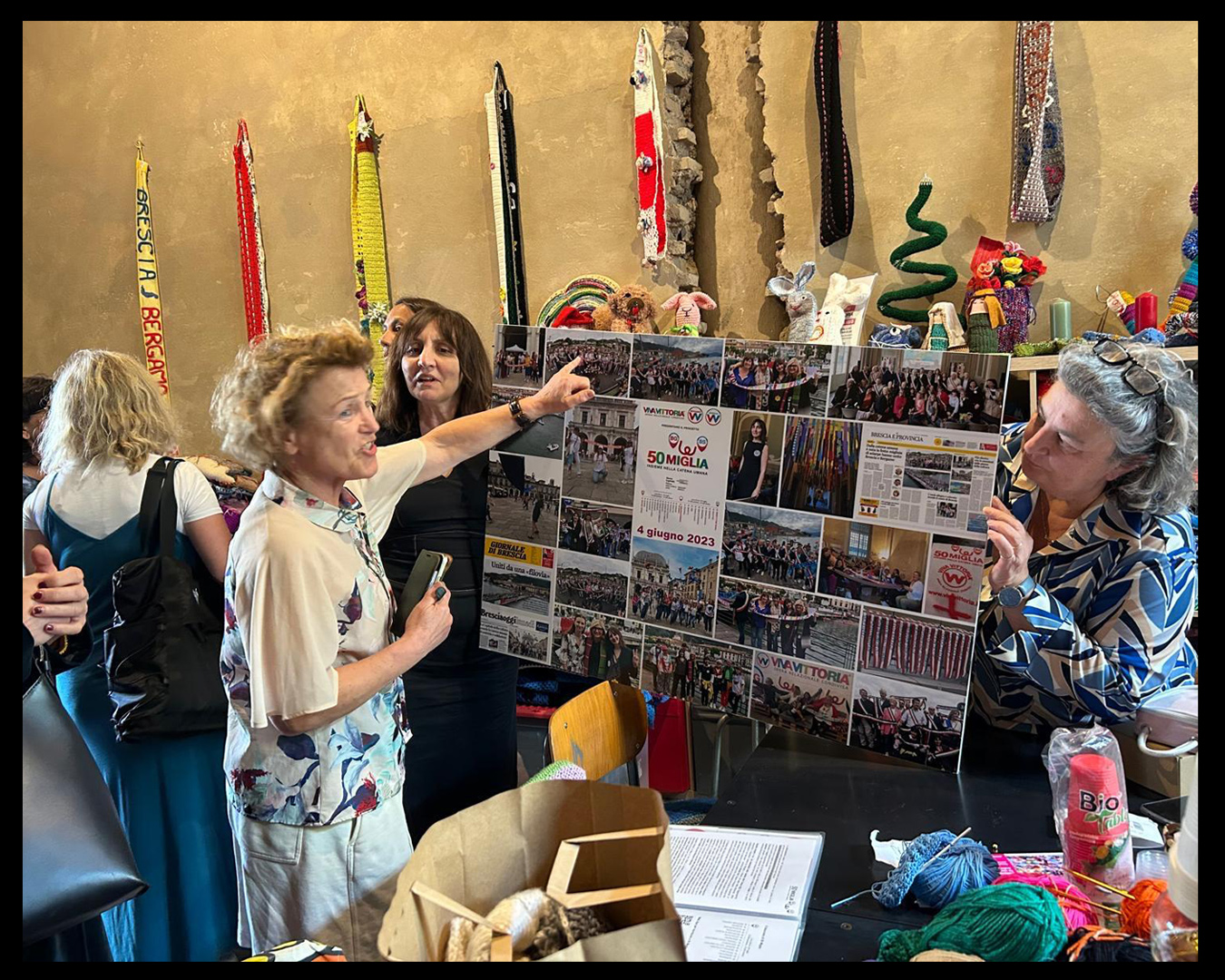
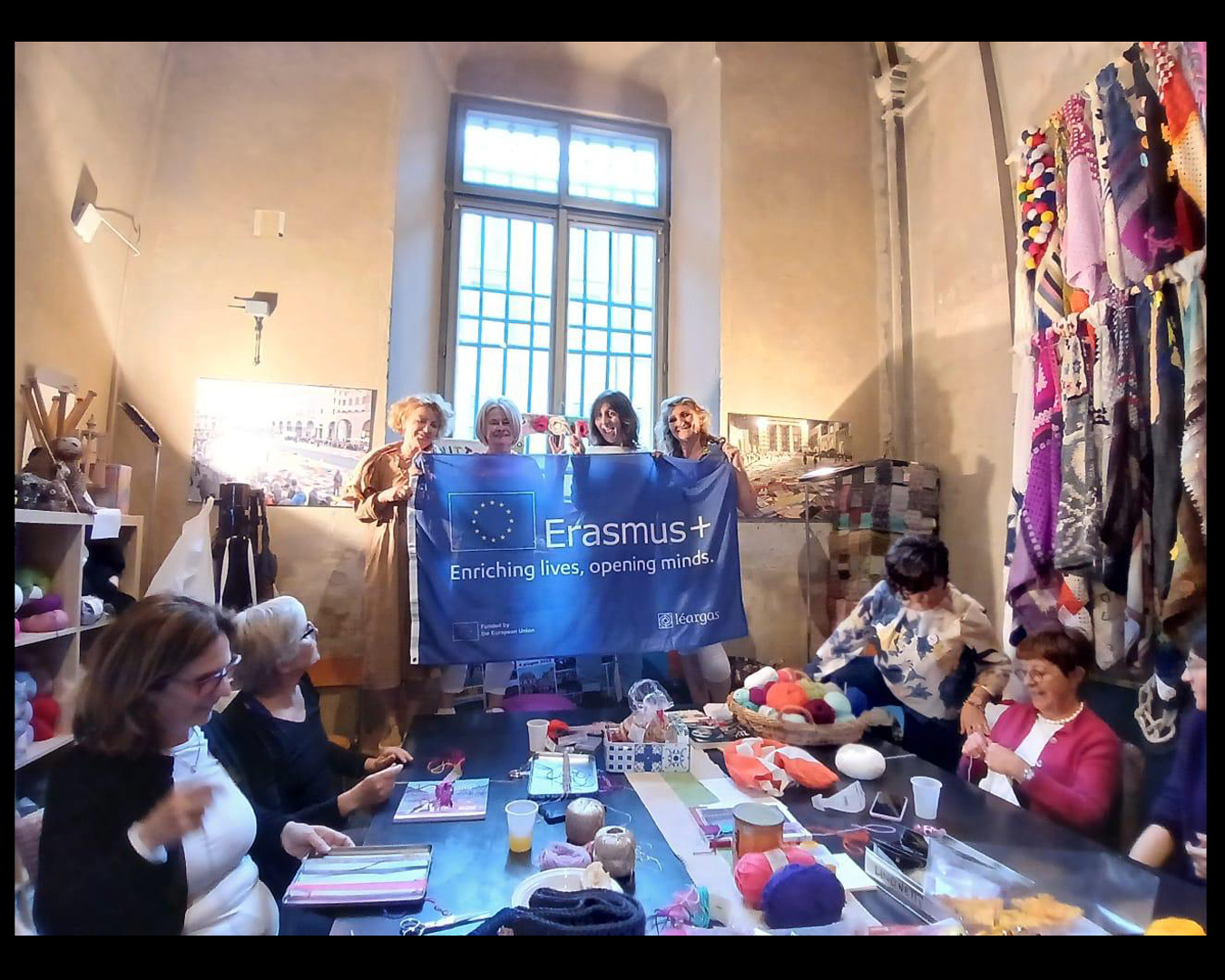
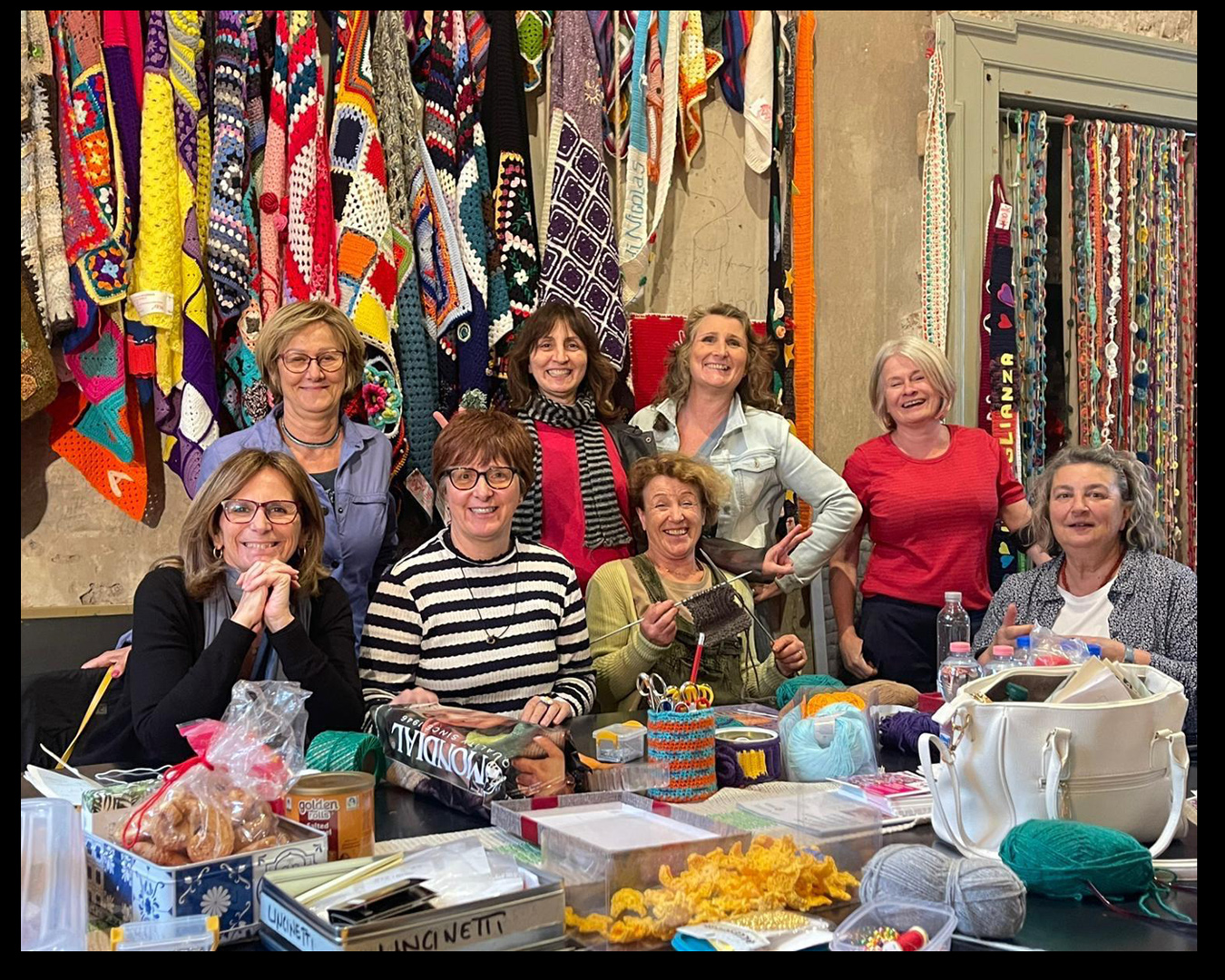
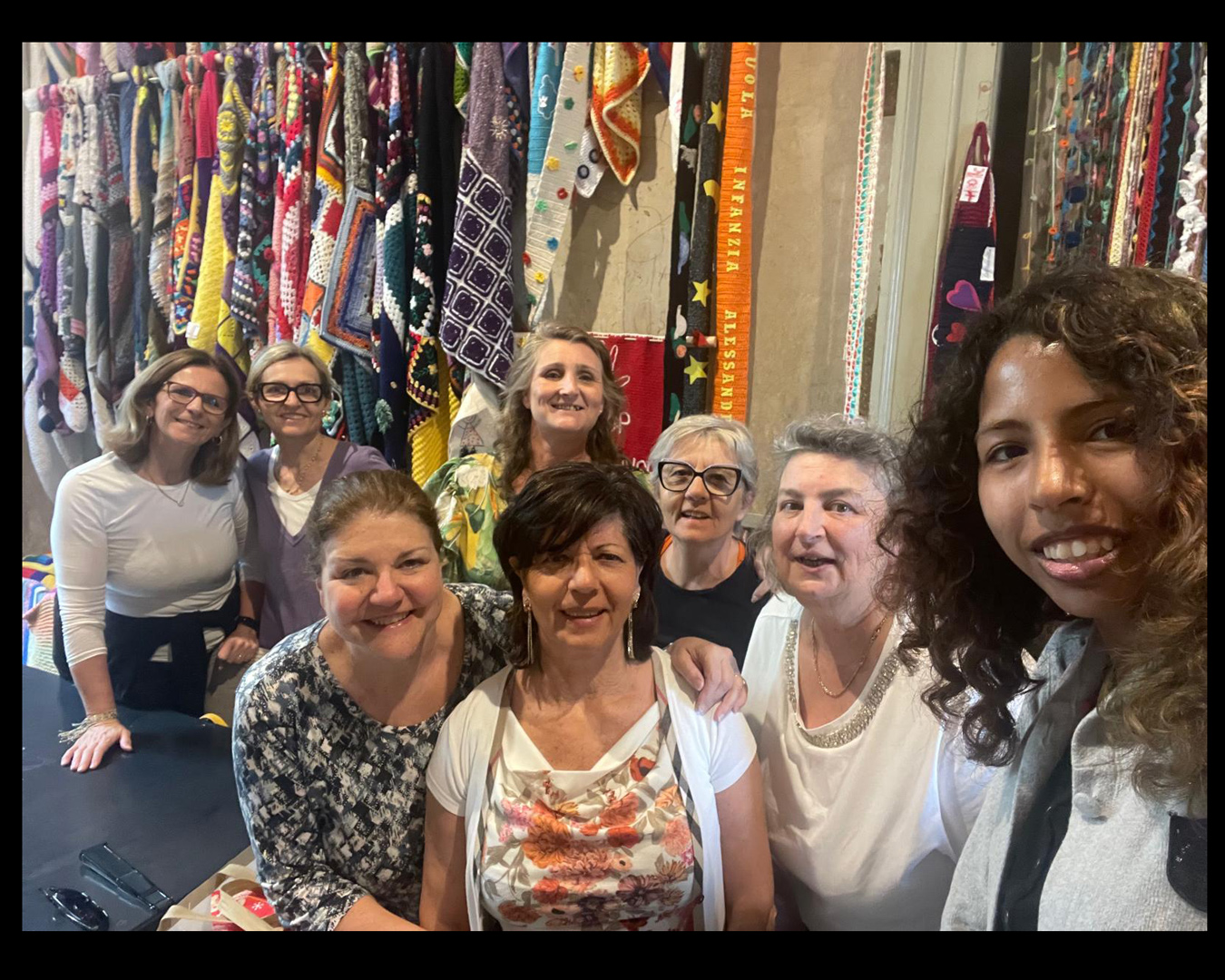
But they also have a permanent drop-in hub, which at first glance is a free space to learn the crafts of knitting or crochet, but is actually at its heart a safe place. It’s somewhere that anyone experiencing domestic abuse can go for respite, comfort, advice, or just to spend time focusing on creating and not on whatever worries await back at home. It’s like knitting with your nonnas. It’s amazing how sharing a skill, a biscuit or a laugh with a group of people who don’t judge, who understand and who will be there for you if and when you need them can make all the difference.
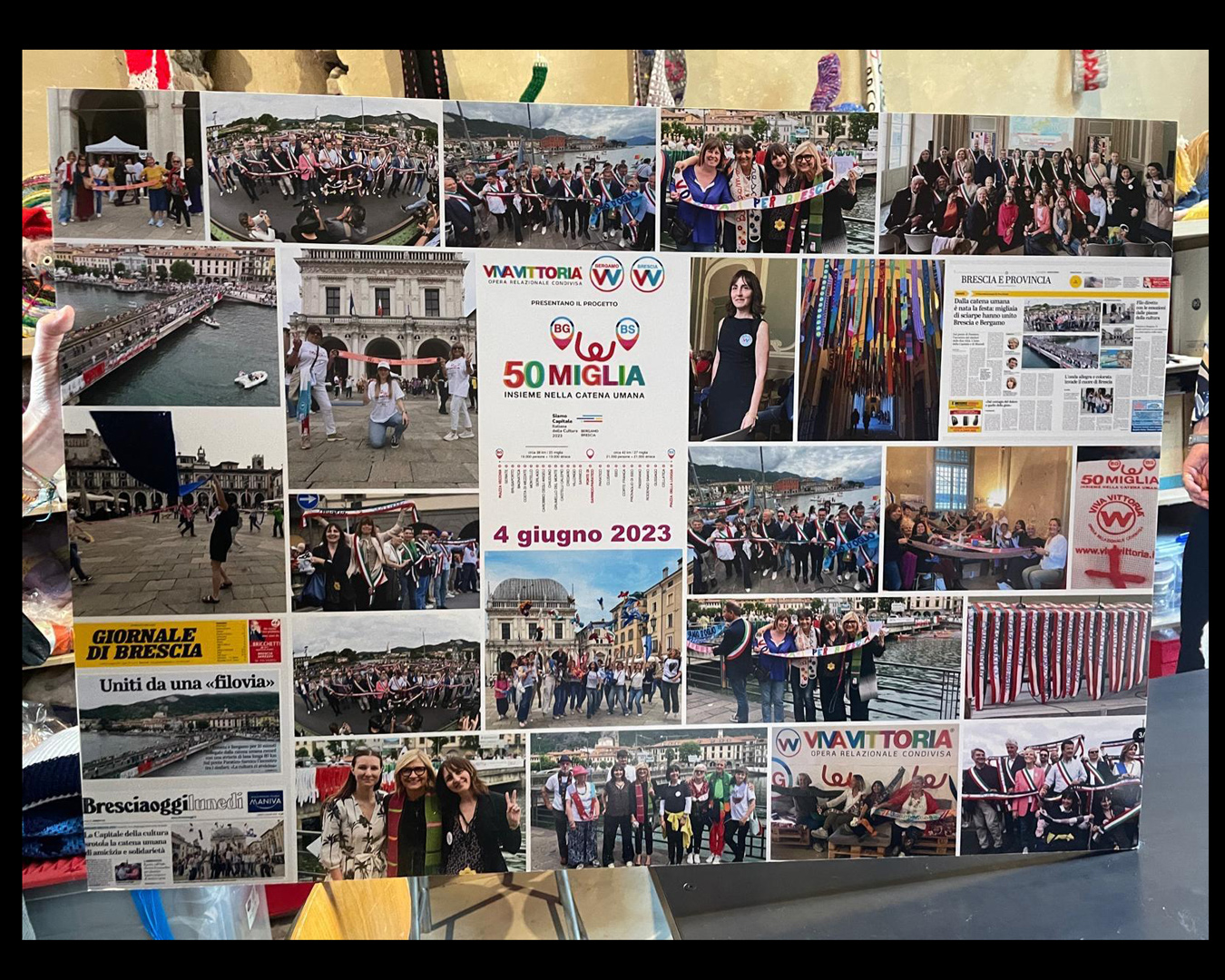
The group was established in 2015 in Brescia and was gifted the small but snug hub space in what used to be the city’s courthouse. Now, as part of the local authority’s commitment to its cultural community, the space is a creative venue housing music, art, and theatre outlets. Since its inception, its vision has spread across Italy, Europe, and even Australia, raising 1.6 million euros to date.
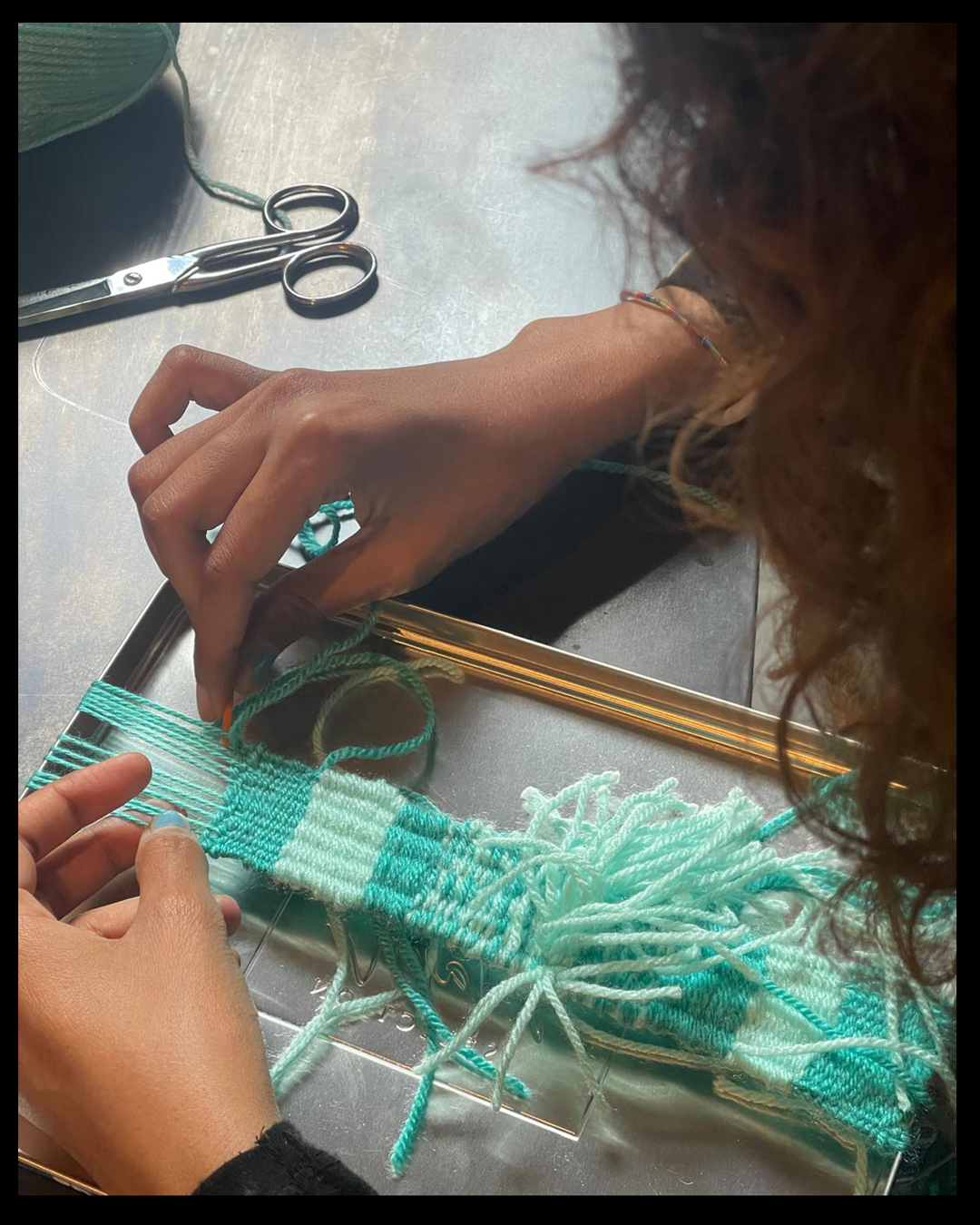
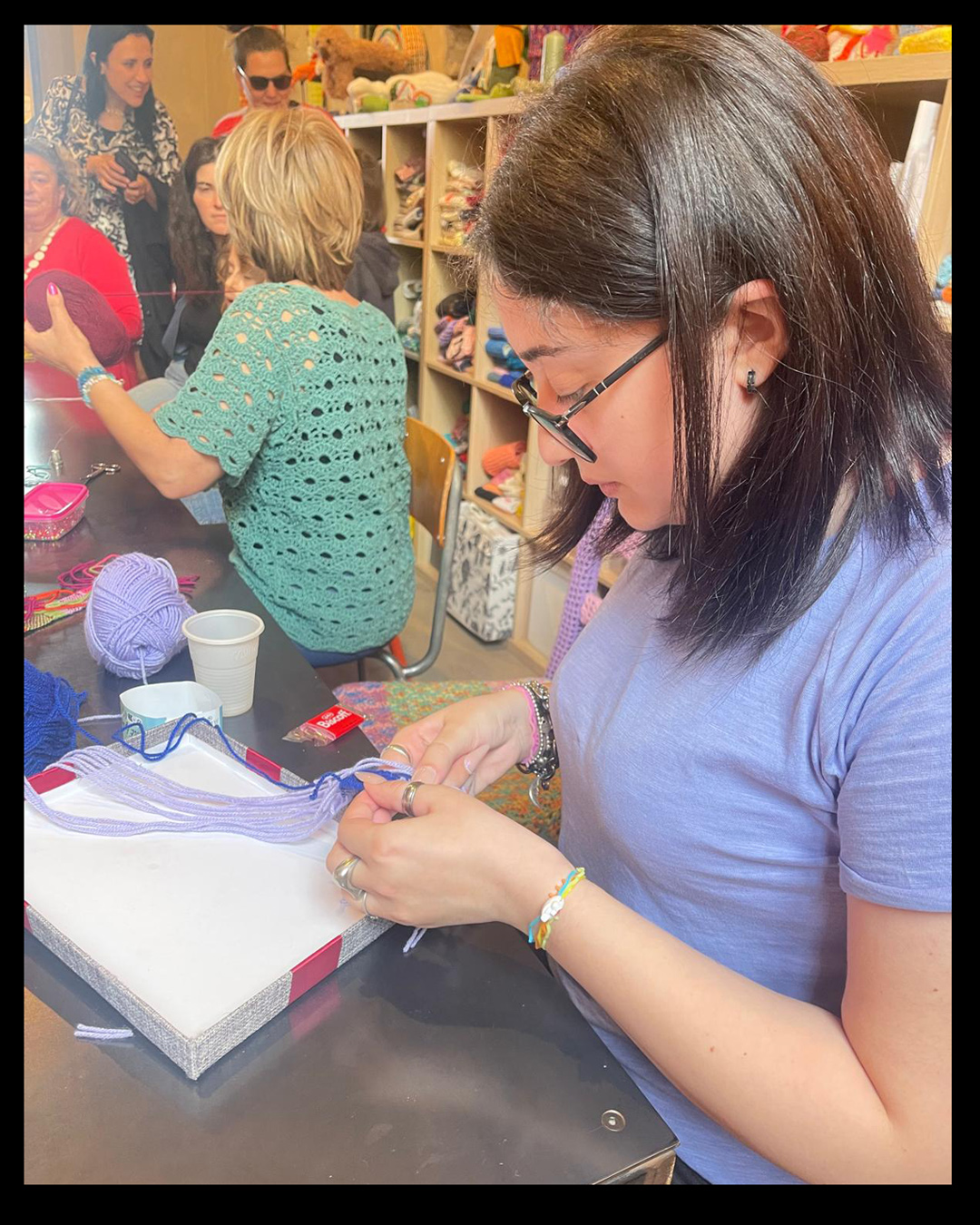
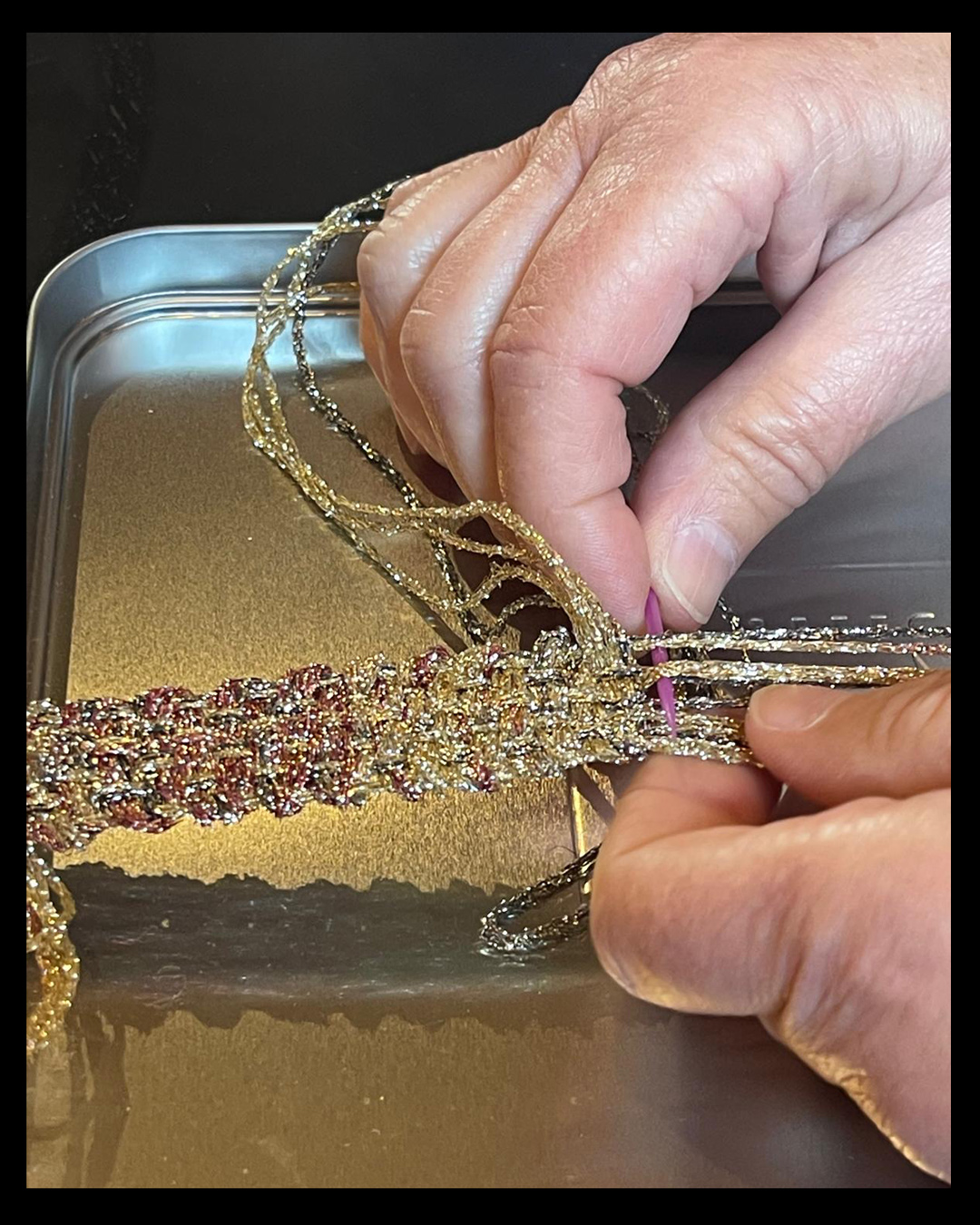
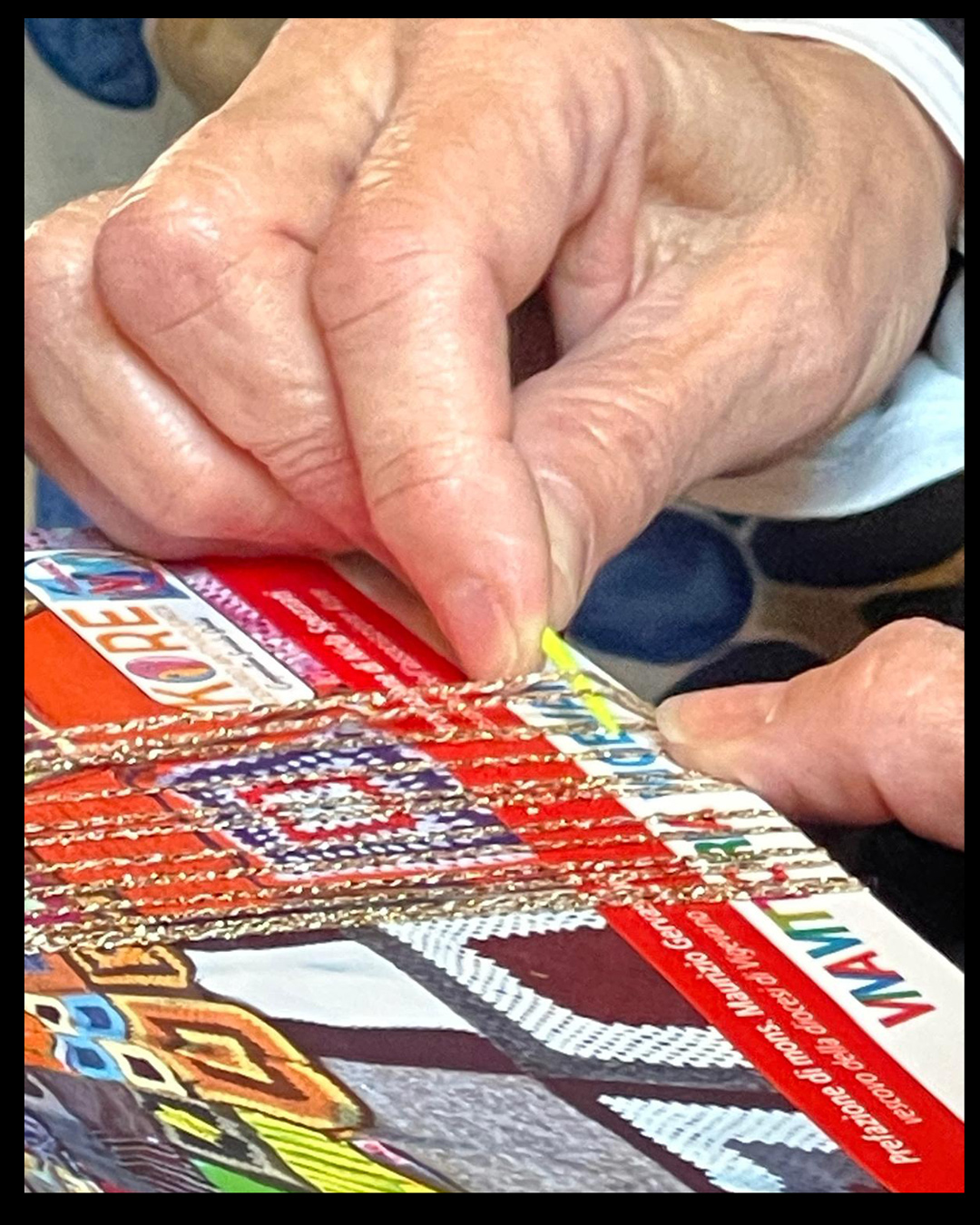
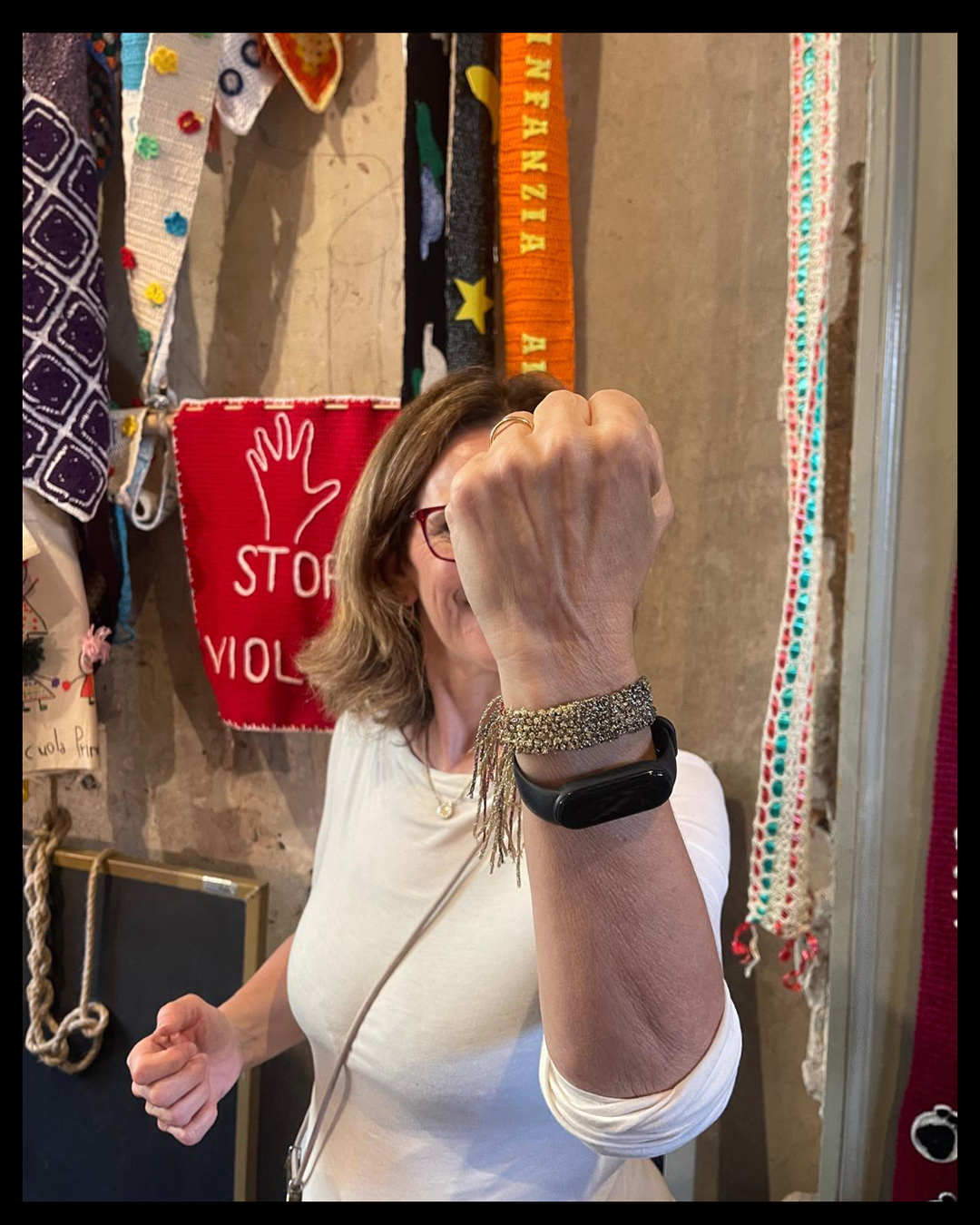
So you can understand why we felt a responsibility to do our bit. Margaret and Mary Ivell were able to be taught, or should I say, revive the skills from childhood, with the patient and expert guidance of the volunteers, and were soon on their way to creating a square. I, on the other hand, well, perimenopause, despite the HRT, has left my brain at a disadvantage. It’s basically on a go-slow, and I embarrassingly couldn’t grasp the basics. But I couldn’t just sit there and twiddle my thumbs, so the next day, even with a language barrier, I decided to teach hand weaving to anyone who wanted to learn. We improvised using books or box lids as mini looms, and over the six three-hour sessions, I passed on the craft to over a dozen women and girls. Using photos of my college work to show what could be achieved using the same techniques and stitches, and also using materials I’d sourced locally, such as magnetic fasteners, we made woven jewellery. By the end of our time, some of the volunteers I had taught were passing on the craft to others.
We could have been content with knowing that we’d done our bit, but the concept of Viva Vittoria is so wonderful, we are hoping to bring the project to Ireland. We’ve done initial research, approached Liberties College to come on board and are keeping our fingers crossed that enough crafty likeminded people with a passion for textiles and a compassion for the survivors of domestic violence will join us in our mission to raise funds, awareness and create safe spaces like the Viva Vittoria hub at home here in Ireland.
As for the Grand Tour itself, now that involved a lot of local wine, getting lost a little (some more than most but I’m not naming names and sure that’s were the adventure lies), plenty of bellisimo food, and some Irish Craic ( the young wans couldn’t keep up with us!) “What happens in Italy stays in Italy”-joke! We are women of a certain age, who are living la dolce vita, but have husbands waiting for us at home. This wasn’t a Shirley Valentine movie, but real Erasmus life.
The moral of this story is you are never too old to learn new things, say yes to opportunities even if they are out of your comfort zone, be brave enough to travel even if it’s on your own, and sometimes there is such a thing as a free lunch.
If you are interested in getting involved in the Viva Vittoria initiative in Ireland, or you want more information about the Textiles programme at Liberties College, we would love to hear from you.
Feltmakers Ireland aims to share information about awards, education, events, exhibitions, and opportunities that you will find interesting. Our sharing is neither paid for by nor an endorsement of these individuals or organisations.
Contact Us: If you have any concerns about content, please email us at feltmakersie@gmail.com.
Questions: For questions about content, please follow the link to the organisation involved in hosting the event.
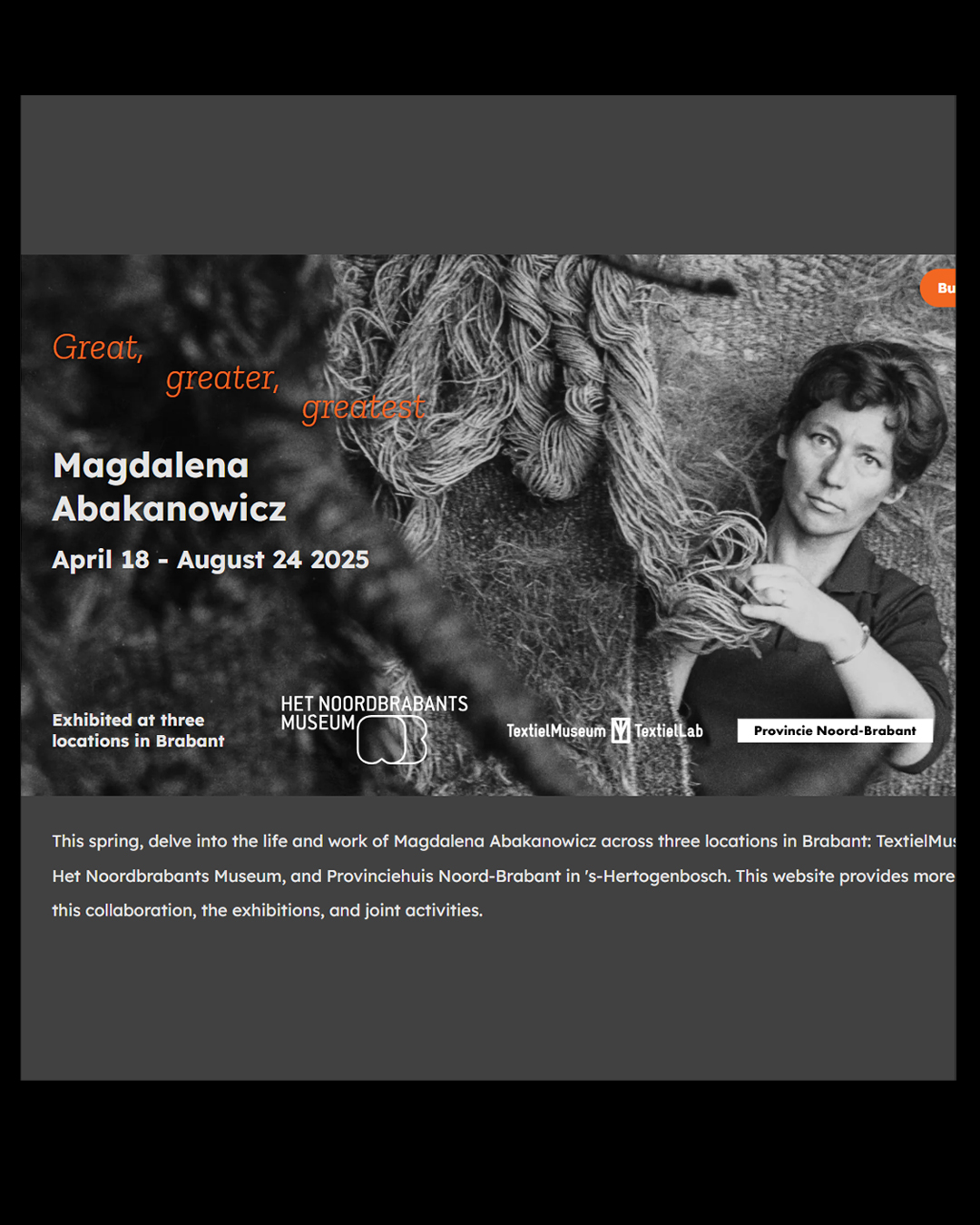
There’s an interesting trio of exhibitions in the Brabant region of the Netherlands devoted to the work of sculptor/installation artist Magdalena Abakanowicz.
The TextielMuseum in Tilburg, Het Noordbrabants Museum, and Provincial House of Noord-Brabant, ‘s-Hertogenbosch – are the three institutions.
“Abakanowicz was fascinated by the texture of textiles and the structure of natural fibres. She used this fascination as a basis for her weavings, but also to depict the human body. She travelled all over the world to set up her exhibitions herself and placed the sculptures in the middle of the space to create an ‘environment’, a world of her own. With this spatial concept, she was one of the forerunners of installation art.”
Feltmakers Ireland aims to share information about awards, education, events, exhibitions, and opportunities that you will find interesting. Our sharing is neither paid for by nor an endorsement of these individuals or organisations.
Contact Us: If you have any concerns about content, please email us at feltmakersie@gmail.com.
Questions: For questions about content, please follow the link to the organisation involved in hosting the event.
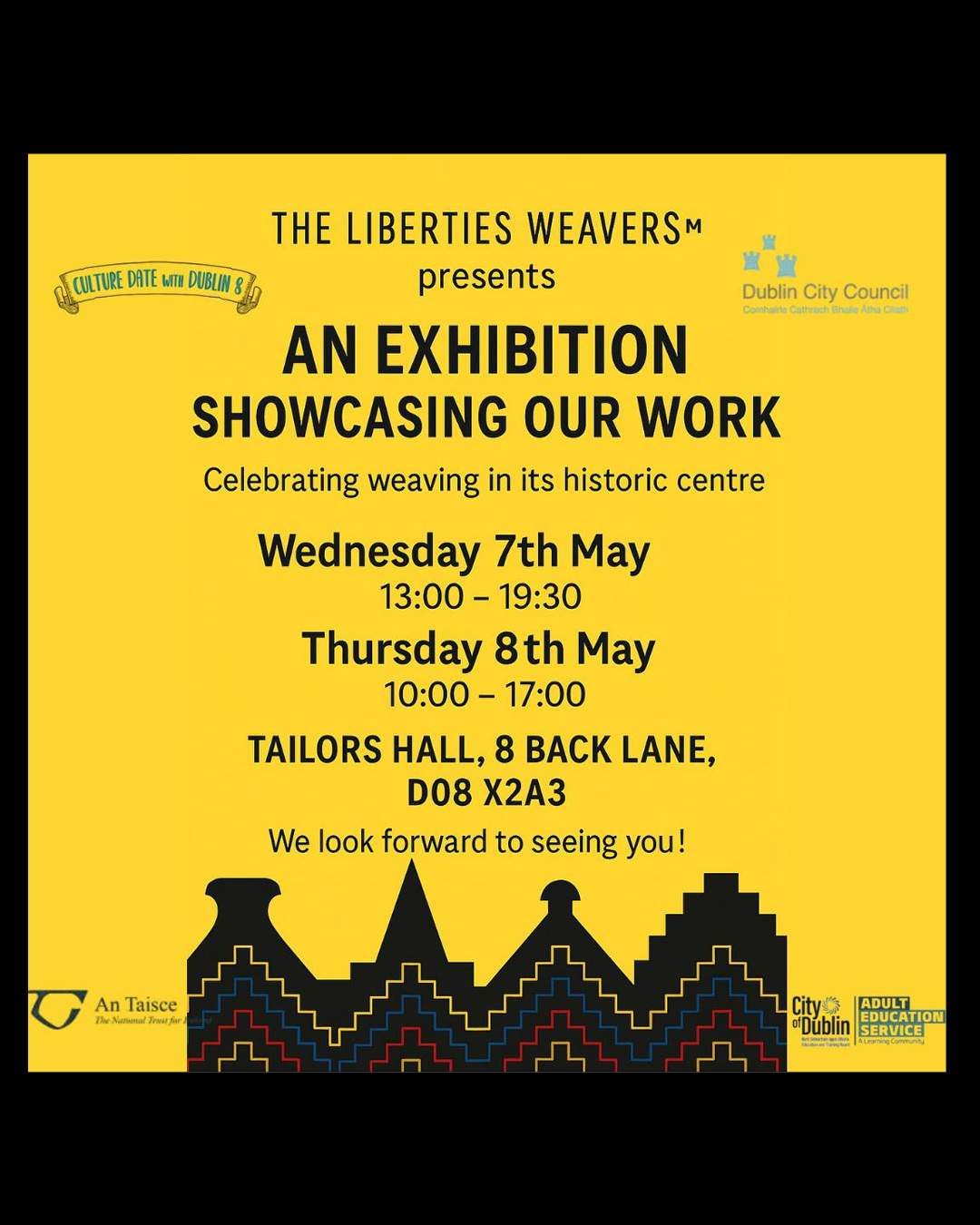
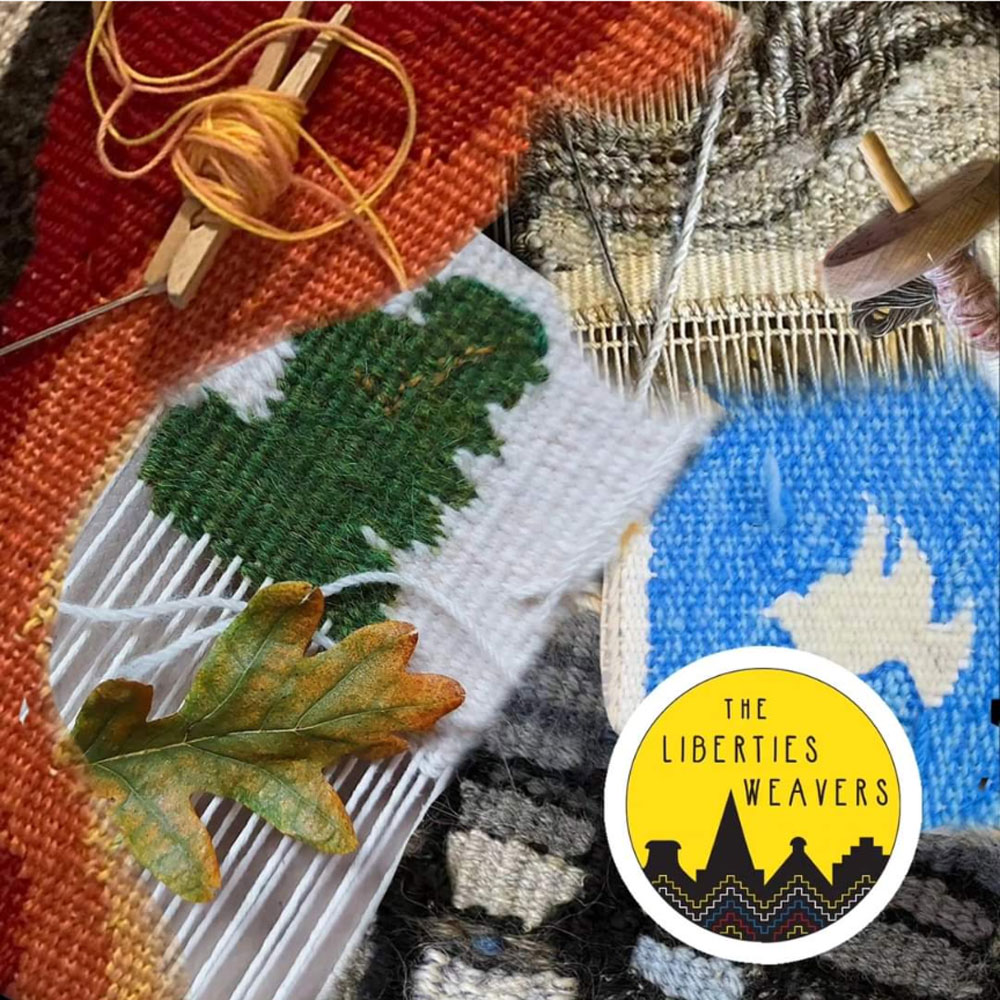
The Liberties Weavers will showcase their work in the beautiful surroundings of Tailors’ Hall, as part of the ‘Culture Date with Dublin 8‘ program of events.
On Thursday, the 8th of May, at 19:00, there will be a talk by Cathy Scuffil, Historian in Residence for the Dublin South Central area, about the history of weaving in the Liberties.
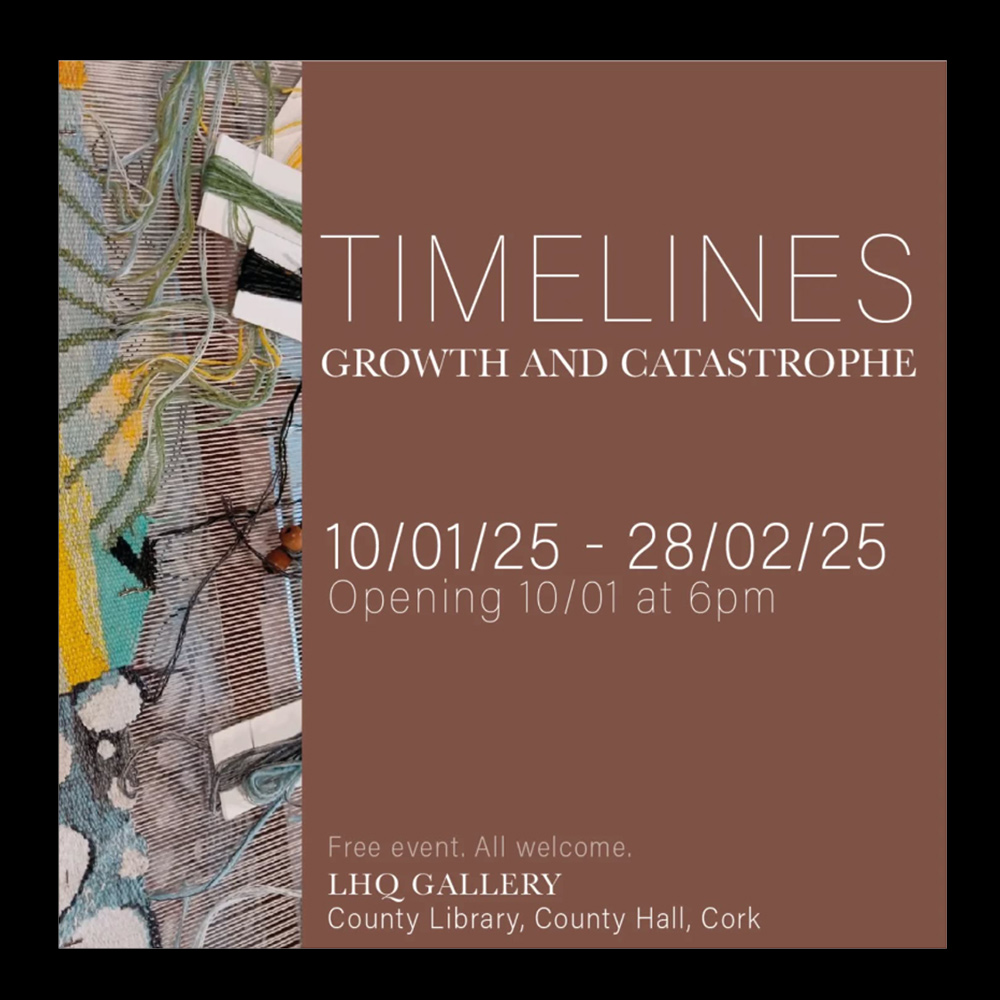
‘Timelines Growth and Catastrophe’ is a collaboration between eight contemporary Irish tapestry weavers. It showcases one large tapestry and eight individual works. The artists are the following: Muriel Beckett, Tish Canniffe, Pascale De Coninck, Frances Crowe, Lorna Donlon, Terry Dunne, Catherine Ryan, and Heather Underwood.
Feltmakers Ireland aims to share information about awards, education, events, exhibitions, and opportunities that you will find interesting. Our sharing is neither paid for by nor an endorsement of these individuals or organisations.
Contact Us: If you have any concerns about content, please email us at feltmakersie@gmail.com.
Questions: For questions about content, please follow the link to the organisation involved in hosting the event.
We’re sorry for posting this one at the last minute, as it closes on Saturday, but this art exhibition looks inspiring. Online sources are filled with excellent pictures and information if you cannot instantly travel to London in Dr Who’s TARDIS.
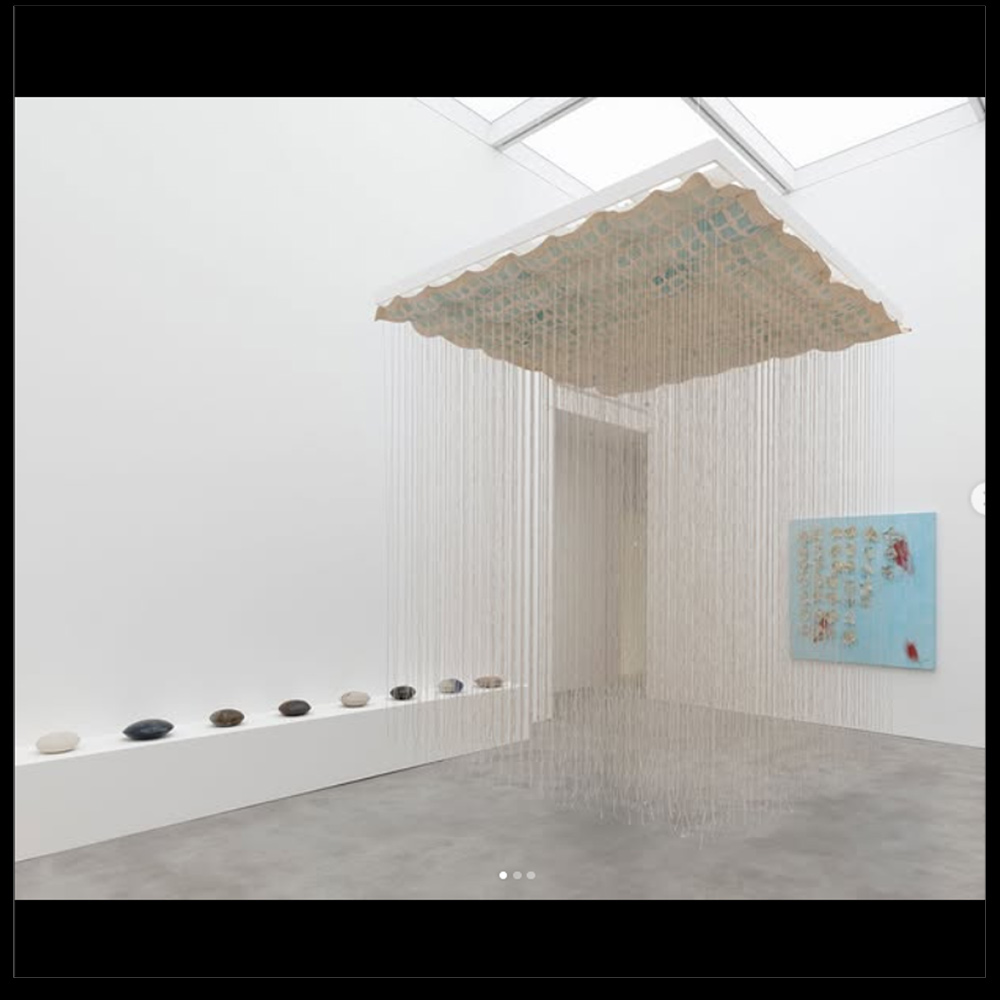
The Alison Jacques Gallery presents ‘Lenore Tawney & Toshiko Takaezu: A Remarkable Friendship’, which is a two-person exhibition dedicated to the work and 50-year friendship of Lenore Tawney (1907-2007) and Toshiko Takaezu (1922-2011).
According to Tawney’s website, her “career as an artist did not begin in earnest until the age of fifty.”
Kim is a former feltmaker, who now focuses on basketry. She has a long-running and informative blog that is worth following.
Disclaimer for Feltmakers Ireland Blog
Feltmakers Ireland aims to share information about awards, education, events, exhibitions, and opportunities that you will find interesting. Our sharing is neither paid for by nor an endorsement of these individuals or organisations.
Contact Us: If you have any concerns about content, please email us at feltmakersie@gmail.com.
Questions: For questions about content, please follow the link to the organisation involved in hosting the event.
The exhibition is centred around the revered figure of Brigid, the Celtic goddess of fire, wisdom, and creativity. Through intricate weaving techniques and vibrant colours, the exhibition brings to life the essence of Brigid, capturing her multifaceted nature and enduring symbolism.
Feltmakers Ireland members Deirdre Crofts and Sandra Chase have pieces in the group exhibition.
The opening night is on Thursday, the 1st of February, from 5 to 8pm.
The exhibition continues through Friday, the 2nd of February, from 12 to 6 pm.
Where: Pallas Projects Gallery, 115-117, The Coombe, The Liberties, Dublin, Ireland.
The above exhibition is part of city-wide celebrations, which run from Thursday, the 1st, through Bank Holiday Monday, the 5th of February, 2024.
To see over 50 activities that are scheduled as part of Brigit: Dublin City Celebrating Women, visit this website – https://dublin.ie/whats-on/brigit/
Disclaimer for Feltmakers Ireland Blog
Feltmakers Ireland aims to share information about awards, education, events, exhibitions, and opportunities that you will find interesting. Our sharing is neither paid for by nor an endorsement of these individuals or organisations.
Contact Us: If you have any concerns about content, please email us at feltmakersie@gmail.com.
Questions: For questions about content, please follow the link to the organisation involved in hosting the event.
If you are going to NYC, then stop by the wonderful Cooper Hewitt Museum and see the exhibition devoted to textile designer Dorothy Liebes.
American textile designer, weaver, and colour authority Dorothy Liebes (1897–1972) profoundly influenced design fields, helping to shape American tastes in areas from interiors and transportation to industrial design, fashion, and film. The “Liebes Look”—which combined vivid colour, lush texture, and often a metallic glint- became inextricably linked with the modern American aesthetic.
From the 1930s through the 1960s, Liebes collaborated with some of the most prominent architects and designers of the time, including Frank Lloyd Wright, Henry Dreyfuss, Donald Deskey, Raymond Loewy, and Samuel Marx. Fashion designers, including Pauline Trigère, Adrian, and Bonnie Cashin, also used her fabrics, yielding some of the most distinctively American fashions of the mid-20th century.
If you cannot travel, the website has an extensive virtual exhibition.
Feltmakers Ireland aims to share information about awards, education, events, exhibitions, and opportunities that you will find interesting. Our sharing is neither paid for by nor an endorsement of these individuals or organisations.
Contact Us: If you have any concerns about content, please email us at feltmakersie@gmail.com.
Questions: For questions about content, please follow the link to the organisation involved in hosting the event.




 Feltmakers Ireland