

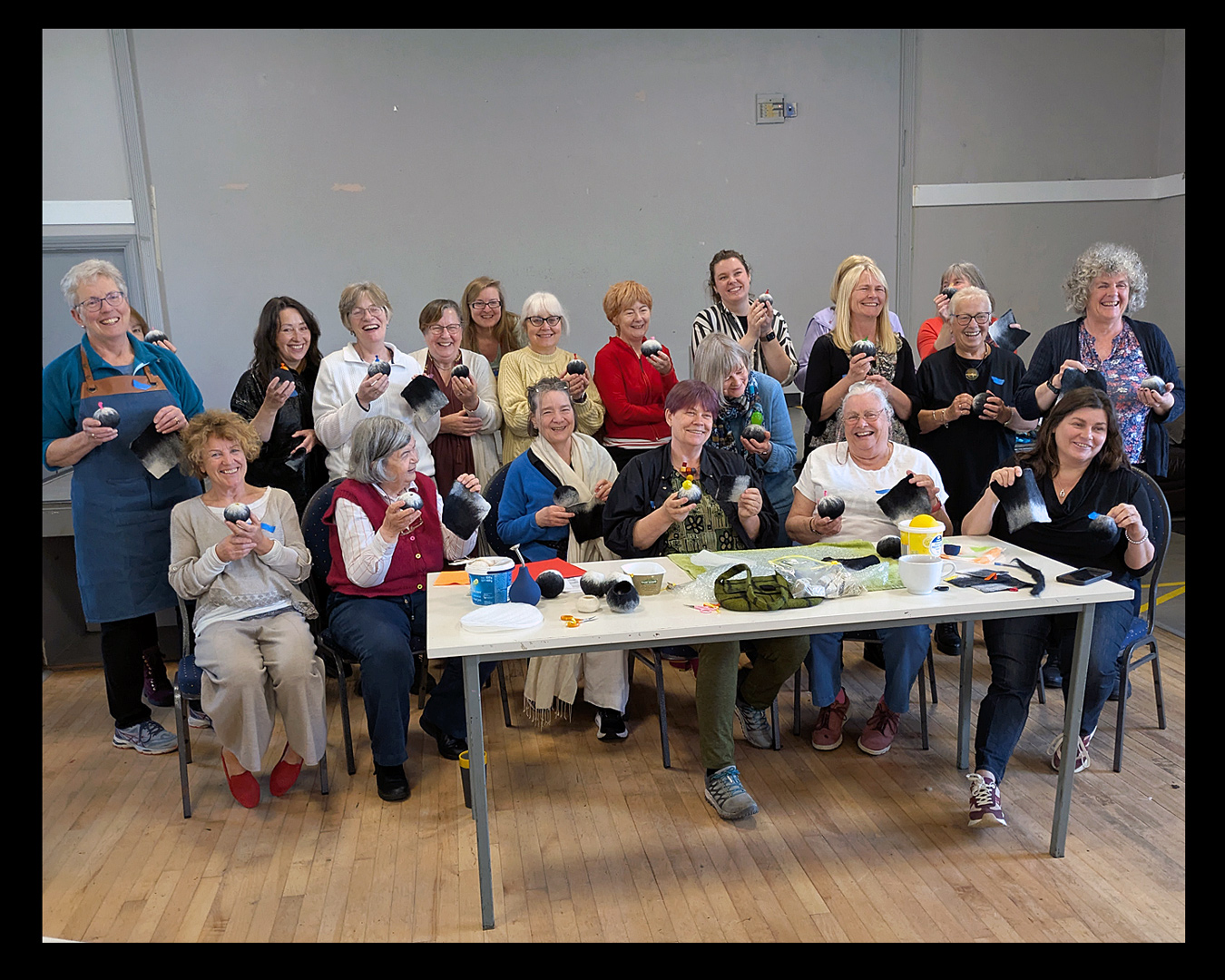
On Saturday, the 26th of April, 20 students gathered around artist and Feltmakers Ireland guild member Annika Berglund to learn about Fine Feltmaking. In the morning, we concentrated on flat, two-dimensional wet felting, and during the afternoon, we focused on creating a three-dimensional vessel.
What is Fine Felt?
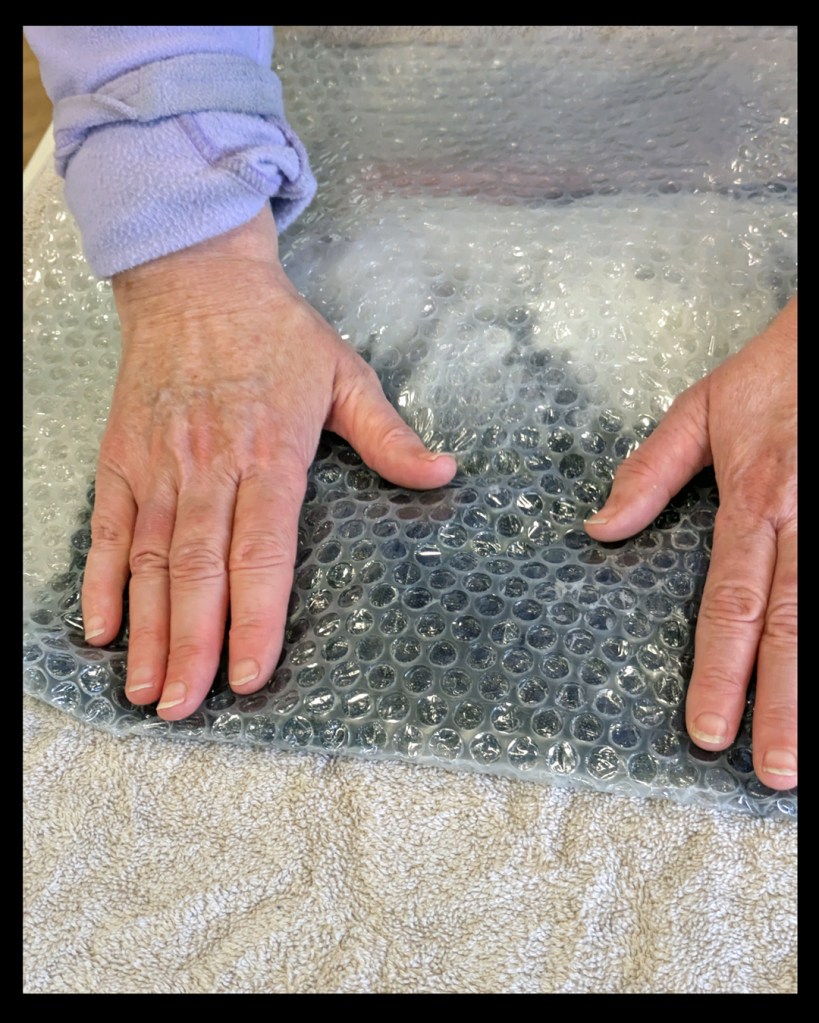
With this type of wet felting, the aim is to create dense, smooth felt. It is not a fast process. She shared that she came across the slow approach during her research for the guild’s Irish Wool Project. One of the wool tester’s felted samples were exceptionally smooth and tight. In querying this person, she deduced that our usual method, which involved a bit of rubbing and a lot of rolling, needed to be reexamined. By slowly compressing the fibres, the results are better!
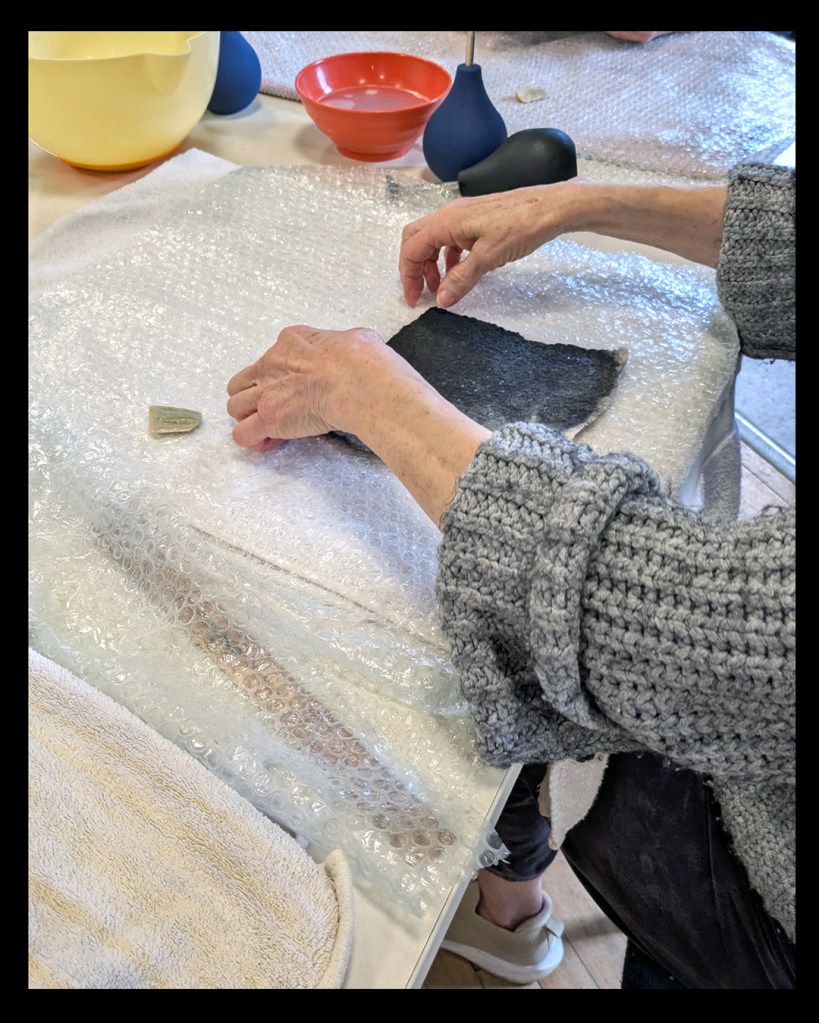
Consequently, during the Fine Felt Technical Workshop, we didn’t toss or throw. Instead, we took it slow. Annika said we might never seek this patience-requiring method again, but we would know and have the option to use it in our future felting. Nevertheless, Annika reminded us that “Felt is Forgiving”.
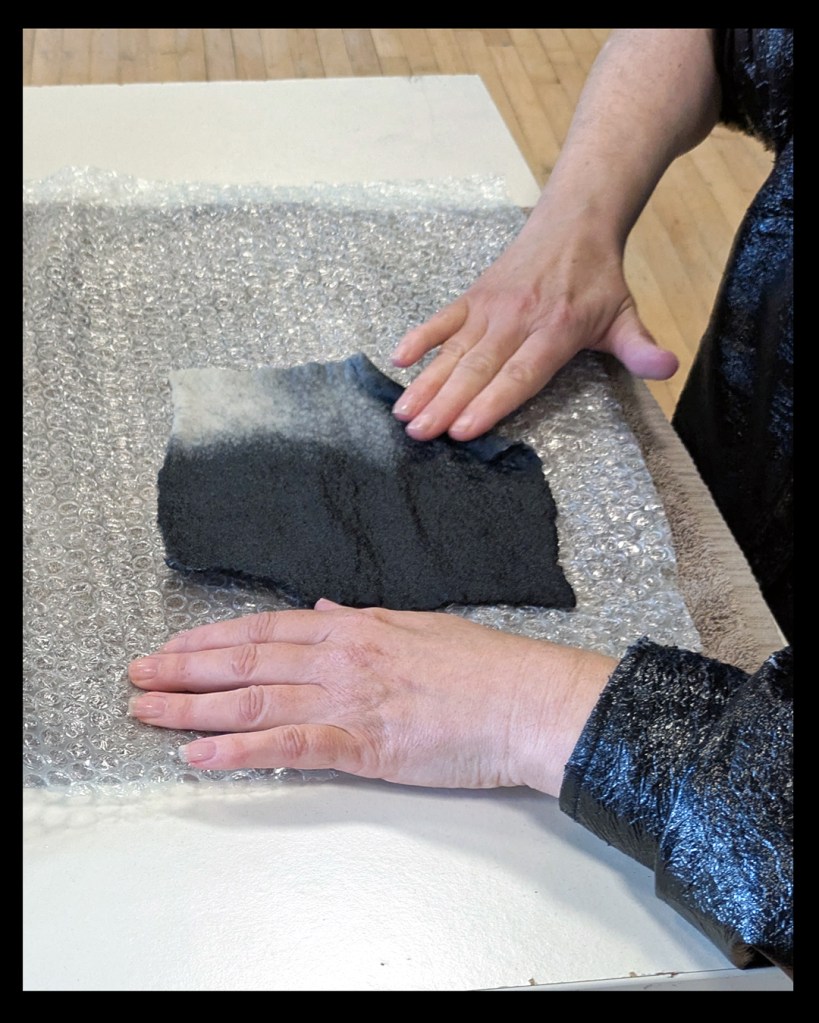
Throughout the workshop, the students used only two colours: black and white. This simple limitation allowed us to experience how colours combine through the feltmaking process. Similarly, we learned about the differences between the wispy and the blunt ends of a wool shingle and how they can impact the final project. There was a lot to think about!
Morning
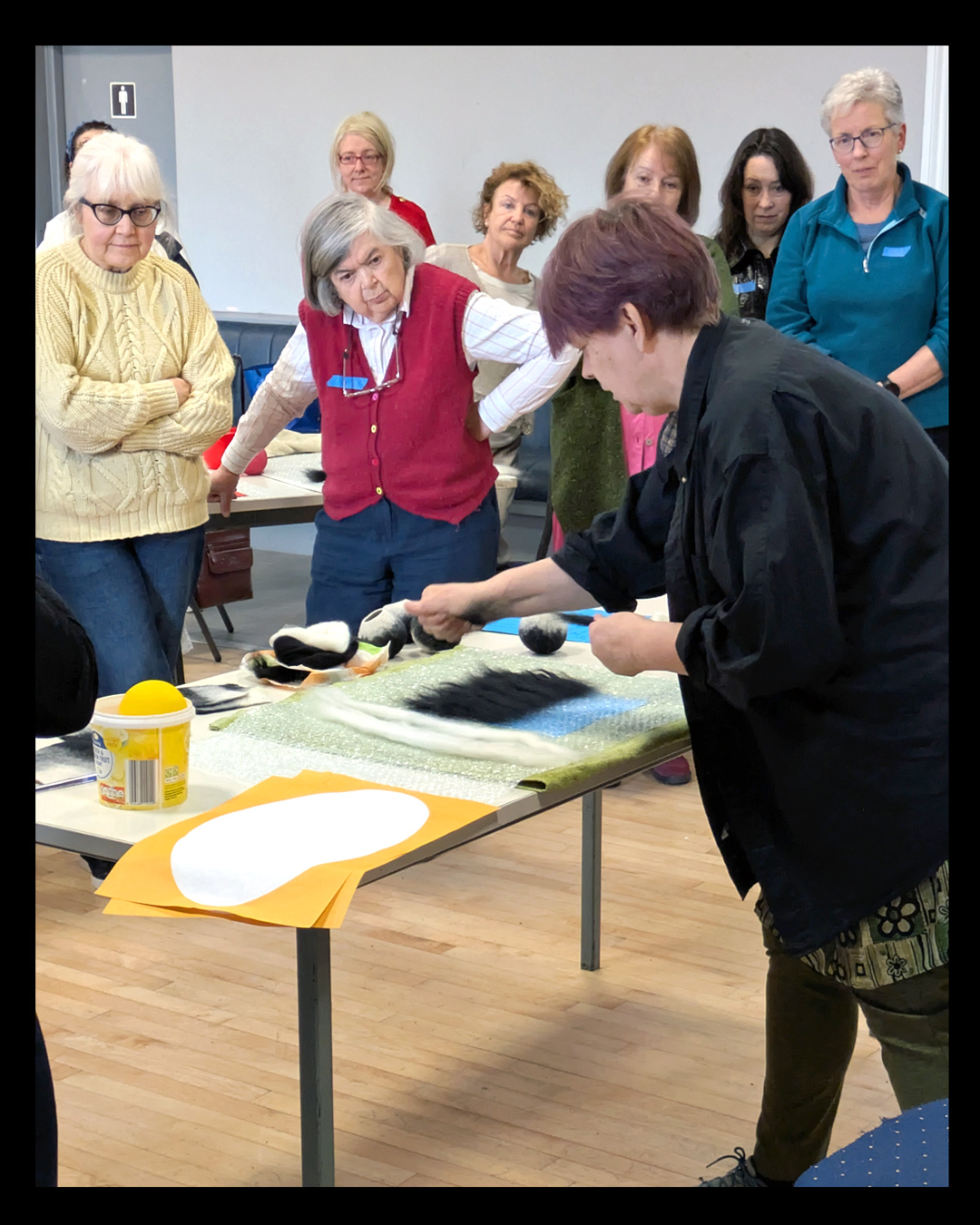
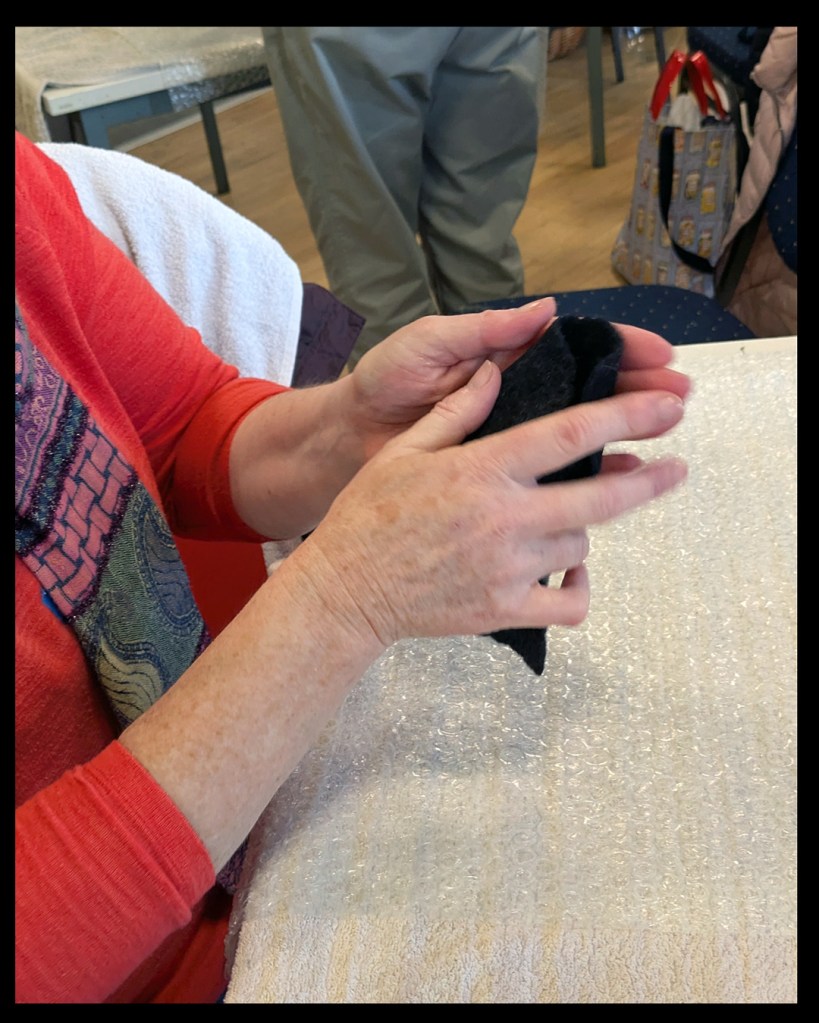
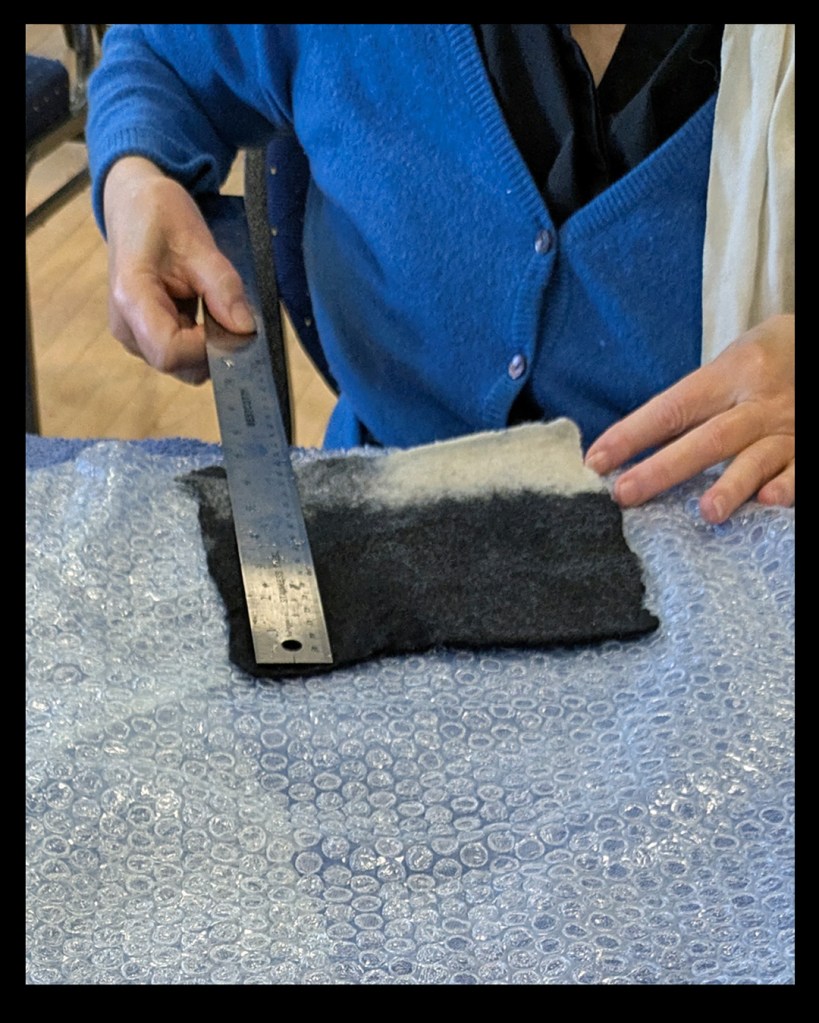
In the morning, we worked on a flat square of felt. We learned how to carefully lay out Merino wool roving to a specific size and then gently transform the fluff into felt. Annika explained the hows and whys of why we might want to shrink our samples more or less. Interestingly, we worked in imperial measurements (inches) because the percentage shrinkage was more obvious. As we shrank down our pieces, she reminded us to remember the edges!
Afternoon
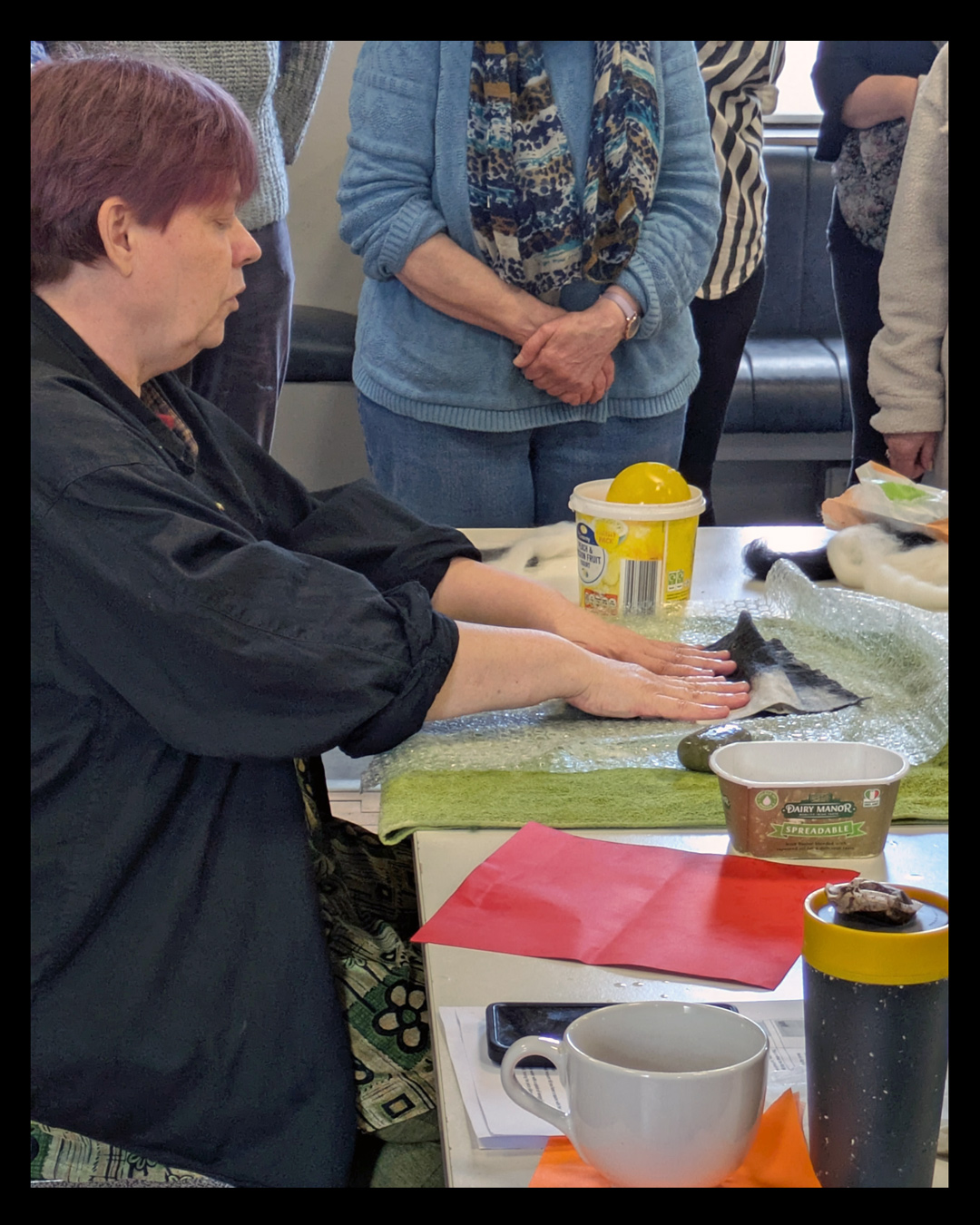
In the afternoon session, the students concentrated on creating a three-dimensional sphere. We used a flat, circular-shaped resist to make this hollow form, a vessel. Interestingly, the afternoon vessel layout was a quicker process. However, similar to our morning education, this felting process needed a delicate touch. Annika reminded us that with rolling, it can get bumpy; the resist inside may bunch up, but you’re in control.
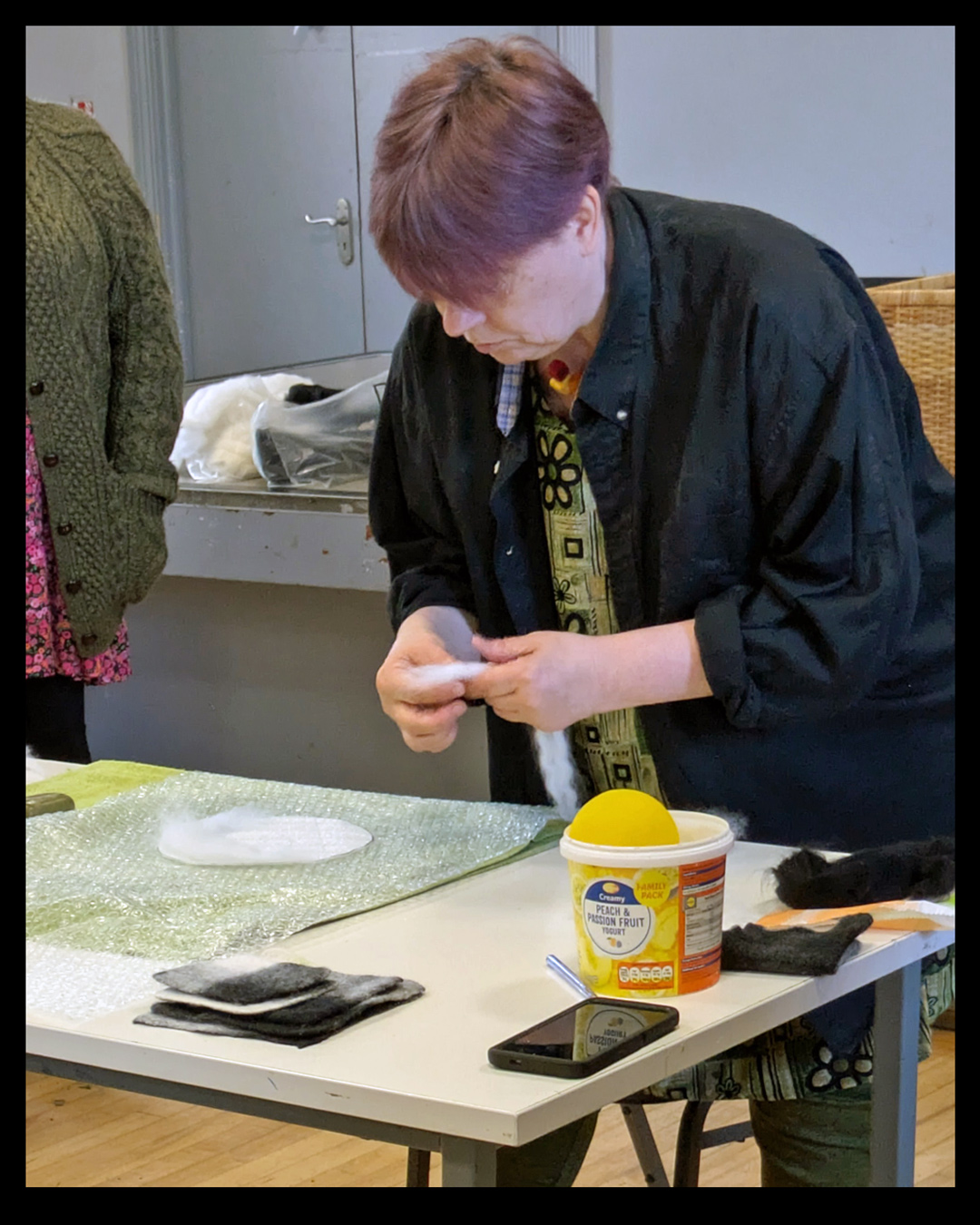
Busy Hands

Additional Information
Educator and artist Vanda Sousa has several excellent blog posts about wet felting. This one on how to create fine felt is helpful – https://www.vandafsousa.com/blog/tutorial-how-to-make-fine-and-flexible-felt.
If you are more experienced with three-dimensional felting, Vanda Sousa has an upcoming online course that may be of interest. It is for designing resists to make felted slippers, shoes and boots – https://www.vandafsousa.com/resists-made-easy-for-footwear
Appreciation Time
Many thanks to the volunteers who assisted in setting up the room and helping the students: Loli Cox, Adrienne Dempsey, Hélène Dooley, Marie Dunne, Sam Fagan, Juliane Gorman, Fiona Leech, Caitríona Nolan, and Suzanne Phelan.
Sam was invaluable, continually lending a hand behind the scenes.
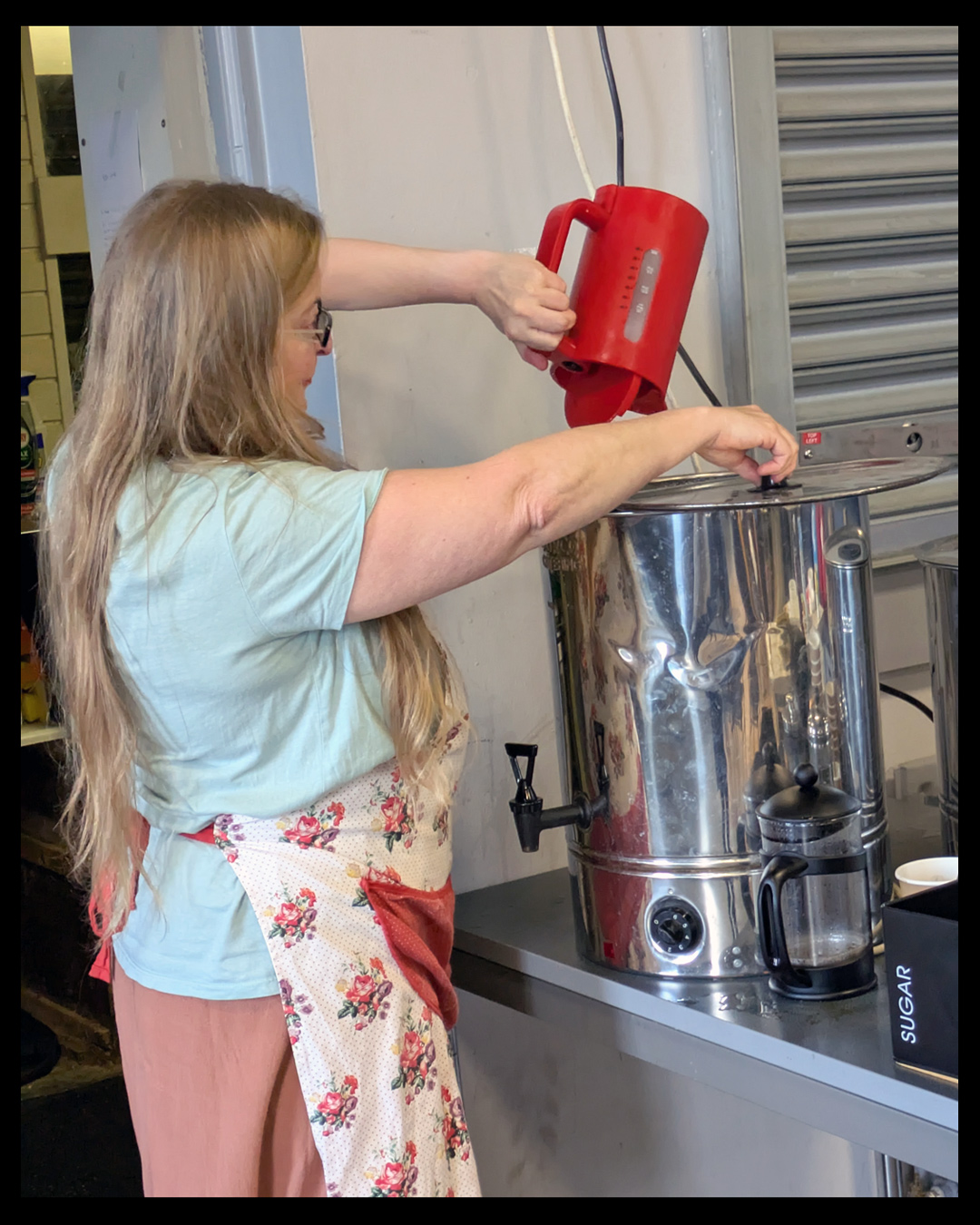
A special thanks to Lorna Cady for taking care of the CIE Sports Hall and the tea, coffee, and sweet treats!
Lastly, a huge thanks to Annika Berglund for taking on this workshop for the Guild. She has a marvellous way of getting the students’ attention and also making us laugh!
A Video of the Day!
Disclaimer for Feltmakers Ireland Blog
Feltmakers Ireland aims to share information about awards, education, events, exhibitions, and opportunities that you will find interesting. Our sharing is neither paid for by nor an endorsement of these individuals or organisations.
Contact Us: If you have any concerns about content, please email us at feltmakersie@gmail.com.
Questions: For questions about the content, please follow the link to the organisation hosting the event.




 Feltmakers Ireland