
By guild member Christine Jordan of Rough Circle Wool Studio
Late last year, while researching various aspects of wool and fibre crafts, I came across a Dutch textile artist named Beatrice Waanders. Her work is beautiful, and I loved the scale of it. When I got in touch with her, she mentioned that a master class would be available sometime in the spring of 2025, and so I planned my next wool research trip around that.
Early May is when our lambs are finding their feet, and by the end of the month, I usually can go away for a short trip. Editor’s Note: Christine raises Valais Blacknose, Herdwick, and native Irish Galway sheep on a small, certified organic farm in County Carlow. You can read about her sheep over on her blog – https://www.roughcircle.ie/sheep-ireland-wool-blog
I have found travelling to the Netherlands really fascinating for so many different reasons. It has a completely different landscape from Ireland, to start, and everything about it visually is entirely different. I firmly believe that when you travel, you really need your mind to switch off on one hand, but to remain open on the other. Visiting a very unfamiliar place, with an unfamiliar language, unfamiliar landscape, architecture, and lifestyle, has really inspired me both times I have visited the Netherlands.
I planned this trip around two different destinations.
Destination One – The Hague
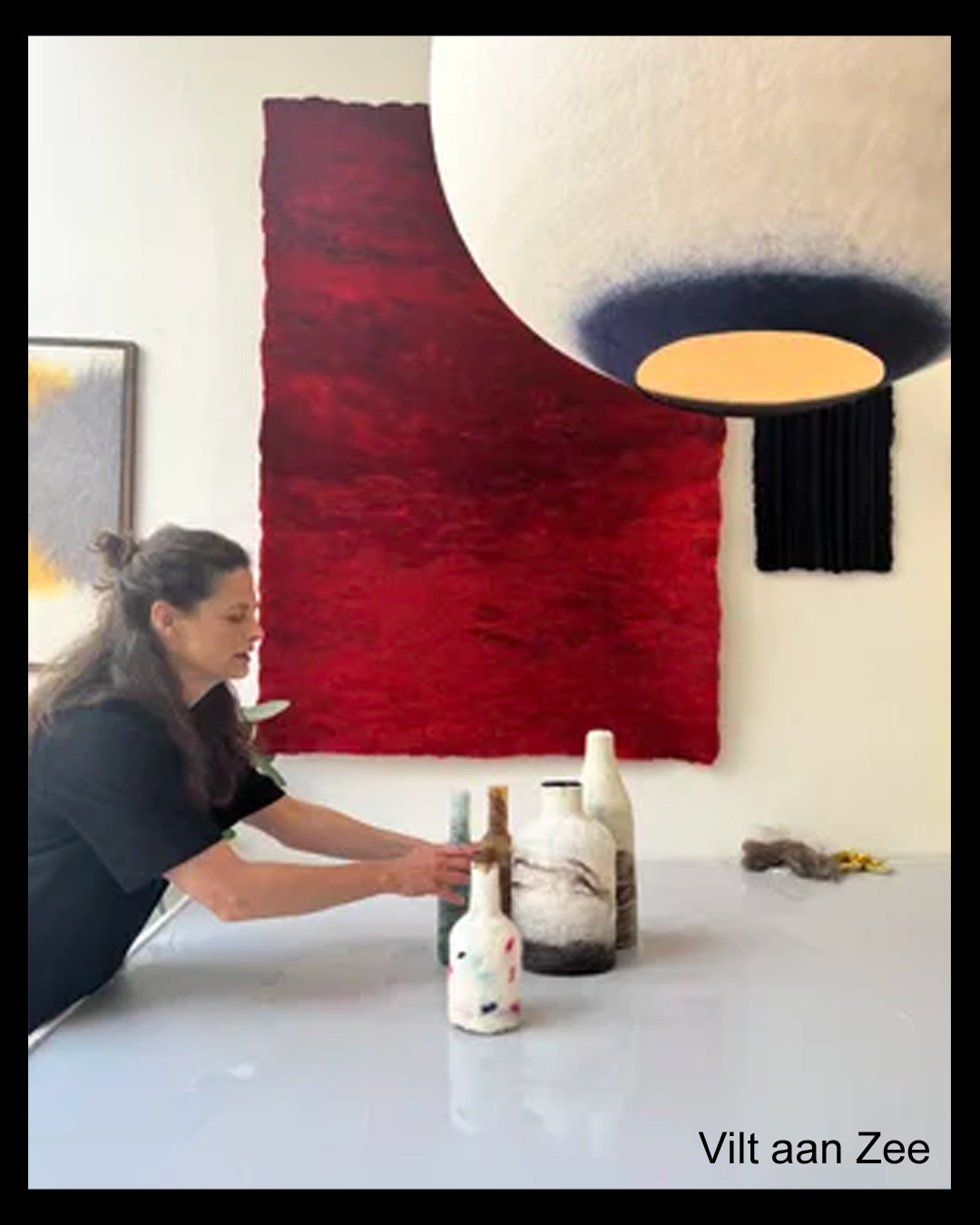
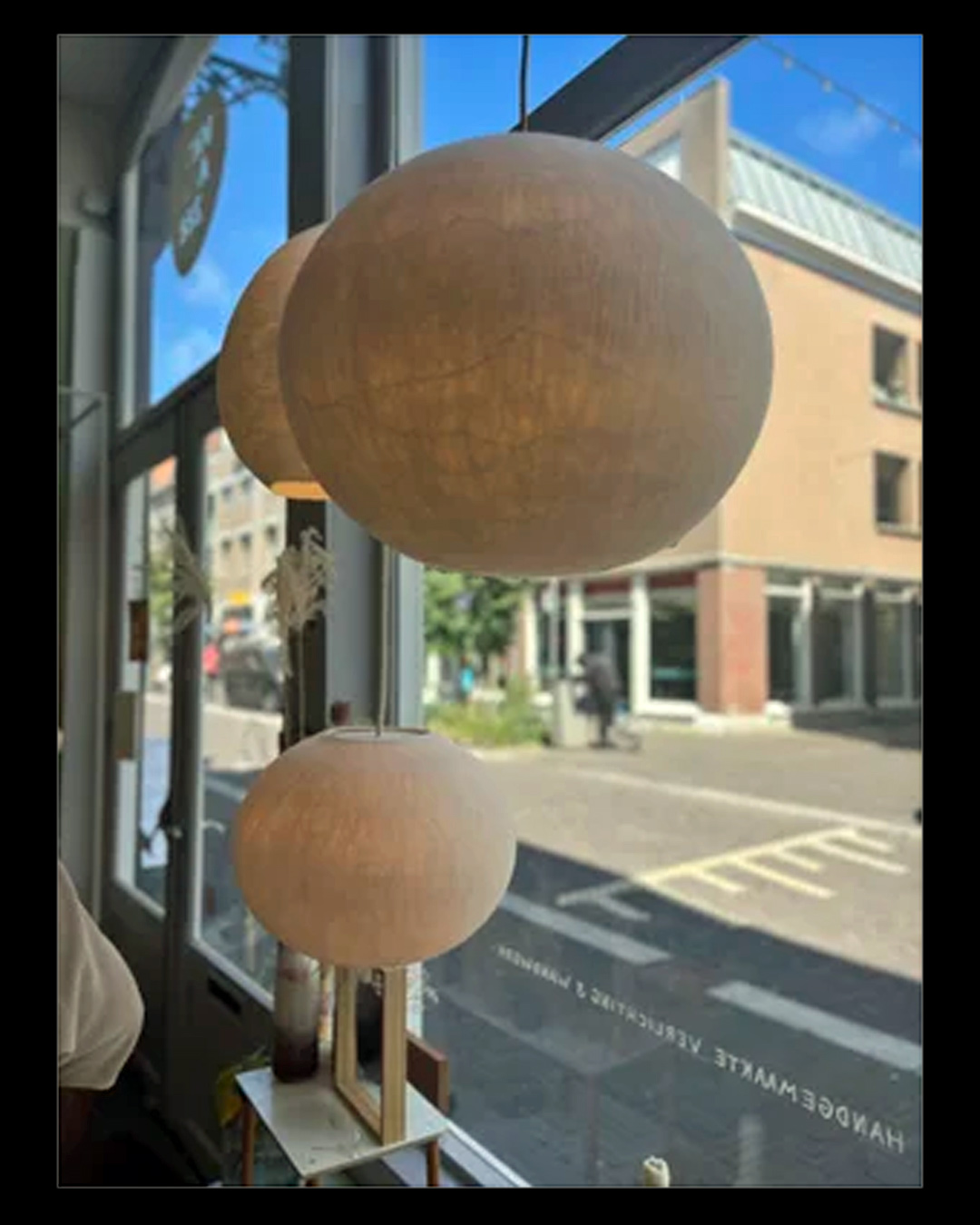
First to The Hague, for a short workshop on wool lighting, which was fascinating.
Anne van de Weijer is a fantastic tutor, and she has a wonderful small-scale studio, Vilt aan Zee, where she makes beautiful felted lights from wool that she exports all over the world. Learning how to create 3-dimensional, very fine felt was interesting because you can use all sorts of vessels and containers to mould a piece of wool around them into a beautiful 3D shape, which you can then use for lots of different things. This vessel can be used decoratively, or you can leave the mould vessel inside so that it can hold water if you would like to use it as a vase, for example.
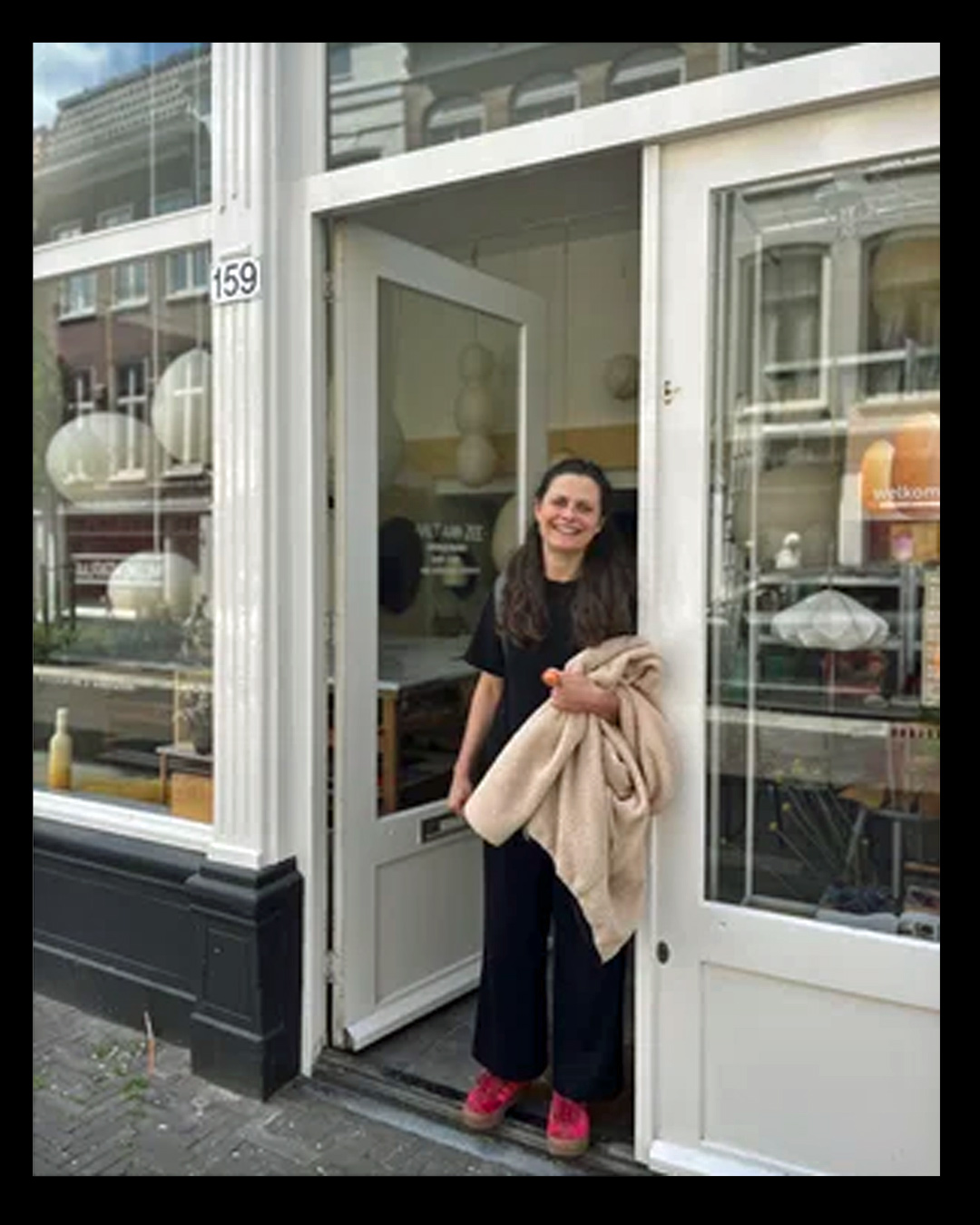
Always thinking that The Hague is a political and administrative city, but perhaps not very interesting, I could not have been more incorrect. It’s a very beautiful and interesting Dutch coastal city, where, after the workshop, I spent a few hours rambling around.
Then, I drove across country and stayed in a beautiful town called Amersfoort, which is possibly one of the prettiest towns I’ve ever been to in my life. Absolutely stunning, and I really want to go back and visit there again. Every town I rambled through had a series of canals with beautiful boats, beautiful parks, and cycle ways. Of course, this is possible because the entire middle of the Netherlands is flat. However, it’s truly unique and distinct, and the architecture is stunning.
Destination Two – Further North
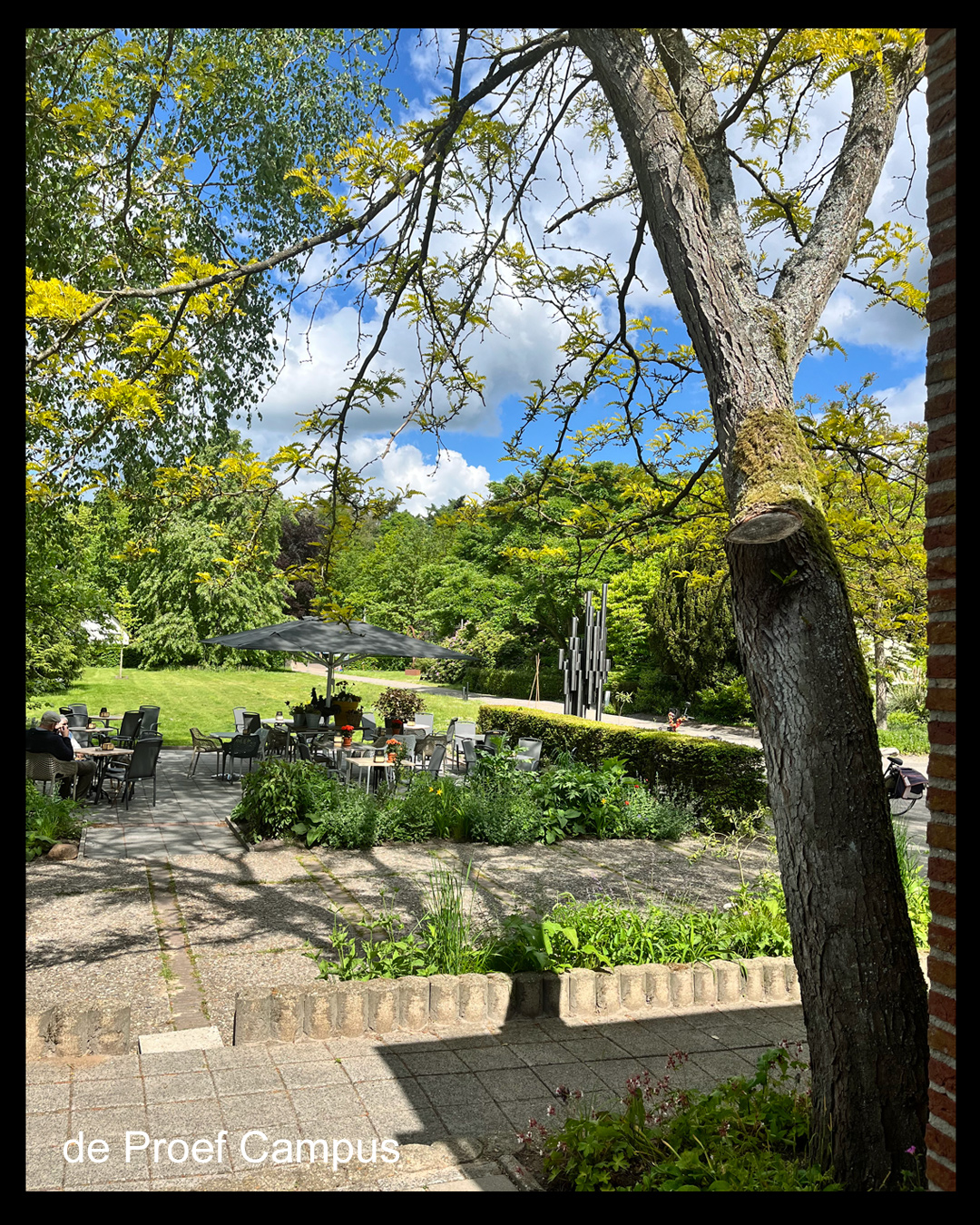
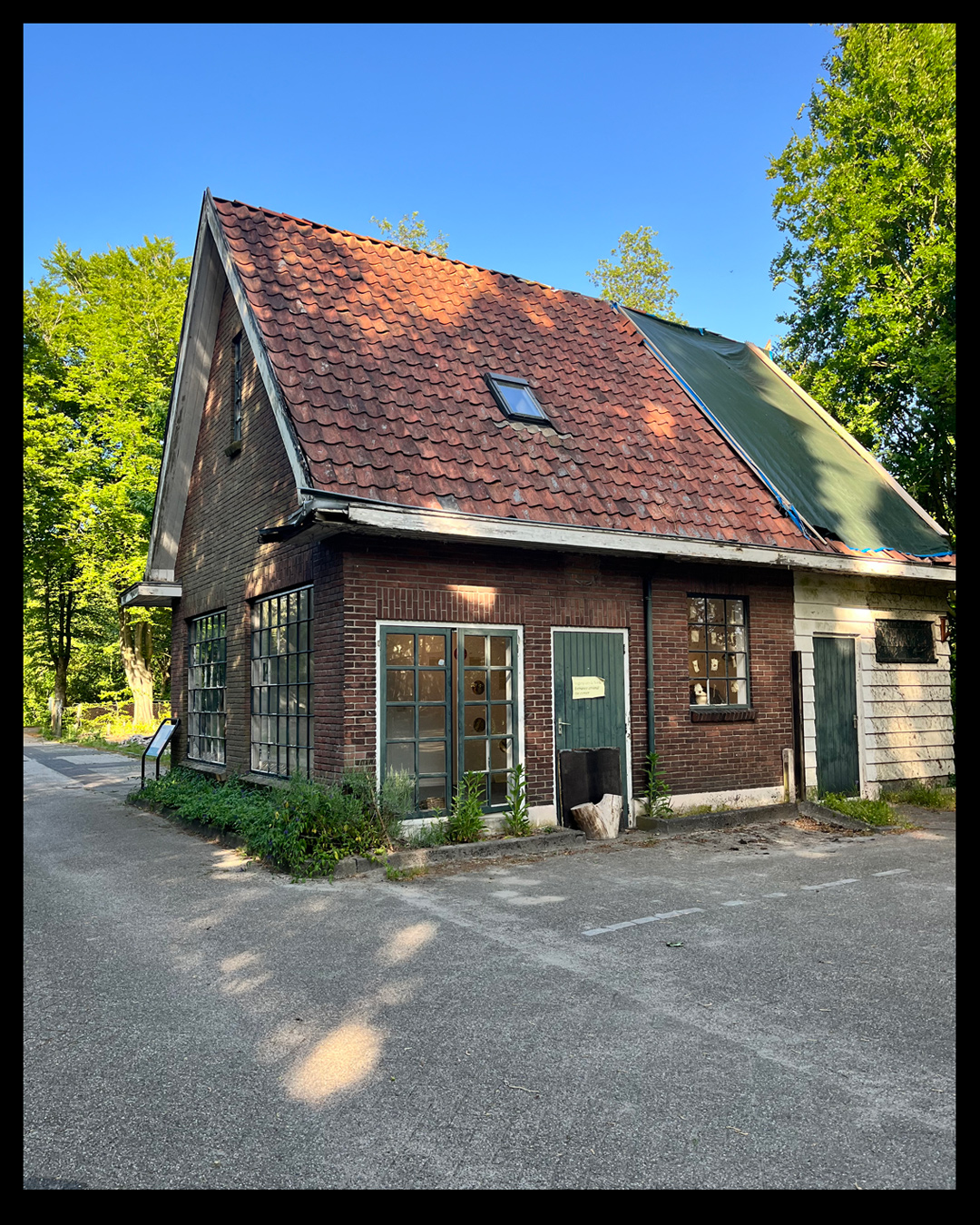
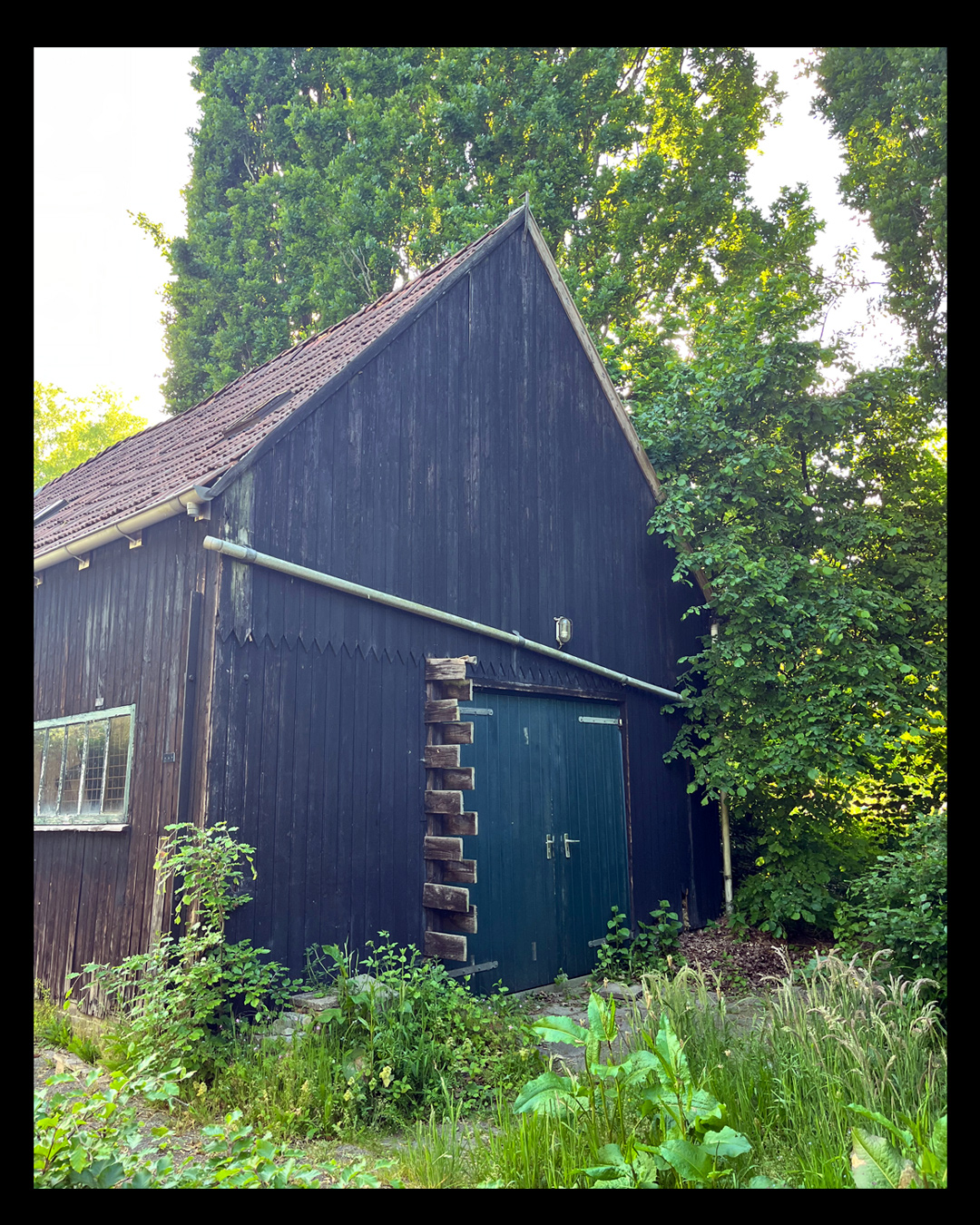
The next morning, I drove north where an organisation called De Proef is based. This is where Beatrice Waanders runs her workshops. Originating in 1884, it was set up as a retreat and nature-filled workspace. Consisting of gardens, studios, glasshouses and research labs, it is based in the UNESCO village of Frederiksoord. Established as a foundation to help people who were struggling in life find a new direction through connection with the land and nature, it has evolved into a heritage project that combines horticulture, agriculture, education, ecology, art, and culture. Having fallen into decline and disuse, it was spotted by two young product designers based in Amsterdam a few years ago.
Seeing its potential, the regeneration project was initiated a few years ago by Joshua Kelly, from County Laois, Ireland, and Kim Van De Belt, both product designers based in the Netherlands. I didn’t know this detail before I travelled there, so I got very excited when I met Joshua and Kim. I couldn’t believe that he was from somewhere only 40 minutes from my home, and here he was in the least well-known part of the Netherlands, having studied Industrial Design like myself, and additionally, also working with a small farm.
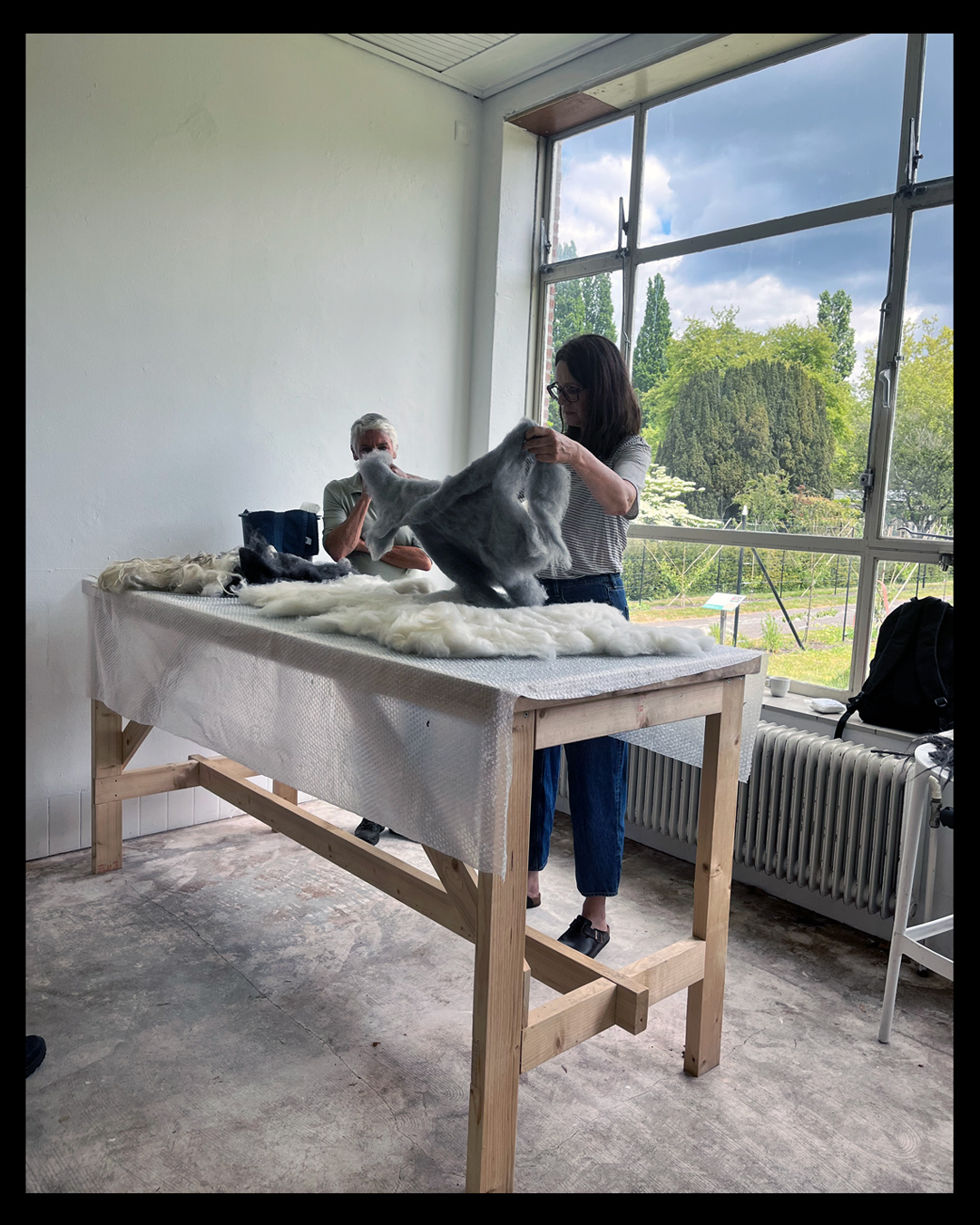
The full day was spent with Beatrice Waanders, learning about working with complex wool patterns and long locks taken from the fleeces of wild native Dutch sheep called Drenthe. The setting was so evocative and peaceful; creating a large-scale wool piece while looking out at the beautiful gardens and trees was a truly memorable experience.
Other Destinations
Planning my travel route, I decided to travel north across the famous Afsluitdijk – the 32km dyke that connects the region of North Holland to Friesland in eastern Netherlands – to get to the airport, instead of retracing my steps south. Researching the work of seminal wool and textile artist Claudy Jongstra, I saw that she has a huge piece on permanent display in the Fries Museum in Leeuwarden. However, when I arrived, to my dismay, it was closed, as Mondays are a slow day in terms of museums, galleries and cultural spaces in rural Friesland.
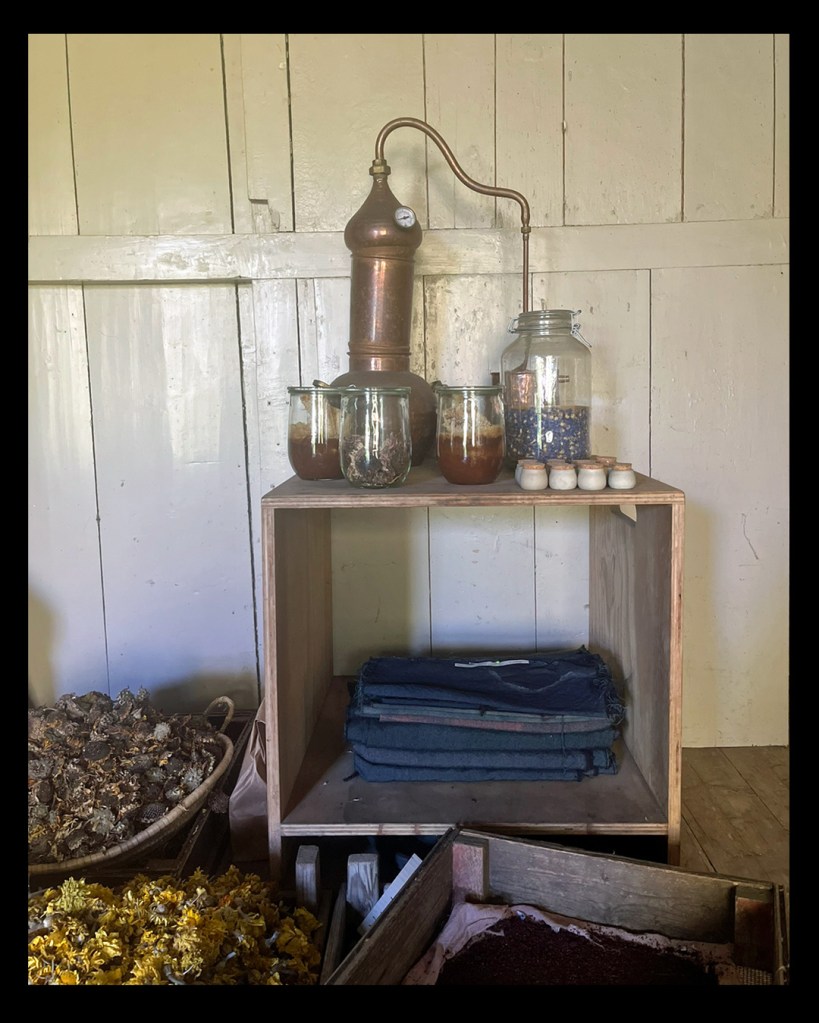
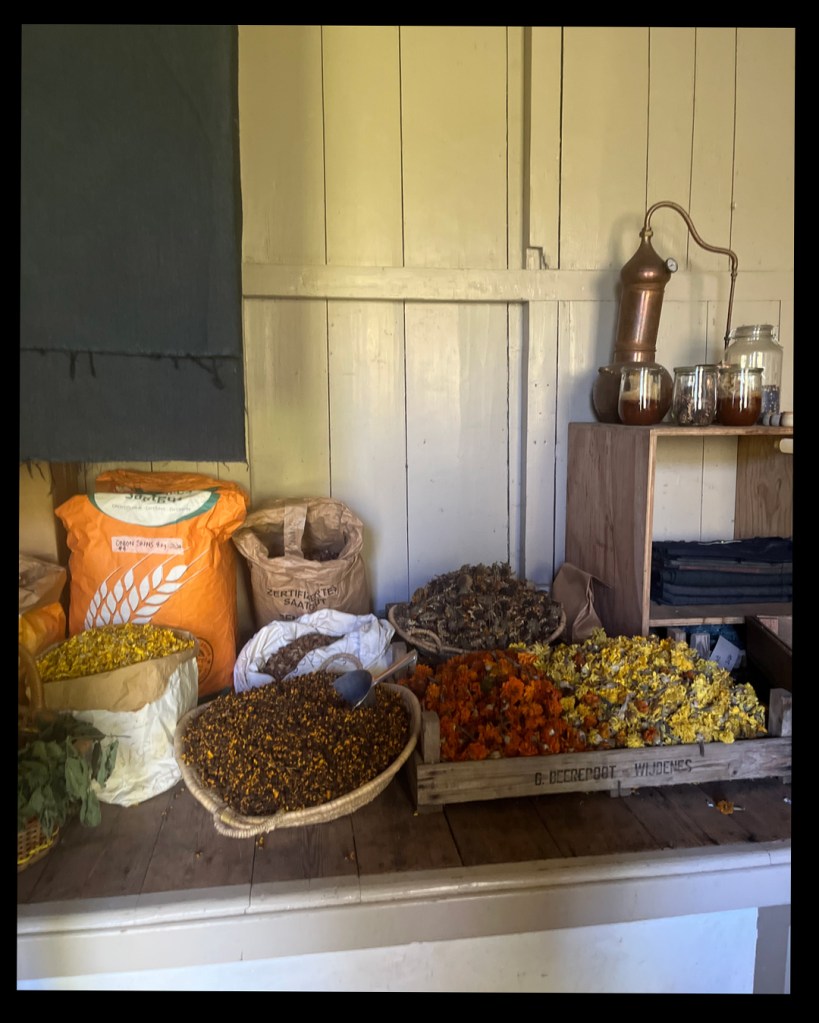
A quick Google search to find something else to do in the locality led me to discover that Claudy’s studio was in fact only 15 minutes away, and it seemed there was a bakery there too. Off I went, thinking there was a cafe/studio for me to stop off at for a short while on the way to the airport. I soon found myself navigating the narrow streets of a small, remote village, which led me to the centre of a yard with a cluster of buildings. Spotting bubble wrap (a dead giveaway for felters) through an open door, and seeing lots of beautiful plants drying in the sun, I briefly chatted with a woman about my interest in wool.
Now, Claudy Jongstra is one of the world’s most influential textile and ecological artists who, for more than thirty years, has been transforming wool, colour and light into monumental installations of stunning organic textures and subtle natural hues. Based in this remote part of rural Friesland, she breeds the native and rare Drenthe Heath sheep for wool. Tending to her historic dye gardens, which she uses to craft art that is both deeply ecological and tactile, she is the blueprint for sustainable living and working. Her work connects communities, landscapes, and tradition, and has appeared at the Venice and São Paulo Architecture Biennales, the TextielMuseum, and the Museum at FIT, and is held in collections including MoMA, V&A, and SFMoMA.
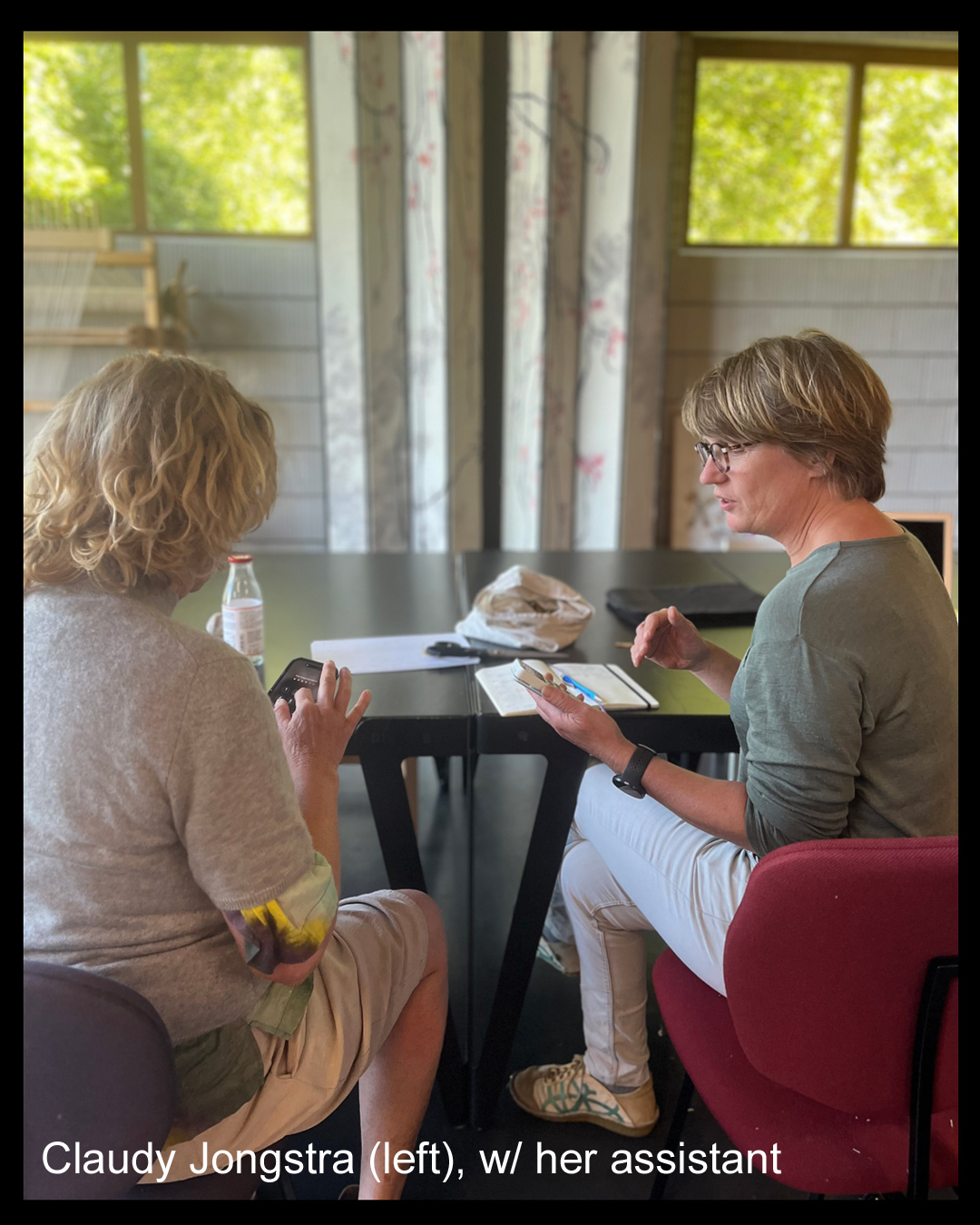
In that context, my wandering innocently into what I thought was a studio/cafe/shop, but turned out to be her home and large-scale workspace, was to say naive, and if I had known, there is no way I would have landed there. Speechless to realise where I was standing is an understatement. Her assistant just laughed and invited me in and asked if I would like to meet Claudy, because “she is just out back”. Two minutes later, I was being shown around the exhibition space, wool storage room and workspace by Claudy herself – an absolute powerhouse of energy and vision.
It was one of those pinch-me moments that was the result of something entirely spontaneous and was just a stroke of luck.
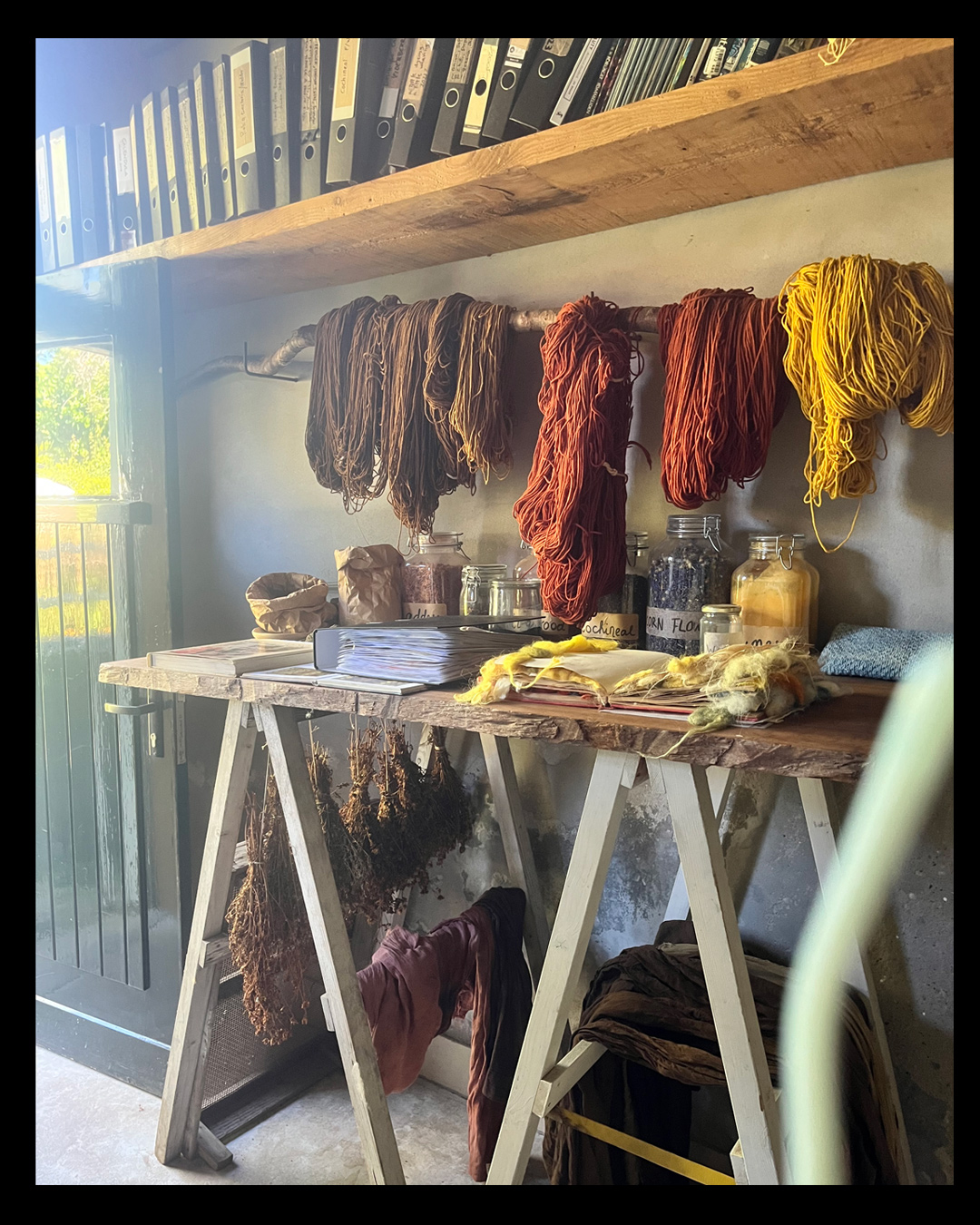
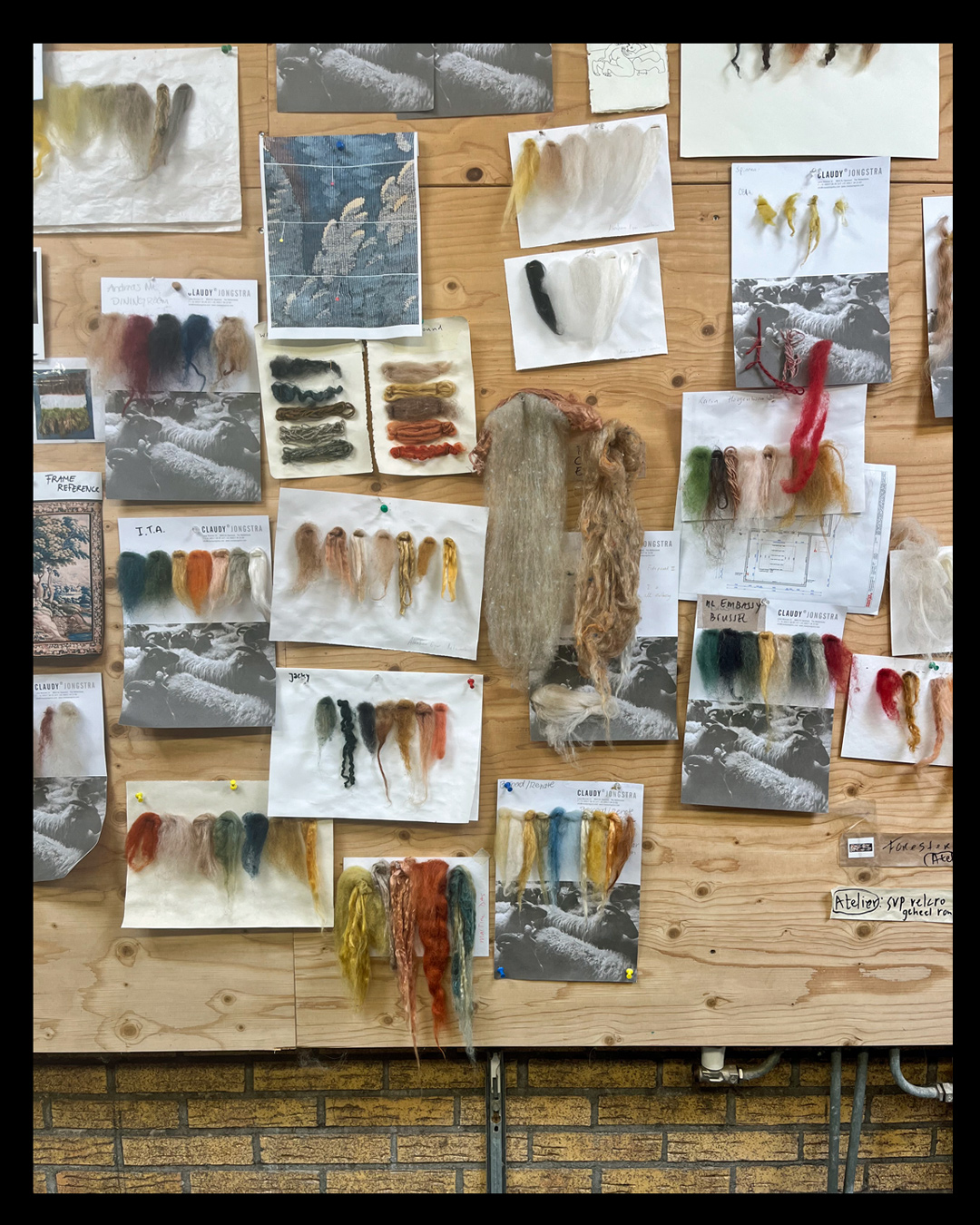
For anyone who knows of the “burnt toast theory”, then this was it. That closed museum disappointment had led to an extraordinary meeting with one of the most celebrated wool artists in the world.
I was shortly dispatched to her farm to deliver a package – it is only a couple of kilometres away – and Claudy asked if I could drop it off as I would be passing by, which would save her a trip. This is where she and her partner, Claudia, have their stunning dye plant garden, in the middle of which there is an events space with a huge bread oven – another passion project and the source of my confusion regarding the bakery. The little flock of Drenthe sheep, an ancient greenhouse, gardens and workshops all housed in historic farm buildings, was just so beautiful to see, and I floated out of there, wondering if that really just happened.
The Road Home
The journey to Schiphol Airport across the massive dyke, with views across the sea for miles, was spectacular. It continued down the motorway via the gorgeous town of Medemblik. It was a swift one due to the studio visits, for which I got hefty speeding fines two months later; however, they were absolutely worth it.
My trip to the Netherlands was again a fabulous experience, with so much to inspire me from these three cutting-edge, contemporary wool artists. I would encourage anyone interested in felting to make a visit – it’s a short flight, with easy transport everywhere, beautiful towns and villages, plus a vibrant textiles scene, making the destination a really interesting one.
Links:
Anne van de Weijer – Vilt aan Zee, Boekhorststraat 159, 2512 ZE Den Haag, the Netherlands @viltaanzeelight
Beatrice Waanders – There are several films on her website – https://thesoftworld.com/film/ and here is a link to her masterclasses – https://thesoftworld.com/workshops-masterclasses/ @the_soft_world
Claudy Jongstra has a very inspiring website – https://claudyjongstra.com/ @claudyjongstra
The de Proep campus website – https://deproef.org/ @deproef_org
Christine Jordan – Rough Circle Wool Studio – https://www.roughcircle.ie/ @roughcirclestudio
From the Editor:
Thank you, Christine, for sharing your fascinating account of your trip to the Netherlands.
If you’re a guild member and have recently had an interesting textile experience, we’d love to feature it on our blog. Get in touch with us at feltmakersIE@gmail.com
Disclaimer for Feltmakers Ireland Blog
Feltmakers Ireland aims to share information about awards, education, events, exhibitions, and opportunities that you will find interesting. Our sharing is neither paid for by nor an endorsement of these individuals or organisations.
Contact Us: If you have any concerns about content, please email us at feltmakersie@gmail.com.
Questions: For questions about content, please follow the link to the organisation involved in hosting the event.
 Feltmakers Ireland